
Meningitis
-
Meningitis is a serious medical condition in which the protective membranes surrounding the brain and spinal cord become inflamed.
-
These membranes are known as meninges, and they protect the central nervous system from injury and infection.
-
When microorganisms such as bacteria, viruses, fungi, or parasites enter these layers, inflammation develops rapidly.
-
Because the brain and spinal cord are extremely sensitive organs, even a small amount of swelling can disturb normal body functions.
-
Meningitis is considered a medical emergency because delay in treatment can lead to severe complications or death.
-
The disease can affect people of all age groups, but infants, young children, elderly people, and individuals with weak immunity are more vulnerable.
Structure of the Meninges 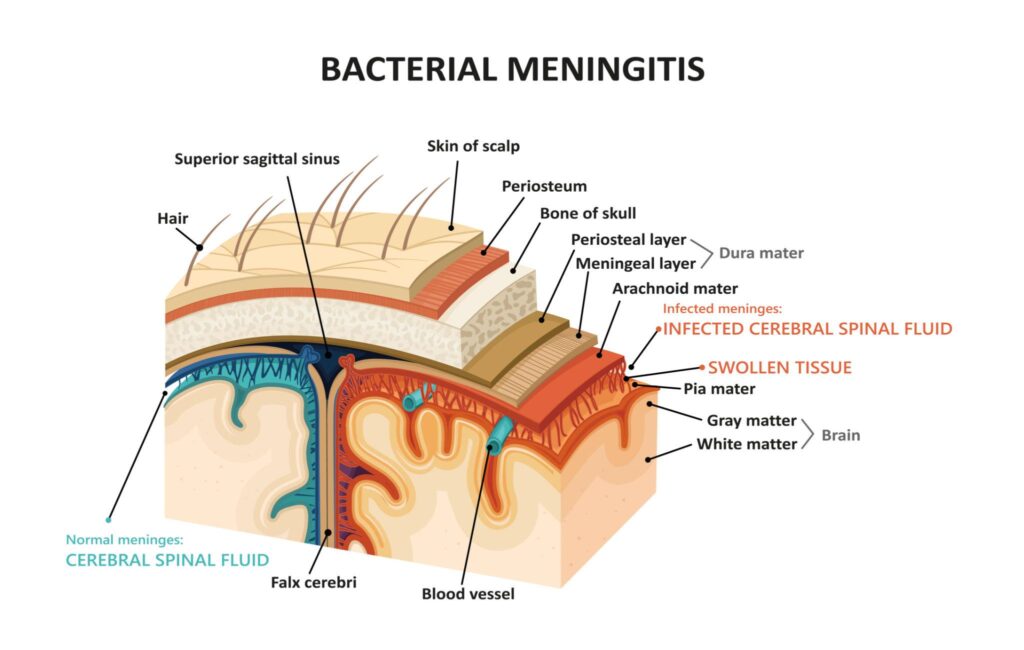
-
The meninges consist of three protective layers:
-
Dura mater (outer tough layer)
-
Arachnoid mater (middle thin layer)
-
Pia mater (inner delicate layer attached to brain tissue)
-
-
These layers also contain cerebrospinal fluid, which cushions the brain.
-
When infection occurs, inflammatory cells accumulate in this space.
-
Fluid pressure rises inside the skull.
-
Increased intracranial pressure can reduce blood supply to the brain.
-
This may cause neurological symptoms very quickly.
Causes
Meningitis can occur due to several infectious agents.
A. Bacterial Causes
The most dangerous type is bacterial meningitis.
Common bacteria include:
-
Neisseria meningitidis
-
Streptococcus pneumoniae
-
Haemophilus influenzae
These bacteria often spread through respiratory droplets.
B. Viral Causes
Common viral causes include:
-
Enteroviruses
-
Herpes viruses
-
Mumps virus
-
Influenza virus
Viral meningitis is usually less severe.
C. Fungal Causes
Fungal meningitis mainly occurs in:
-
Immunocompromised patients
-
Cancer patients
-
Long steroid users
D. Tuberculous Causes
-
Tuberculosis can cause meningitis through blood spread.
-
Tuberculous meningitis develops slowly but is serious.
How Infection Reaches the Brain
-
Infection usually starts in another body part:
-
Nose
-
Throat
-
Ear
-
Lungs
-
-
From there, organisms enter the bloodstream.
-
They cross the blood-brain barrier.
-
Then they infect the meninges.
In some cases, infection occurs directly after:
-
Head injury
-
Skull fracture
-
Brain surgery
Types of Meningitis
Bacterial Meningitis
-
Sudden onset
-
Rapid progression
-
High mortality if untreated
-
Requires emergency antibiotics
Viral Meningitis
-
Mild to moderate illness
-
Often self-limiting
-
Recovery usually occurs within days
Fungal Meningitis
-
Slow onset
-
Seen in weak immunity
Tuberculous Meningitis
-
Chronic symptoms
-
Long treatment duration
Common Symptoms
The classic symptoms include:
-
High fever
-
Severe headache
-
Neck stiffness
-
Vomiting
-
Sensitivity to light
-
Altered consciousness
Other symptoms may include:
-
Confusion
-
Irritability
-
Restlessness
-
Difficulty speaking
-
Convulsions
Why Neck Stiffness Happens
-
Inflammation irritates spinal nerves.
-
Neck muscles become rigid.
-
Patient cannot bend neck forward easily.
-
This is one of the most important warning signs.
Symptoms in Infants and Children
Symptoms are often different in babies:
-
Constant crying
-
Poor feeding
-
Refusal to breastfeed
-
Irritability
-
Sleepiness
-
Bulging fontanelle
-
Fever or low temperature
Danger Signs That Need Immediate Hospital Admission
-
Repeated vomiting
-
Seizures
-
Loss of consciousness
-
Difficulty breathing
-
Sudden rash with fever
A rapidly spreading rash can occur in meningococcal infection.
How Meningitis Spreads
Meningitis spreads through close contact:
-
Coughing
-
Sneezing
-
Saliva droplets
-
Shared utensils
-
Crowded living conditions
Risk increases in:
-
Schools
-
Hostels
-
Dormitories
-
Military camps
Who Is at Higher Risk?
High-risk groups include:
-
Newborn babies
-
Children below five years
-
Elderly persons
-
Diabetic patients
-
Malnourished individuals
-
Immunocompromised persons
Diagnosis of Meningitis
Diagnosis requires urgent evaluation.
Important investigations:
-
Blood count
-
Blood culture
-
Lumbar puncture
-
Cerebrospinal fluid analysis
-
CT scan if needed
Cerebrospinal Fluid Findings
Doctors examine:
-
Cell count
-
Protein level
-
Sugar level
-
Bacterial stain
-
Culture
Typical bacterial meningitis shows:
-
High protein
-
Low glucose
-
Increased neutrophils
Treatment
Bacterial Meningitis
Immediate antibiotics are essential.
Common drugs:
-
Ceftriaxone
-
Vancomycin
Additional treatment:
-
Steroids
-
Intravenous fluids
-
Oxygen support
-
Monitoring in ICU if severe
Viral Meningitis
Usually supportive:
-
Bed rest
-
Fluids
-
Fever reduction
-
Pain control
Tuberculous Meningitis
Requires prolonged anti-tubercular therapy:
-
Isoniazid
-
Rifampicin
-
Pyrazinamide
-
Ethambutol
Complications of Meningitis
Untreated meningitis may cause:
-
Hearing loss
-
Brain damage
-
Paralysis
-
Learning disability
-
Hydrocephalus
-
Epilepsy
-
Death
Prevention of Meningitis
Vaccination is the most effective prevention.
Important vaccines:
-
Meningococcal vaccine
-
Pneumococcal vaccine
-
Haemophilus influenzae type b vaccine
Additional Preventive Measures
-
Hand washing
-
Avoid close contact with infected persons
-
Proper cough hygiene
-
Good nutrition
-
Early treatment of respiratory infections