Introduction
-
Innate immunity is the first line of defense of the body against infections.
-
It provides immediate protection against invading pathogens.
-
It does not require prior exposure to microorganisms to produce a response.
-
This type of immunity is present from birth, therefore it is also called natural immunity or nonspecific immunity.
-
Innate immunity acts rapidly and recognizes common structural patterns of pathogens, rather than specific antigens.
-
It includes several defense mechanisms such as:
-
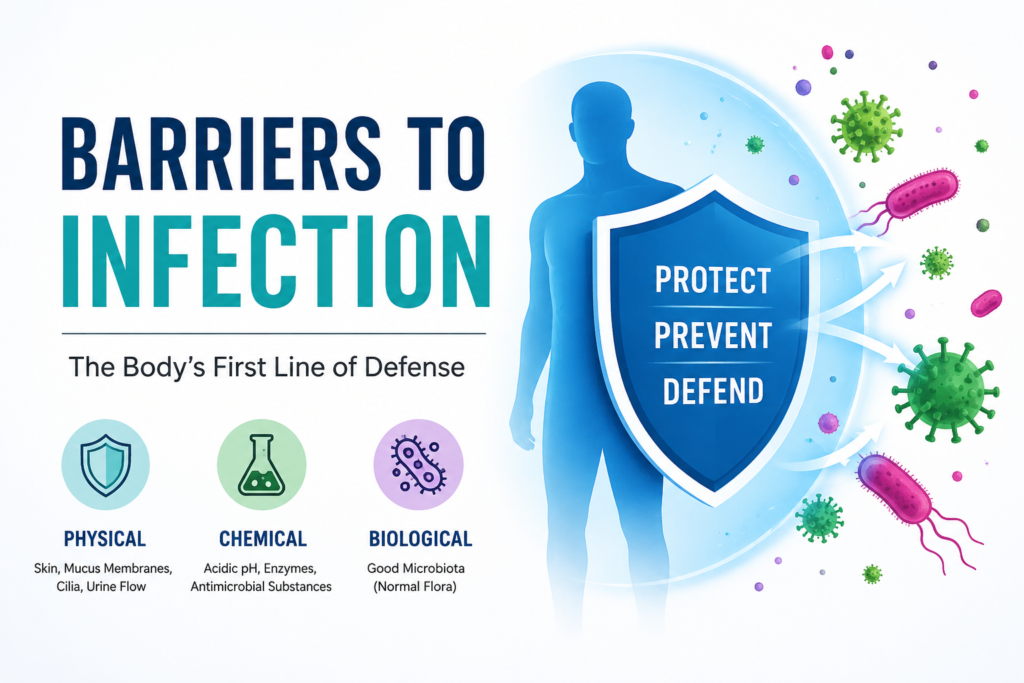
Physical barriers (skin and mucous membranes)
-
Chemical defenses (enzymes, acids, antimicrobial substances)
-
Cellular components (macrophages, neutrophils, natural killer cells)
-
Inflammatory responses
-
-
These mechanisms help prevent the entry, spread, and multiplication of infectious agents.
-
Innate immunity works in coordination with adaptive immunity to protect the body from bacteria, viruses, fungi, and parasites.
Characteristics of Innate Immunity
-
Present from birth
-
Provides immediate response
-
Non-specific defense mechanism
-
No immunological memory
-
Same response occurs during repeated exposure
-
Recognizes common microbial structures
-
Activates adaptive immune response
Components of Innate Immunity
Innate immunity consists of several protective mechanisms that work together to prevent infection.
| Component | Description | Example |
|---|---|---|
| Physical barriers | Prevent entry of microorganisms | Skin, mucous membranes |
| Chemical barriers | Destroy or inhibit microbial growth | Lysozyme, stomach acid |
| Cellular defenses | Immune cells destroy pathogens | Macrophages, neutrophils |
| Inflammatory response | Local reaction to infection | Redness, swelling |
| Complement system | Protein system that destroys microbes | Complement proteins |
1. Physical Barriers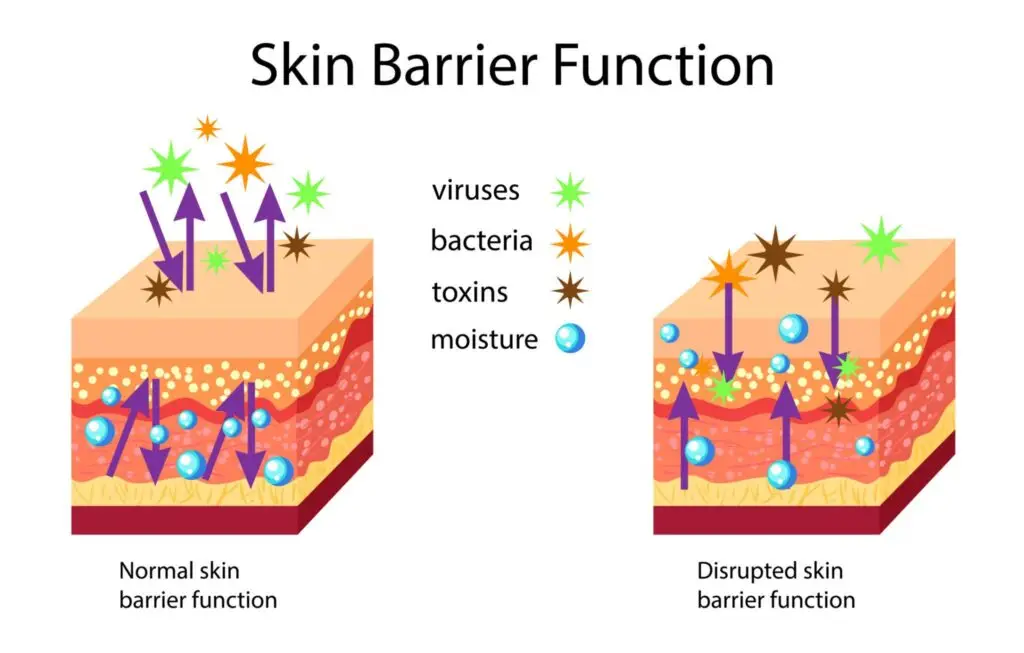
Skin
-
Acts as the first line of defense
-
Outer layer contains keratin, which prevents microbial penetration
-
Sweat and sebum contain antimicrobial substances
Mucous Membranes
-
Line the respiratory, digestive, and urogenital tracts
-
Produce mucus that traps microorganisms
Cilia
-
Present in the respiratory tract
-
Move mucus and trapped microbes out of the airways
2. Chemical Barriers
Chemical substances produced by the body help destroy invading pathogens.
Examples of Chemical Defenses
| Chemical Substance | Location | Function |
|---|---|---|
| Lysozyme | Tears, saliva | Breaks bacterial cell wall |
| Hydrochloric acid | Stomach | Kills ingested microbes |
| Defensins | Skin and mucosa | Destroy microbial membranes |
| Interferons | Virus-infected cells | Inhibit viral replication |
These substances help prevent infection by directly damaging microorganisms.
3. Cellular Components of Innate Immunity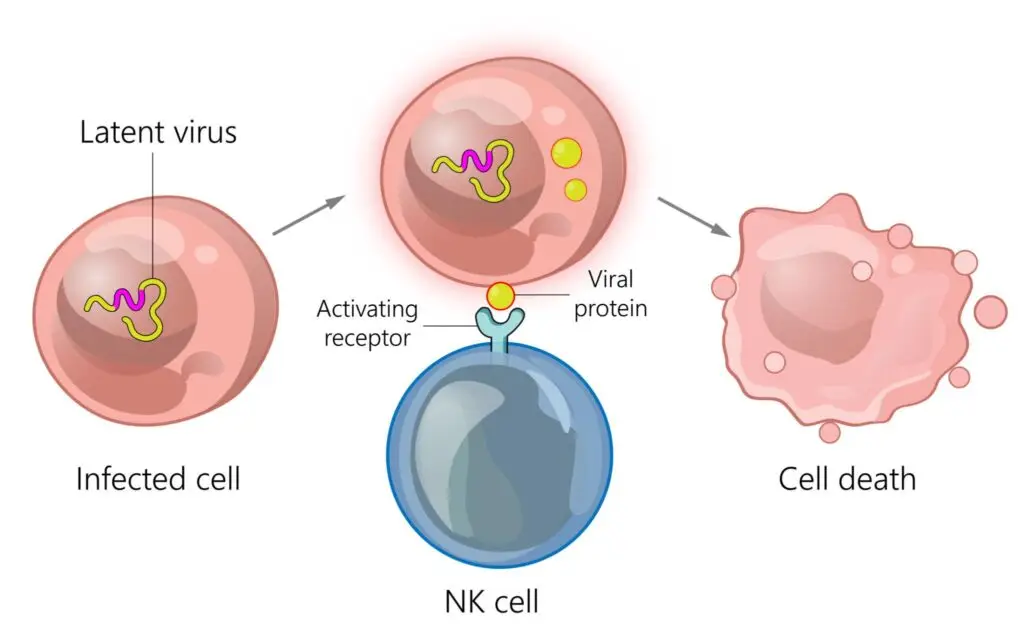
Major Innate Immune Cells
| Cell Type | Function |
|---|---|
| Neutrophils | First cells to reach infection site and perform phagocytosis |
| Macrophages | Engulf and destroy pathogens |
| Dendritic cells | Present antigens to T cells |
| Natural Killer (NK) cells | Kill virus-infected and tumor cells |
These cells destroy pathogens through phagocytosis and cytotoxic activity.
4. Phagocytosis
Phagocytosis is the process by which immune cells engulf and digest microorganisms.
Steps of Phagocytosis
-
Recognition of pathogen
-
Attachment to microbe
-
Engulfment by phagocyte
-
Formation of phagosome
-
Digestion of microorganism
Main phagocytic cells:
-
Neutrophils
-
Macrophages
5. Inflammatory Response
Cardinal Signs of Inflammation
| Sign | Description |
|---|---|
| Redness (Rubor) | Increased blood flow |
| Heat (Calor) | Increased metabolic activity |
| Swelling (Tumor) | Accumulation of fluid |
| Pain (Dolor) | Stimulation of nerve endings |
Functions of Inflammation
-
Destroys pathogens
-
Removes damaged cells
-
Promotes tissue repair
6. Complement System
The complement system is a group of plasma proteins that enhance immune responses.
Functions of Complement Proteins
-
Destroy microorganisms
-
Enhance phagocytosis
-
Promote inflammation
-
Lyse bacterial cells
Complement activation occurs through three pathways:
| Pathway | Activation |
|---|---|
| Classical pathway | Antigen–antibody complex |
| Alternative pathway | Direct microbial surface activation |
| Lectin pathway | Mannose-binding lectin binding to microbes |
7. Pattern Recognition Receptors (PRRs)
Innate immune cells recognize pathogens using pattern recognition receptors.
These receptors detect Pathogen-Associated Molecular Patterns (PAMPs).
Examples include:
-
Bacterial cell wall components
-
Viral RNA
-
Lipopolysaccharides
Major PRRs include:
-
Toll-like receptors (TLRs)
-
NOD-like receptors
-
RIG-like receptors
8. Role of Innate Immunity in Disease Prevention
Innate immunity plays an important role in preventing infections.
Functions
-
Prevents entry of pathogens
-
Eliminates microbes rapidly
-
Activates adaptive immunity
-
Controls early infection
Innate immunity provides immediate protection until adaptive immunity develops.
Differences Between Innate and Adaptive Immunity
| Feature | Innate Immunity | Adaptive Immunity |
|---|---|---|
| Specificity | Non-specific | Highly specific |
| Memory | No memory | Has immunological memory |
| Response time | Immediate | Delayed |
| Main cells | Neutrophils, macrophages, NK cells | B cells and T cells |
Clinical Significance
Understanding innate immunity is important in many medical conditions.
- Infectious Diseases – Innate immunity provides the first defense against bacterial and viral infections.
- Autoimmune Disorders – Abnormal activation of innate immunity may contribute to inflammatory diseases.
- Cancer Immunotherapy – NK cells and macrophages play a role in tumor surveillance.
- Vaccination – Innate immune responses help activate adaptive immunity during vaccination.