Introduction
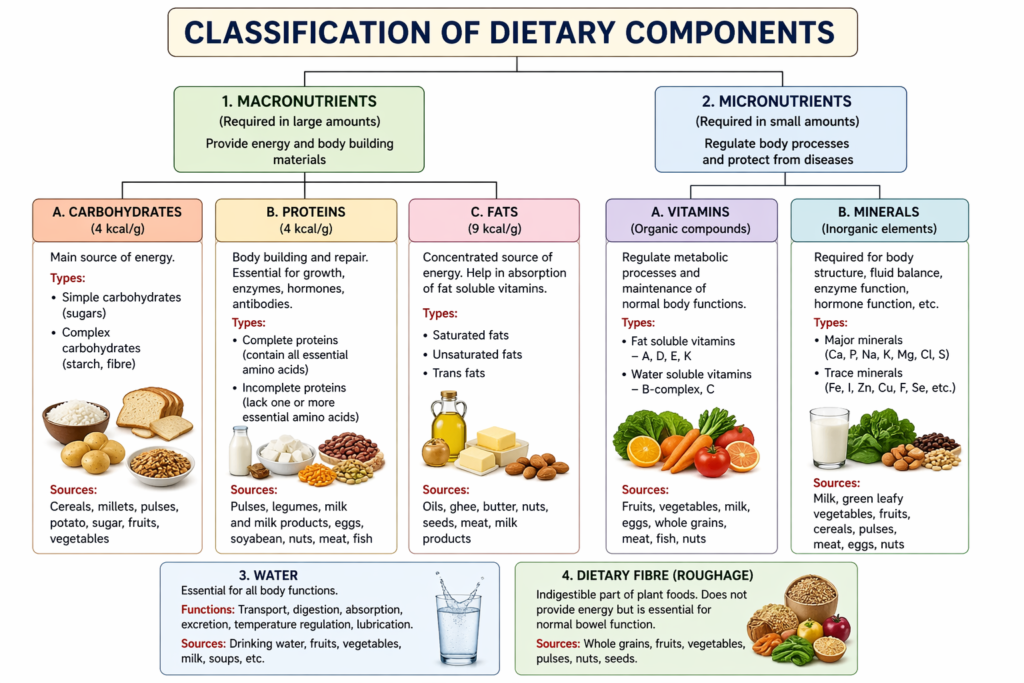
- Dietary fibre, also called fibre or roughage, is the indigestible portion of plant-derived food.
- It cannot be completely broken down by human gastrointestinal enzymes.
- It passes through the small intestine without digestion or absorption.
- In the large intestine, part of dietary fibre undergoes bacterial fermentation.
- Dietary fibre is considered a non-nutritive dietary component because it provides very little energy.
- Despite low energy value, it has major physiological importance in maintaining digestive health.
- It helps regulate bowel movement and improves intestinal function.
- A high-fibre diet reduces the risk of several diseases such as:
- Constipation
- Obesity
- Type 2 Diabetes
- Cardiovascular disease
- Colorectal cancer
- Dietary fibre mainly consists of non-starch polysaccharides and plant structural components.
Major Components of Dietary Fibre
- Cellulose
- Hemicellulose
- Pectin
- Lignin
- Resistant starch
- Inulin
- Beta-glucans
- Oligosaccharides
History
| Period | Subject Area | Major Progress |
|---|---|---|
| Before 1970s | Physiology, Botany | Limited studies on physiological effects of dietary fibre |
| 1970s–1980s | Nutrition, Biochemistry | Clinical studies increased; health effects became clearer |
| 1980s–1990s | Chemistry, Nutrition | Fibre classification and analysis improved |
| 1990s–2000s | Food Science, Nutrition | Structure and function relationship studied |
| After 2000 | Nutrition, Food Technology | Fibre widely used in functional foods and disease prevention |
Classification of Dietary Fibre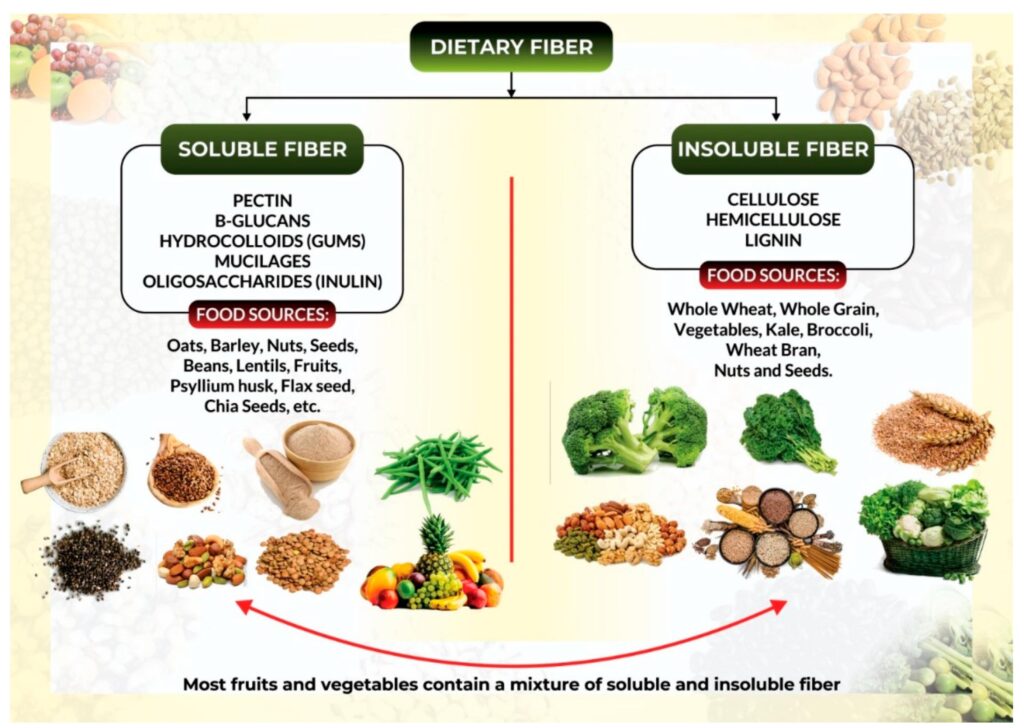
1. Soluble Dietary Fibre
- Soluble dietary fibre dissolves in water and forms a viscous gel-like substance in the intestine.
- This property slows gastric emptying and nutrient absorption.
- It is also fermented by intestinal bacteria in the colon, producing short-chain fatty acids.
Chemical Components of Soluble Dietary Fibre
Soluble fibre consists mainly of non-starch polysaccharides and related compounds.
Major Components
- Pectin
- Gums
- Mucilage
- Beta-glucans
- Inulin
- Oligofructose
- Psyllium
- Resistant starch
- Wheat dextrin
- Polydextrose
Important Sources of Soluble Dietary Fibre
Fruits
- Apple
- Pear
- Orange
- Banana
- Strawberry
- Blueberry
- Guava
Vegetables
- Carrot
- Cauliflower
- Spinach
- Artichoke
- Okra
Cereals
- Oats
- Barley
Legumes
- Lentils
- Peas
- Beans
Seeds
- Flaxseed
- Psyllium husk
Physiological Functions of Soluble Fibre
1. Lowers Blood Cholesterol
- Soluble fibre binds bile acids and increases cholesterol excretion.
2. Slows Glucose Absorption
- Helps prevent sudden rise of blood glucose.
- Type 2 Diabetes
3. Delays Gastric Emptying
- Produces prolonged satiety.
4. Supports Gut Microbiota
- Fermentation produces:
- Acetate
- Propionate
- Butyrate
2. Insoluble Dietary Fibre
- Insoluble dietary fibre does not dissolve in water and remains structurally intact during intestinal transit.
- It mainly adds bulk to stool and promotes bowel movement.
Major Components
- Cellulose
- Linear polymer of glucose molecules
- Long unbranched chain
- Hemicellulose
- Branched shorter polysaccharide chains
- Lignin
- Complex phenolic polymer
- Non-carbohydrate plant fibre
Important Sources of Insoluble Dietary Fibre
Whole Grains
- Wheat bran
- Corn bran
- Rice bran
- Whole wheat
- Wheat bran
Vegetables
- Celery
- Green beans
- Bell pepper
- Cauliflower
Fruits
- Kiwi
- Pear
- Grapes
Nuts
- Almonds
- Walnuts
- Hazelnuts
- Almond
Physiological Functions of Insoluble Fibre
1. Increases Fecal Bulk
- Absorbs water and enlarges stool volume.
2. Promotes Bowel Movement
- Stimulates intestinal motility.
3. Prevents Constipation
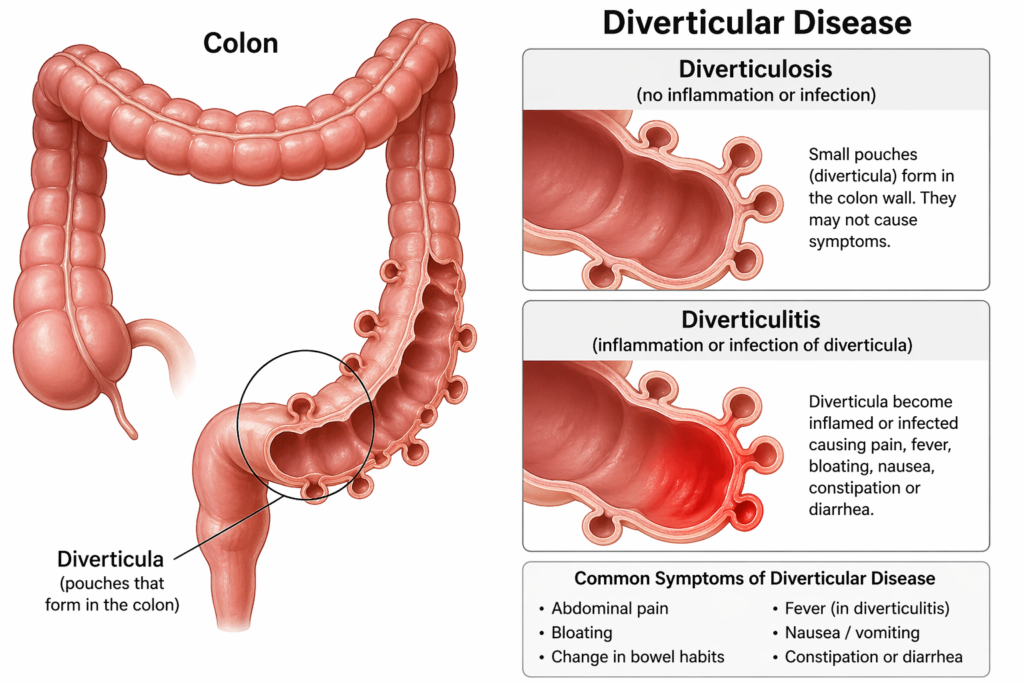
- Constipation
4. Reduces Colonic Pressure
- Helps prevent diverticular disease.
Physico-Chemical Properties of Dietary Fibre
1. Solubility
Solubility refers to the ability of dietary fibre to dissolve in water.
Types According to Solubility
Soluble Fibre
Soluble fibre dissolves in water and forms a gel-like solution.
Examples
- Pectin
- Beta-glucan
- Inulin
- Psyllium
Insoluble Fibre
Insoluble fibre does not dissolve in water.
Examples
- Cellulose
- Hemicellulose
- Lignin
Physiological Importance
- Soluble fibre delays gastric emptying
- Insoluble fibre increases stool bulk
2. Water Holding Capacity
Water holding capacity is the ability of fibre to absorb and retain water.
Important Features
- Fibre binds large amounts of water
- Increases fecal moisture
- Softens stool
Fibres with High Water Holding Capacity
- Cellulose
- Hemicellulose
- Psyllium
Physiological Importance
- Prevents constipation
- Improves bowel movement
Constipation
3. Swelling Capacity
Swelling capacity means increase in fibre volume after water absorption.
Important Features
- Fibre expands in intestine
- Increases bulk
Physiological Importance
- Produces satiety
- Delays hunger
Obesity
4. Viscosity
Viscosity is the ability of fibre to form thick gel in solution.
Fibres with High Viscosity
- Pectin
- Beta-glucan
- Psyllium
Physiological Importance
- Delays gastric emptying
- Slows glucose absorption
- Lowers cholesterol absorption
Type 2 Diabetes
Hypercholesterolemia
5. Fermentability
Fermentability is the ability of fibre to be metabolized by colonic bacteria.
Highly Fermentable Fibres
- Inulin
- Pectin
- Resistant starch
Products of Fermentation
Short-chain fatty acids:
- Acetate
- Propionate
- Butyrate
Physiological Importance
- Nourishes colon cells
- Supports gut microbiota
6. Bulk Forming Capacity
Bulk forming property means ability to increase fecal mass.
Fibres with High Bulk Forming Action
- Cellulose
- Hemicellulose
Physiological Importance
- Accelerates intestinal transit
- Reduces colonic pressure
7. Adsorption Capacity
Dietary fibre can bind different substances in intestine.
Binds
- Bile acids
- Cholesterol
- Toxins
- Minerals
Physiological Importance
- Lowers cholesterol
- Helps detoxification
8. Particle Size
Particle size influences physiological effect.
Coarse Fibre
- Better bulking action
Fine Fibre
- Less mechanical stimulation
Dietary Fibre Content in Various Foods
| Food Source | Total Fibre (g/100 g) | Insoluble Fibre (g/100 g) | Soluble Fibre (g/100 g) |
|---|---|---|---|
| Grains | |||
| Barley | 17.3 | – | – |
| Corn | 13.4 | – | – |
| Oats | 10.3 | 6.5 | 3.8 |
| Rice (dry) | 1.3 | 1.0 | 0.3 |
| Rice (cooked) | 0.7 | 0.7 | 0.0 |
| Wheat (whole grain) | 12.6 | 10.2 | 2.3 |
| Wheat germ | 14.0 | 12.9 | 1.1 |
| Legumes and Pulses | |||
| Green beans | 1.9 | 1.4 | 0.5 |
| Soy | 15.0 | – | – |
| Peas (green frozen) | 3.5 | 3.2 | 0.3 |
| Kidney beans (canned) | 6.3 | 4.7 | 1.6 |
| Lentils (raw) | 11.4 | 10.3 | 1.1 |
| Lima beans (canned) | 4.2 | 3.8 | 0.4 |
| White beans (raw) | 17.7 | 13.4 | 4.3 |
| Vegetables | |||
| Potato (without skin) | 1.3 | 1.0 | 0.3 |
| Bitter gourd | 16.6 | 13.5 | 3.1 |
| Beetroot | 7.8 | 5.4 | 2.4 |
| Fenugreek leaves | 4.9 | 4.2 | 0.7 |
| Ladyfinger | 4.3 | 3.0 | 1.3 |
| Spinach (raw) | 2.6 | 2.1 | 0.5 |
| Tomato (raw) | 1.2 | 0.8 | 0.4 |
| Eggplant | 6.6 | 5.3 | 1.3 |
| Cauliflower (raw) | 1.8 | 1.1 | 0.7 |
| Carrot (raw) | 2.5 | 2.3 | 0.2 |
| Broccoli (raw) | 3.29 | 3.0 | 0.29 |
| Fruits | |||
| Apple (unpeeled) | 2.0 | 1.8 | 0.2 |
| Kiwi | 3.39 | 2.61 | 0.80 |
| Mango | 1.8 | 1.06 | 0.74 |
| Pineapple | 1.2 | 1.1 | 0.1 |
| Grapes | 1.2 | 0.7 | 0.5 |
| Orange | 1.8 | 0.7 | 1.1 |
| Strawberry | 2.2 | 1.3 | 0.9 |
| Banana | 1.7 | 1.2 | 0.5 |
| Pear | 3.0 | 2.0 | 1.0 |
| Nuts and Seeds | |||
| Almonds | 11.2 | 10.1 | 1.1 |
| Coconut (raw) | 9.0 | 8.5 | 0.5 |
| Peanut (dry roasted) | 8.0 | 7.5 | 0.5 |
| Cashew | 6.0 | – | – |
| Sesame seed | 7.79 | 5.89 | 1.90 |
| Flaxseed | 22.33 | 10.15 | 12.18 |
Methods of Analysis of Dietary Fibre
| Method | Principle | Main Use |
|---|---|---|
| Enzymatic–Gravimetric Method | Digestible starch and protein are removed by enzymes, remaining residue is weighed | Most common method for total dietary fibre estimation |
| Enzymatic–Chemical Method | Uses enzymes followed by chemical separation of fibre fractions | Measures soluble and insoluble fibre separately |
| Gravimetric Method | Fibre residue is dried and weighed after digestion | Estimation of crude fibre |
| Detergent Method | Uses acid or neutral detergent to separate plant cell wall components | Cellulose, hemicellulose, lignin analysis |
| Chromatographic Method | Individual fibre components separated chemically | Detailed fibre characterization |
Therapeutic Functions of Dietary Fibre
- Dietary fibre has important therapeutic value because it helps in prevention and management of many metabolic, gastrointestinal, and cardiovascular disorders.
- Its beneficial effects depend on solubility, viscosity, fermentability, and water-holding capacity.
1. Prevention and Treatment of Constipation
Constipation – Dietary fibre increases stool bulk by absorbing water and softening fecal mass.
Therapeutic Effects
- Increases fecal volume
- Stimulates intestinal peristalsis
- Reduces colonic transit time
- Promotes regular bowel movement
Important Fibres
- Cellulose
- Hemicellulose
- Psyllium
2. Control of Diabetes Mellitus
Type 2 Diabetes – Soluble fibre delays glucose absorption in the intestine.
Therapeutic Effects
- Reduces postprandial blood glucose rise
- Improves insulin sensitivity
- Delays gastric emptying
Important Fibres
- Pectin
- Beta-glucan
- Psyllium
3. Reduction of Blood Cholesterol
Hypercholesterolemia – Soluble fibre binds bile acids and increases cholesterol excretion.
Therapeutic Effects
- Lowers LDL cholesterol
- Reduces total cholesterol
- Protects against atherosclerosis
Important Fibres
- Beta-glucan
- Pectin
- Oats fibre
4. Prevention of Obesity
Obesity – Fibre increases satiety and reduces calorie intake.
Therapeutic Effects
- Delays hunger
- Decreases overeating
- Supports weight control
5. Protection Against Cardiovascular Disease
Cardiovascular disease
Therapeutic Effects
- Lowers serum cholesterol
- Improves lipid profile
- Reduces cardiovascular risk
6. Prevention of Colon Disorders
Colorectal cancer
Therapeutic Effects
- Dilutes intestinal carcinogens
- Reduces transit time
- Improves bowel clearance
7. Improvement of Gut Microbiota
Fermentable fibres act as prebiotics.
Therapeutic Effects
- Stimulate beneficial bacteria
- Produce short-chain fatty acids
- Improve colon health
8. Prevention of Hemorrhoids and Diverticular Disease
Hemorrhoids
Therapeutic Effects
- Reduces colonic pressure
- Softens stool
- Prevents straining during defecation
Application of Dietary Fibre in Functional Foods
- Dietary fibre is widely used in functional foods because it improves nutritional value and provides health benefits beyond basic nutrition.
- Functional foods are foods enriched with biologically active components that help prevent disease and promote health.
Functional food
Functional foods are food products designed to provide physiological benefits such as:
- Improved digestion
- Better metabolic control
- Reduced disease risk
Why Dietary Fibre is Added to Functional Foods
Main Reasons
- Increases fibre content of diet
- Improves gastrointestinal health
- Helps control blood glucose
- Lowers blood cholesterol
- Improves satiety
Major Applications of Dietary Fibre in Functional Foods
1. Bakery Products – Dietary fibre is added to bakery foods to improve nutritional quality.
Examples
- Fibre-enriched bread
- Biscuits
- Cakes
- Whole grain cookies
Common Fibres Used
- Wheat bran
- Oat fibre
- Psyllium
Whole grain bread
2. Breakfast Cereals – Breakfast cereals are commonly fortified with fibre.
Examples
- Oat cereals
- Bran cereals
- Fibre-fortified flakes
Benefits
- Improves bowel regularity
- Lowers cholesterol
Bran cereal
3. Dairy Products – Fibre is added to dairy-based functional foods.
Examples
- Fibre-fortified yogurt
- Probiotic milk drinks
Common Fibre Used
- Inulin
- Oligosaccharides
Benefits
- Prebiotic action
- Supports gut microbiota
Yogurt
4. Beverage Industry – Soluble fibre is added to drinks.
Examples
- Fibre drinks
- Fruit juices with added fibre
Common Fibre Used
- Pectin
- Inulin
5. Meat and Fat Replacement Products – Dietary fibre improves texture and reduces fat content.
Benefits
- Fat replacement
- Improved water retention
- Better texture
6. Functional Snack Foods – High-fibre snacks are widely developed.
Examples
- Fibre bars
- High-fibre crackers
- Seed-based snacks
7. Infant and Medical Nutrition Products – Used in therapeutic nutrition.
Benefits
- Improves digestion
- Prevents constipation
Clinical Significance
| Clinical Condition | Clinical Significance of Dietary Fibre |
|---|---|
| Constipation | Increases stool bulk, softens feces, stimulates bowel movement, and reduces intestinal transit time |
| Hemorrhoids | Reduces straining during defecation and lowers rectal venous pressure |
| Diverticulosis | Lowers colonic pressure and improves fecal passage |
| Type 2 Diabetes | Delays glucose absorption, reduces postprandial blood glucose, and improves insulin sensitivity |
| Hypercholesterolemia | Binds bile acids, lowers LDL cholesterol, and reduces serum cholesterol |
| Cardiovascular disease | Improves lipid profile and reduces cardiovascular risk |
| Obesity | Increases satiety, delays hunger, and reduces calorie intake |
| Colorectal cancer | Dilutes carcinogens, shortens transit time, and protects colonic mucosa |
| Gut microbiota support | Fermentable fibre acts as prebiotic and promotes beneficial intestinal bacteria |