Introduction
- Nucleic acids are complex biomolecules that play a vital role in the storage, transmission, and expression of genetic information in living organisms.
- They are considered the molecular basis of heredity because they carry genetic instructions from one generation to the next.
- Nucleic acids control cellular activities by directing the synthesis of proteins required for growth, development, and metabolism.
- They are present in all living cells, as well as in many viruses.
- Nucleic acids are polymers made up of repeating units called nucleotides.
- Each nucleotide consists of a nitrogenous base, a pentose sugar, and a phosphate group.
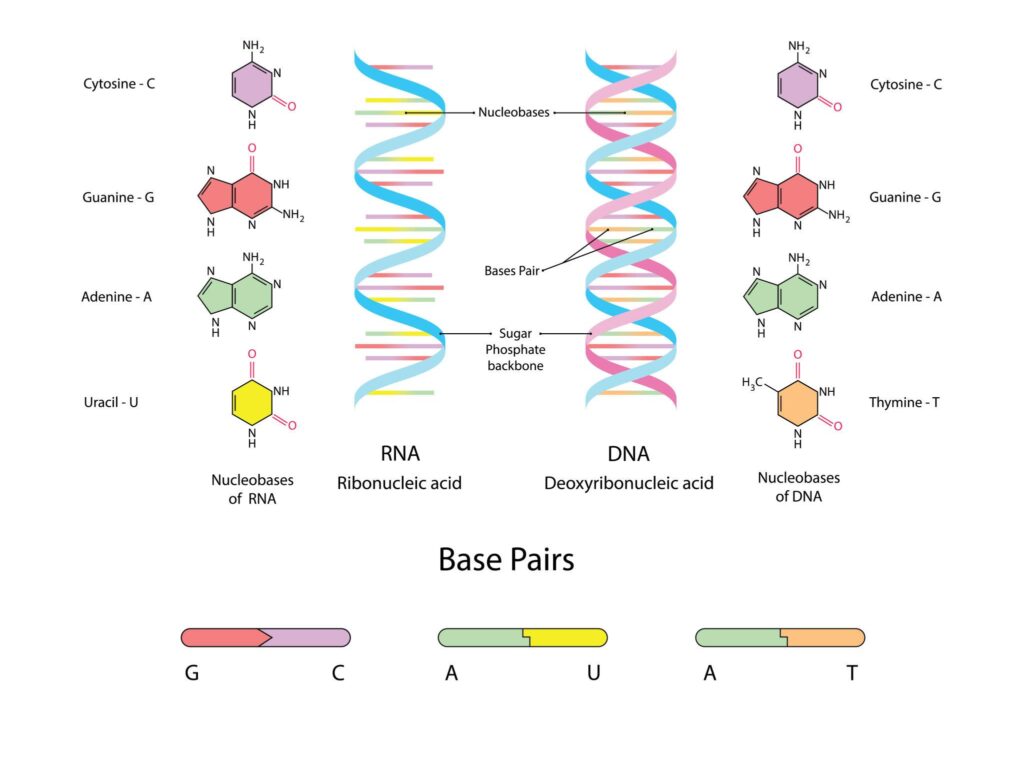
- The two major types of nucleic acids are Deoxyribonucleic Acid (DNA) and Ribonucleic Acid (RNA).
- DNA serves as the primary genetic material in most organisms and stores hereditary information.
- RNA is involved in the transfer and expression of genetic information during protein synthesis.
- Nucleotides not only form nucleic acids but also participate in many important biological functions such as energy transfer (ATP), cell signaling (cAMP), and coenzyme formation (NAD⁺, FAD, Coenzyme A).
- The study of nucleic acids and nucleotides forms the foundation of molecular biology, genetics, biotechnology, and modern medicine.
History of Nucleic Acids
The discovery of nucleic acids is one of the most important milestones in biochemistry and molecular biology. The understanding of nucleic acids evolved gradually through the contributions of several scientists.
| Year | Scientist | Discovery |
|---|---|---|
| 1869 | Friedrich Miescher | Discovered a phosphorus-containing substance from pus cells and named it Nuclein. |
| 1889 | Richard Altmann | Renamed nuclein as Nucleic Acid. |
| 1910 | Phoebus Levene | Identified the components of nucleic acids: sugar, phosphate, and nitrogenous bases. |
| 1928 | Frederick Griffith | Demonstrated the phenomenon of bacterial transformation. |
| 1944 | Avery, MacLeod, and McCarty | Proved that DNA is the genetic material. |
| 1950 | Erwin Chargaff | Proposed Chargaff’s rules (A=T and G=C). |
| 1952 | Hershey and Chase | Confirmed DNA as the genetic material using bacteriophages. |
| 1953 | Watson and Crick | Proposed the double-helical structure of DNA. |
| 1961 | Nirenberg and Matthaei | Deciphered the genetic code and its role in protein synthesis. |
Functions of Nucleic Acids
Nucleic acids are essential molecules that regulate, store, and transmit genetic information.
1. Storage of Genetic Information
- DNA serves as the repository of hereditary information.
- Genetic information is stored in the sequence of nitrogenous bases.
- This information determines the characteristics of an organism.
2. Transmission of Hereditary Information
- DNA transfers genetic information from parent cells to daughter cells during cell division.
- Ensures continuity of life from one generation to the next.
3. Protein Synthesis
- DNA directs the synthesis of proteins through RNA intermediates.
- RNA carries genetic information from DNA to ribosomes.
- Proteins synthesized control cellular structure and function.
4. Regulation of Cellular Activities
- Nucleic acids regulate metabolism, growth, differentiation, and reproduction.
- Genes control the production of enzymes and regulatory proteins.
5. Replication and Cell Division
- DNA undergoes replication before cell division.
- Ensures accurate distribution of genetic material to daughter cells.
6. Mutation and Evolution
- Changes in DNA sequences (mutations) create genetic variation.
- Variations contribute to evolution and adaptation.
7. Gene Expression
- RNA molecules participate in the expression of genetic information.
- mRNA, tRNA, and rRNA play important roles in protein synthesis.
8. Viral Genetic Material
- DNA or RNA acts as the genetic material in viruses.
- Responsible for viral replication and infectivity.
Components of Nucleic Acids
Nucleic acids are polymers composed of repeating units called nucleotides.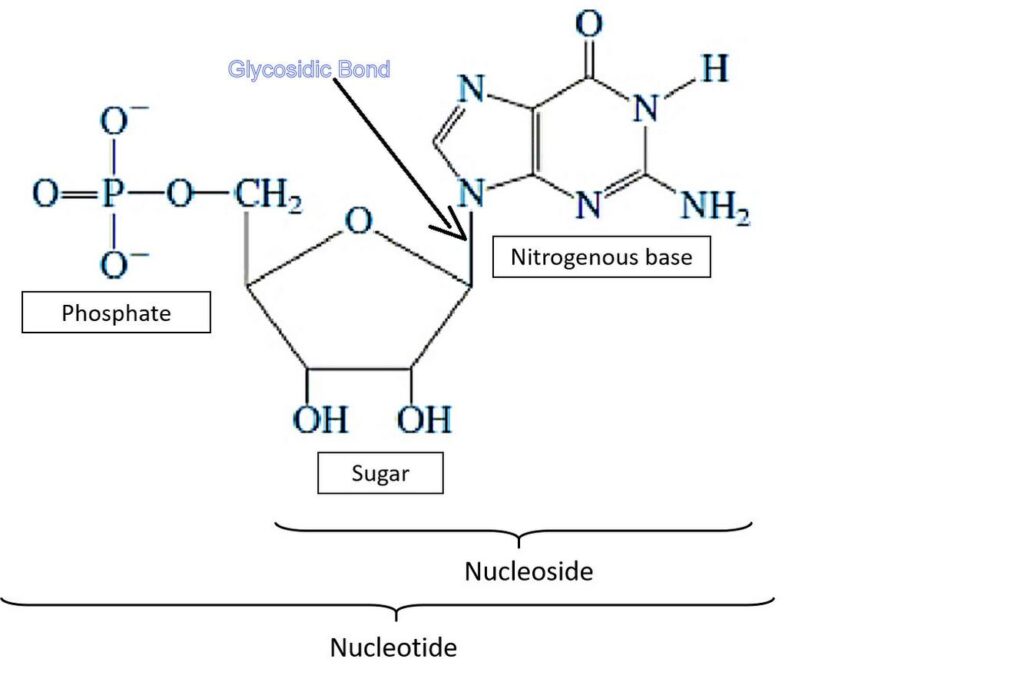
Each nucleotide contains three essential components:
- Nitrogenous Base
- Pentose Sugar
- Phosphate Group
1. Nitrogenous Bases
- Nitrogenous bases are heterocyclic aromatic compounds containing nitrogen.
Classification of Nitrogenous Bases
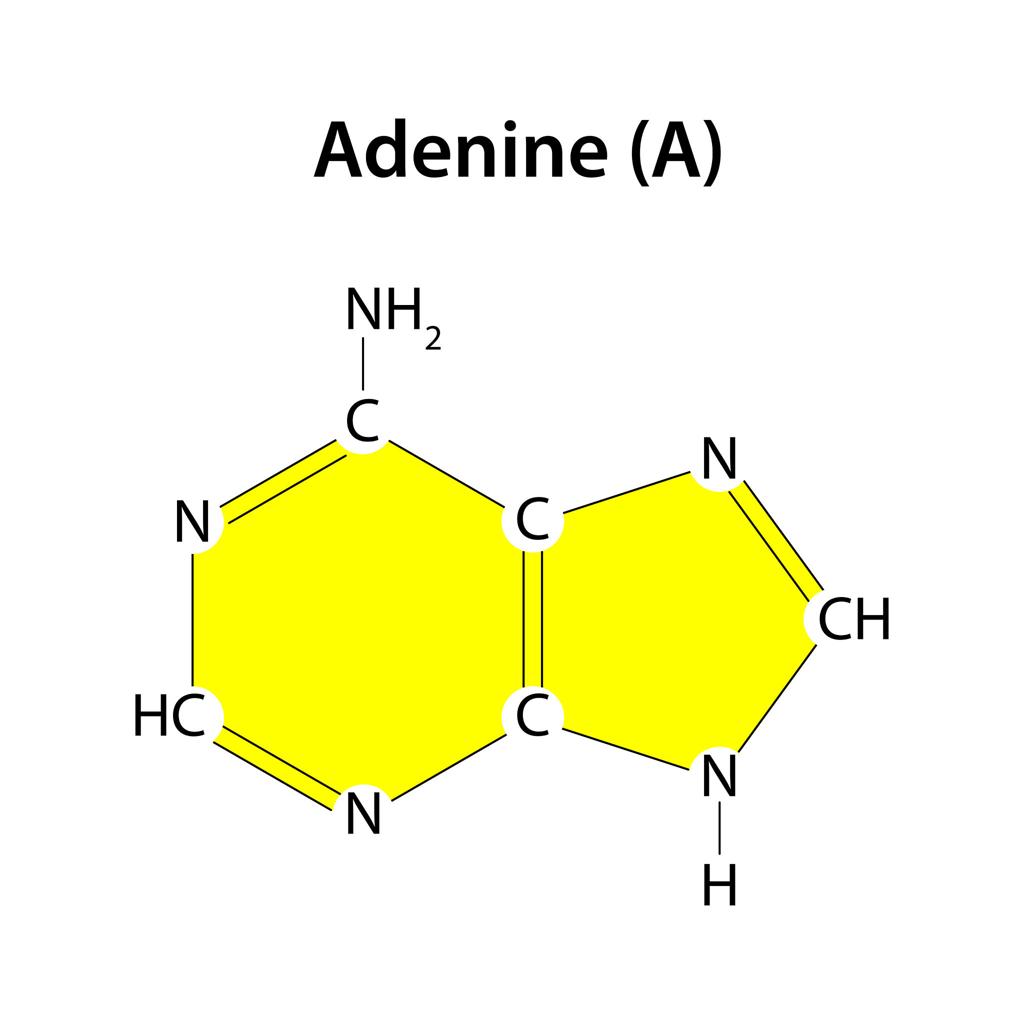
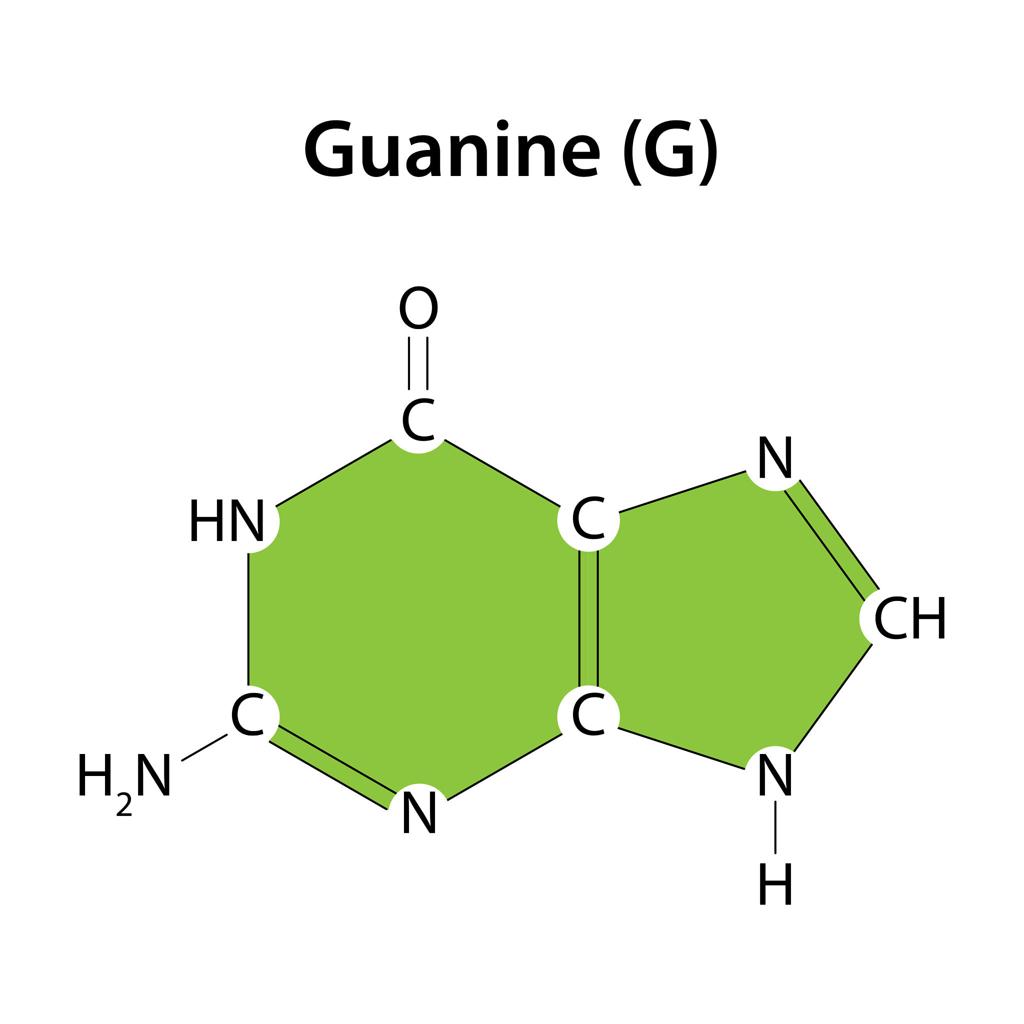
A. Purines
Purines contain a double-ring structure.
Examples
- Adenine (A)
- Guanine (G)
Characteristics
- Larger molecules
- Present in both DNA and RNA
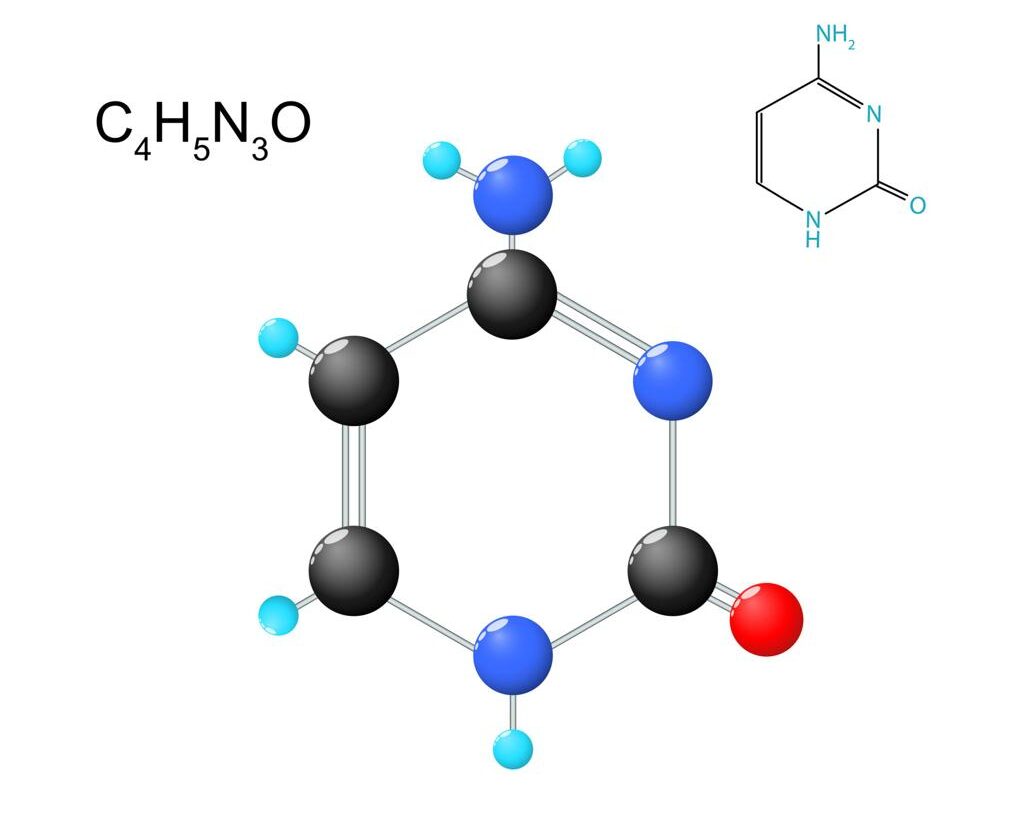
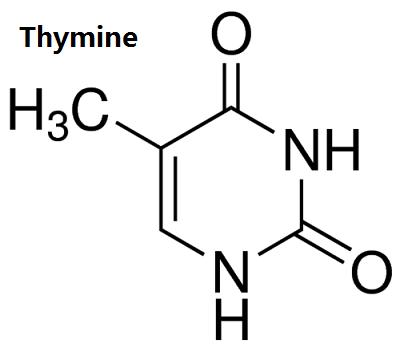
B. Pyrimidines
Pyrimidines contain a single-ring structure.
Examples
- Cytosine (C)
- Thymine (T)
- Uracil (U)
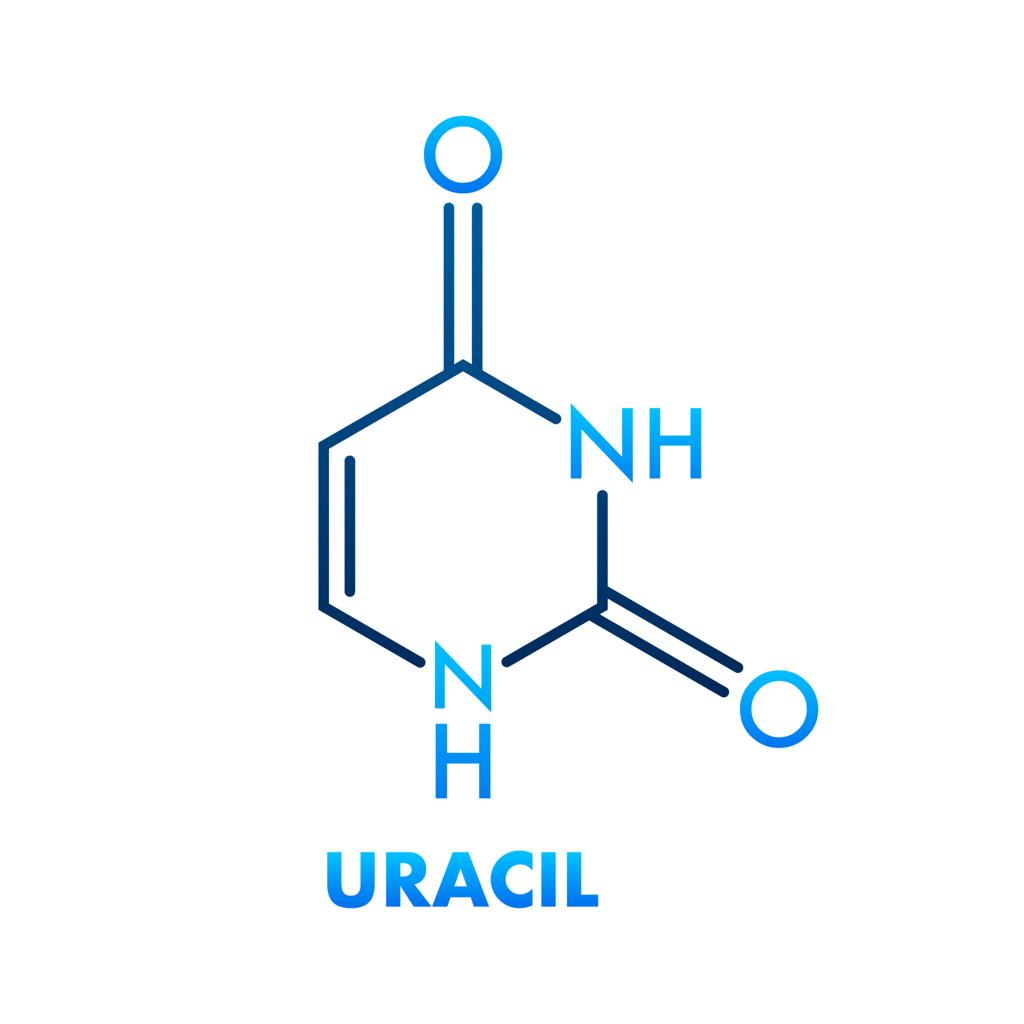
Characteristics
- Smaller molecules
- Thymine is present only in DNA
- Uracil is present only in RNA
Distribution of Bases
| Nitrogenous Base | DNA | RNA |
|---|---|---|
| Adenine | ✓ | ✓ |
| Guanine | ✓ | ✓ |
| Cytosine | ✓ | ✓ |
| Thymine | ✓ | ✗ |
| Uracil | ✗ | ✓ |
2. Pentose Sugar
The sugar component of nucleic acids is a five-carbon sugar (pentose).
A. Ribose
- Present in RNA
- Chemical Formula: C₅H₁₀O₅
- Contains a hydroxyl group (-OH) at carbon 2′
B. Deoxyribose
- Present in DNA
- Chemical Formula: C₅H₁₀O₄
- Contains hydrogen (H) instead of OH at carbon 2′
Difference Between Ribose and Deoxyribose
| Feature | Ribose | Deoxyribose |
|---|---|---|
| Found in | RNA | DNA |
| Formula | C₅H₁₀O₅ | C₅H₁₀O₄ |
| Carbon-2 | OH group present | H present |
3. Phosphate Group
The phosphate group is derived from phosphoric acid (H₃PO₄).
Functions
- Gives acidic nature to nucleic acids.
- Provides negative charge to DNA and RNA.
- Participates in the formation of phosphodiester bonds.
- Links nucleotides together to form nucleic acid chains.
Nucleosides
A nucleoside consists of:
Nitrogenous Base + Pentose Sugar
Examples
| Base | Nucleoside |
|---|---|
| Adenine | Adenosine |
| Guanine | Guanosine |
| Cytosine | Cytidine |
| Uracil | Uridine |
| Thymine | Thymidine |
Nucleotides
- Nucleotides are the fundamental structural units of nucleic acids (DNA and RNA) and are among the most important molecules in living organisms.
- In addition to forming genetic material, nucleotides participate in energy transfer, intracellular signaling, enzyme regulation, and numerous metabolic processes.
- Every nucleotide consists of a nitrogenous base, a pentose sugar, and one or more phosphate groups.
- When thousands to millions of nucleotides join together through phosphodiester bonds, they form nucleic acids.
Structure of a Nucleotide
A nucleotide is composed of three parts:
1. Nitrogenous Base
The base may be a purine or pyrimidine.
Purines
- Adenine (A)
- Guanine (G)
Pyrimidines
- Cytosine (C)
- Thymine (T)
- Uracil (U)
2. Pentose Sugar
The sugar may be:
- Ribose (RNA)
- Deoxyribose (DNA)
3. Phosphate Group
One, two, or three phosphate groups may be attached to the sugar molecule.
General Formula
- Nitrogenous Base + Pentose Sugar + Phosphate = Nucleotide
Formation of Nucleotides
Nucleotide synthesis occurs in two stages:
Step 1: Formation of Nucleoside
Base + Sugar → Nucleoside
Example:
Adenine + Ribose = Adenosine
Step 2: Addition of Phosphate
Nucleoside + Phosphate → Nucleotide
Example:
Adenosine + Phosphate = AMP
Thus:
Adenine → Adenosine → AMP
Classification of Nucleotides
A. Based on Sugar Present
Ribonucleotides
Contain ribose sugar and form RNA.
Examples:
- AMP
- GMP
- CMP
- UMP
Deoxyribonucleotides
Contain deoxyribose sugar and form DNA.
Examples:
- dAMP
- dGMP
- dCMP
- dTMP
B. Based on Number of Phosphate Groups
Monophosphates (NMP)
Contain one phosphate group.
Examples:
- AMP
- GMP
- CMP
- UMP
Diphosphates (NDP)
Contain two phosphate groups.
Examples:
- ADP
- GDP
- CDP
- UDP
Triphosphates (NTP)
Contain three phosphate groups.
Examples:
- ATP
- GTP
- CTP
- UTP
Biologically Important Nucleotides
1. ATP (Adenosine Triphosphate)
ATP is the most important nucleotide in the body and is known as the energy currency of the cell.
Functions
- Energy transfer
- Muscle contraction
- Active transport
- Protein synthesis
- Nerve impulse transmission
- Cell signaling
2. GTP (Guanosine Triphosphate)
Functions
- Protein synthesis
- Signal transduction
- Formation of microtubules
3. UTP (Uridine Triphosphate)
Functions
- Glycogen synthesis
- Carbohydrate metabolism
4. CTP (Cytidine Triphosphate)
Functions
- Synthesis of phospholipids
- Cell membrane formation
Cyclic Nucleotides
Certain nucleotides function as intracellular messengers.
A. Cyclic AMP (cAMP)
Derived from ATP.
Functions
- Second messenger
- Hormonal action
- Regulation of metabolism
Hormones using cAMP:
- Glucagon
- ACTH
- TSH
- Adrenaline
B. Cyclic GMP (cGMP)
Derived from GTP.
Functions
- Visual transduction
- Nitric oxide signaling
- Smooth muscle relaxation
Functions of Nucleotides
1. Building Blocks of DNA and RNANucleotides join together through phosphodiester bonds to form nucleic acids.
2. Energy Storage and Transfer
ATP and GTP act as carriers of chemical energy.
3. Components of Coenzymes
Several coenzymes contain nucleotide derivatives.Examples:
- NAD⁺
- NADP⁺
- FAD
- Coenzyme A
4. Cell Signaling
cAMP and cGMP act as intracellular signaling molecules.
5. Regulation of Metabolism
Nucleotides regulate enzyme activity and metabolic pathways.
6. Biosynthesis
Participate in synthesis of:
- Proteins
- Lipids
- Carbohydrates
- Nucleic acids