Introduction
- Arterial Blood Gas (ABG) analysis is one of the most important laboratory investigations used in critical care medicine, emergency medicine, anesthesiology, pulmonology, and intensive care units.
- It provides rapid and accurate information about a patient’s acid-base status, oxygenation, and ventilation.
- The test helps clinicians assess respiratory function, metabolic disturbances, and the effectiveness of treatment in critically ill patients.
- An ABG analyzer is a specialized instrument designed to measure the concentration of hydrogen ions (pH), partial pressure of oxygen (pO₂), and partial pressure of carbon dioxide (pCO₂) in arterial blood.
- Using these measured values, the analyzer calculates several additional parameters such as bicarbonate (HCO₃⁻), base excess (BE), oxygen saturation (SaO₂), and total carbon dioxide content.
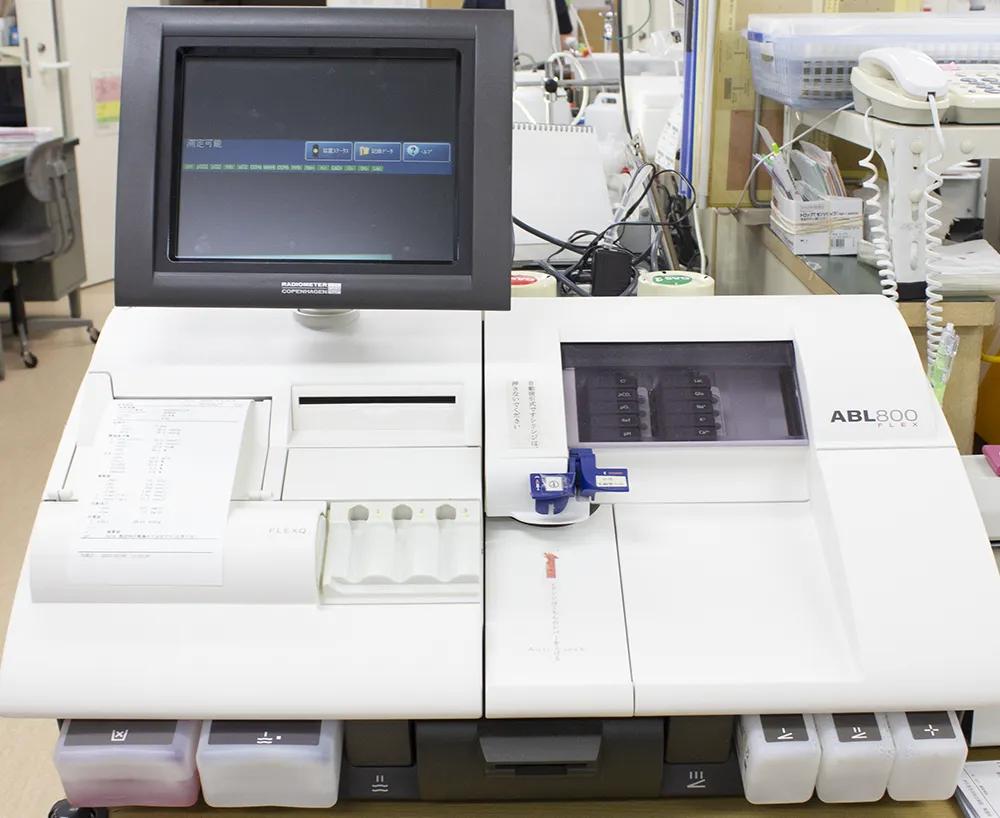
What is an ABG Analyzer?
An Arterial Blood Gas (ABG) Analyzer is an automated laboratory instrument used to evaluate the respiratory and metabolic status of a patient by measuring gases and acid-base parameters in arterial blood.
The analyzer directly measures:
- Blood pH
- Partial pressure of carbon dioxide (pCO₂)
- Partial pressure of oxygen (pO₂)
Using these values, the instrument automatically calculates several clinically important parameters including:
- Bicarbonate (HCO₃⁻)
- Base Excess (BE)
- Oxygen Saturation (SaO₂)
- Total CO₂
- Anion Gap (in some advanced systems)
Modern ABG analyzers provide results within one to three minutes, allowing clinicians to make rapid decisions in emergency situations.
Principle of ABG Analyzer
The ABG Analyzer works on electrochemical principles to measure blood pH, oxygen (PaO₂), and carbon dioxide (PaCO₂) levels in arterial blood. Specialized electrodes detect these parameters and convert them into electrical signals for analysis.
1. pH Measurement – A glass electrode measures the hydrogen ion concentration (H⁺) in blood to determine pH.
2. PaO₂ Measurement – A Clark electrode measures the partial pressure of oxygen (PaO₂) in the blood.
3. PaCO₂ Measurement – A Severinghaus electrode measures the partial pressure of carbon dioxide (PaCO₂) by detecting changes in pH caused by dissolved CO₂.
4. Electrolyte Measurement – Ion-selective electrodes (ISE) are used to measure electrolytes such as sodium, potassium, chloride, and ionized calcium.
5. Calculated Parameters – The analyzer automatically calculates bicarbonate (HCO₃⁻), base excess (BE), oxygen saturation (SaO₂), and total carbon dioxide (tCO₂) from the measured values.
Components
An ABG analyzer consists of several components that work together to accurately measure blood gases and acid-base parameters in arterial blood.
1. Sample Chamber
- The sample chamber holds the arterial blood sample during analysis.
- It maintains appropriate conditions to ensure accurate measurements of blood gases and pH.
2. Electrodes
Electrodes are the most important components of the analyzer and are responsible for measuring different blood gas parameters.
- pH Electrode: Measures the acidity or alkalinity of blood.
- pCO₂ Electrode (Severinghaus Electrode): Measures the partial pressure of carbon dioxide.
- pO₂ Electrode (Clark Electrode): Measures the partial pressure of oxygen.
3. Pump and Mixing System
- This system transports the blood sample through the analyzer and ensures proper mixing for consistent and reliable measurements.
4. Gas Analyzer
- The gas analyzer detects and measures the concentration of oxygen and carbon dioxide present in the blood sample.
5. Display and Output Interface
- The display screen shows the test results, including pH, pO₂, pCO₂, bicarbonate (HCO₃⁻), oxygen saturation (SaO₂), and other calculated parameters.
6. Temperature Control System
- This system maintains the sample at a constant temperature (usually 37°C) to ensure accurate measurement of blood gases.
7. Calibration System
- The calibration system uses standard reference solutions and gases to regularly calibrate the electrodes, ensuring precise and reliable results.
8. Sample Input and Output Ports
- These ports allow the introduction of the blood sample into the analyzer and the safe disposal of the sample after analysis.
Together, these components enable the ABG analyzer to provide rapid and accurate assessment of a patient’s oxygenation, ventilation, and acid-base status.
Sample Collection
Accurate sample collection is essential for reliable ABG results. Arterial blood is collected under aseptic conditions using a heparinized syringe to assess a patient’s oxygenation, ventilation, and acid-base status.
Preferred Arterial Sites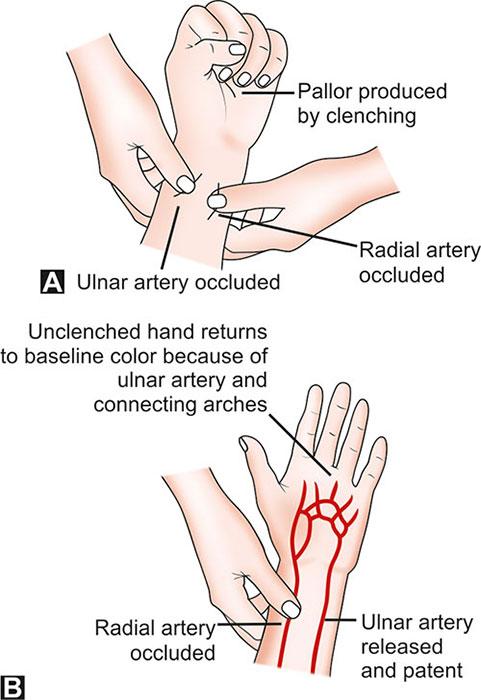
The following arteries are commonly used for ABG sample collection:
1. Radial Artery
- Most commonly preferred site.
- Easily accessible.
- Has good collateral circulation through the ulnar artery.
- Allen’s test should be performed before puncture.
2. Brachial Artery
- Used when the radial artery is inaccessible.
- Located deeper than the radial artery.
- Has less collateral circulation.
3. Femoral Artery
- Preferred in emergency situations and critically ill patients.
- Easy to access during shock or cardiac arrest.
- Higher risk of bleeding and infection.
Materials Required
- Heparinized syringe
- Sterile gloves
- Antiseptic solution
- Gauze or cotton swab
- Ice container (if analysis is delayed)
Procedure
- Select the appropriate arterial puncture site.
- Perform Allen’s test if using the radial artery.
- Clean the puncture site with an antiseptic solution.
- Insert a heparinized syringe into the artery and collect 1–2 mL of arterial blood.
- Remove the needle and apply firm pressure to the puncture site for 5–10 minutes.
- Expel any air bubbles from the syringe immediately.
- Mix the sample gently to prevent clot formation.
- Analyze the sample as soon as possible. If delayed, transport the sample on ice.
Precautions
- Avoid air bubbles in the sample.
- Use adequate heparin to prevent clotting.
- Analyze the sample promptly.
- Maintain aseptic technique during collection.
- Properly label the sample and record patient details.
Proper sample collection and handling are essential for obtaining accurate ABG results and ensuring correct clinical interpretation.
Normal Reference Values
| Parameter | Normal Range |
|---|---|
| pH | 7.35 – 7.45 |
| pCO₂ | 35 – 45 mmHg |
| pO₂ | 80 – 100 mmHg |
| HCO₃⁻ | 22 – 26 mmol/L |
| Base Excess | -2 to +2 mmol/L |
| SaO₂ | 95 – 100% |
Interpretation of ABG Results
ABG interpretation is performed systematically to identify acid-base disorders and evaluate oxygenation status.
1. Assess pH
- pH < 7.35: Acidosis
- pH > 7.45: Alkalosis
2. Determine the Primary Disorder
- PaCO₂ abnormality: Respiratory disorder
- HCO₃⁻ abnormality: Metabolic disorder
3. Evaluate Compensation
- Determine whether the lungs or kidneys are compensating for the primary acid-base disturbance.
4. Identify Simple or Mixed Disorders
- Assess whether a single acid-base disorder or multiple disorders are present.
5. Assess Oxygenation
- Evaluate PaO₂ and oxygen saturation (SaO₂) to determine the patient’s oxygenation status.
Acid-Base Disorders and Compensatory Mechanisms
| Acid-Base Disorder | Primary Change | ABG Findings | Compensatory Mechanism |
| Respiratory Acidosis | Respiratory | ↓ pH, ↑ PaCO₂ | Kidneys retain HCO₃⁻ to increase blood pH |
| Metabolic Acidosis | Metabolic | ↓ pH, ↓ HCO₃⁻ | Hyperventilation causes ↓ PaCO₂ |
| Respiratory Alkalosis | Respiratory | ↑ pH, ↓ PaCO₂ | Kidneys excrete HCO₃⁻ to lower blood pH |
| Metabolic Alkalosis | Metabolic | ↑ pH, ↑ HCO₃⁻ | Hypoventilation causes ↑ PaCO₂ |
Anion Gap
The anion gap (AG) is the difference between the major measured cations and anions in plasma and is used to evaluate metabolic acidosis.
Formula
Anion Gap (AG) = (Na⁺ + K⁺) − (Cl⁻ + HCO₃⁻)
Normal Range
| Parameter | Reference Range |
|---|---|
| Anion Gap | 8–16 mmol/L |
Causes of High Anion Gap Metabolic Acidosis (HAGMA)
| Causes |
|---|
| Renal failure |
| Diabetic ketoacidosis |
| Lactic acidosis |
| Aspirin (salicylate) poisoning |
| Aminoacidurias |
| Organic acidurias |
| Methanol poisoning |
| Drug-induced acidosis (corticosteroids, furosemide, thiazides, salicylates) |
Causes of Normal Anion Gap Metabolic Acidosis (NAGMA)
| Causes |
|---|
| Diarrhea |
| Renal tubular acidosis |
| Carbonic anhydrase inhibitor therapy |
| Magnesium-containing antacids |
| Chlorpropamide therapy |
| Iodide administration |
| Lithium therapy |
Causes of Decreased Anion Gap
| Causes |
|---|
| Hypoalbuminemia |
| Multiple myeloma |
| Hypercalcemia |
| Bromide intoxication |
Common Causes of Acid-Base Disorders
| Metabolic Acidosis | Metabolic Alkalosis |
|---|---|
| High Anion Gap Metabolic Acidosis (HAGMA) | Severe vomiting |
| Renal failure | Cushing syndrome |
| Diabetic ketoacidosis | Milk-alkali syndrome |
| Lactic acidosis | Diuretic therapy |
| Normal Anion Gap Metabolic Acidosis (NAGMA) | |
| Diarrhea | |
| Renal tubular acidosis | |
| Carbonic anhydrase inhibitors |
Causes of Respiratory Disorders
| Respiratory Acidosis | Respiratory Alkalosis |
|---|---|
| Pneumonia | High altitude |
| Bronchitis | Hyperventilation |
| Asthma | Hysteria and anxiety |
| Chronic Obstructive Pulmonary Disease (COPD) | Febrile conditions |
| Pneumothorax | Septicemia |
| Narcotic overdose | Meningitis |
| Sedative overdose | Congestive cardiac failure |
| Paralysis of respiratory muscles | |
| Central nervous system trauma | |
| Ascites and peritonitis |
Quality Control and Laboratory Safety
Maintaining proper quality control and laboratory safety is essential for ensuring accurate ABG results and protecting healthcare personnel from potential hazards.
Quality Control
Quality control (QC) procedures help ensure the accuracy, precision, and reliability of ABG measurements.
| Quality Control Measure | Purpose |
|---|---|
| Daily calibration of electrodes | Ensures accurate measurement of pH, PaO₂, and PaCO₂ |
| Use of control materials | Verifies analyzer performance |
| Regular maintenance of analyzer | Prevents instrument malfunction |
| Monitoring calibration records | Detects analytical errors and trends |
| Participation in external quality assurance programs | Ensures compliance with laboratory standards |
| Prompt analysis of samples | Minimizes changes in blood gas values |
| Checking for air bubbles and clots | Prevents inaccurate results |
Laboratory Safety
ABG samples are considered potentially infectious and must be handled using standard biosafety precautions.
| Safety Measure | Importance |
|---|---|
| Wear gloves, lab coat, and protective equipment | Prevents exposure to blood-borne pathogens |
| Follow aseptic techniques during sample collection | Reduces risk of contamination |
| Handle needles carefully | Prevents needlestick injuries |
| Dispose of sharps in designated containers | Ensures safe waste management |
| Disinfect work surfaces regularly | Prevents cross-contamination |
| Avoid direct contact with blood samples | Minimizes infection risk |
| Follow biomedical waste disposal guidelines | Ensures environmental and personnel safety |
| Wash hands before and after handling samples | Maintains personal hygiene and infection control |
Proper quality control and adherence to laboratory safety guidelines are essential for obtaining reliable ABG results and maintaining a safe working environment.