Introduction
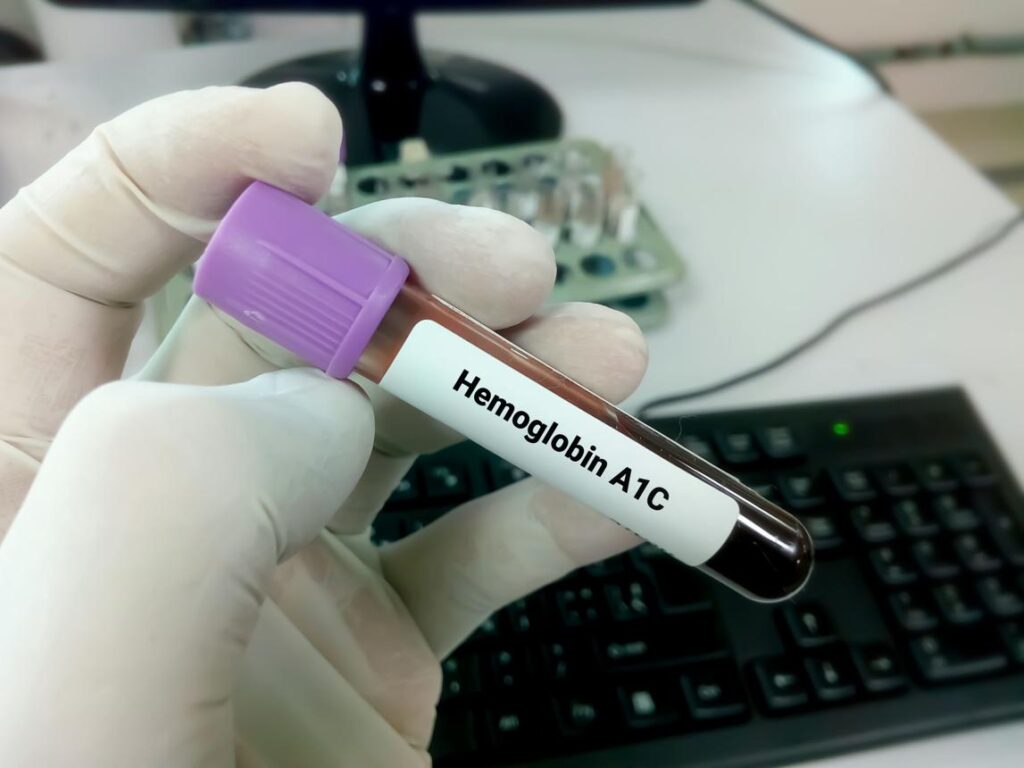
- The HbA1c test is one of the most important laboratory tests used for the diagnosis and monitoring of diabetes mellitus. It helps doctors understand the average blood glucose level of a person over the past 2–3 months.
- Unlike a single blood sugar test, which shows the glucose level at a particular moment, the HbA1c test gives a long-term picture of glucose control.
The test is also known as:
- Glycated Hemoglobin Test
- Hemoglobin A1c Test
- Glycohemoglobin Test
- HbA1c Assay
What is HbA1c?
- Hemoglobin is a protein present inside red blood cells (RBCs). Its main function is to carry oxygen from the lungs to different tissues of the body.
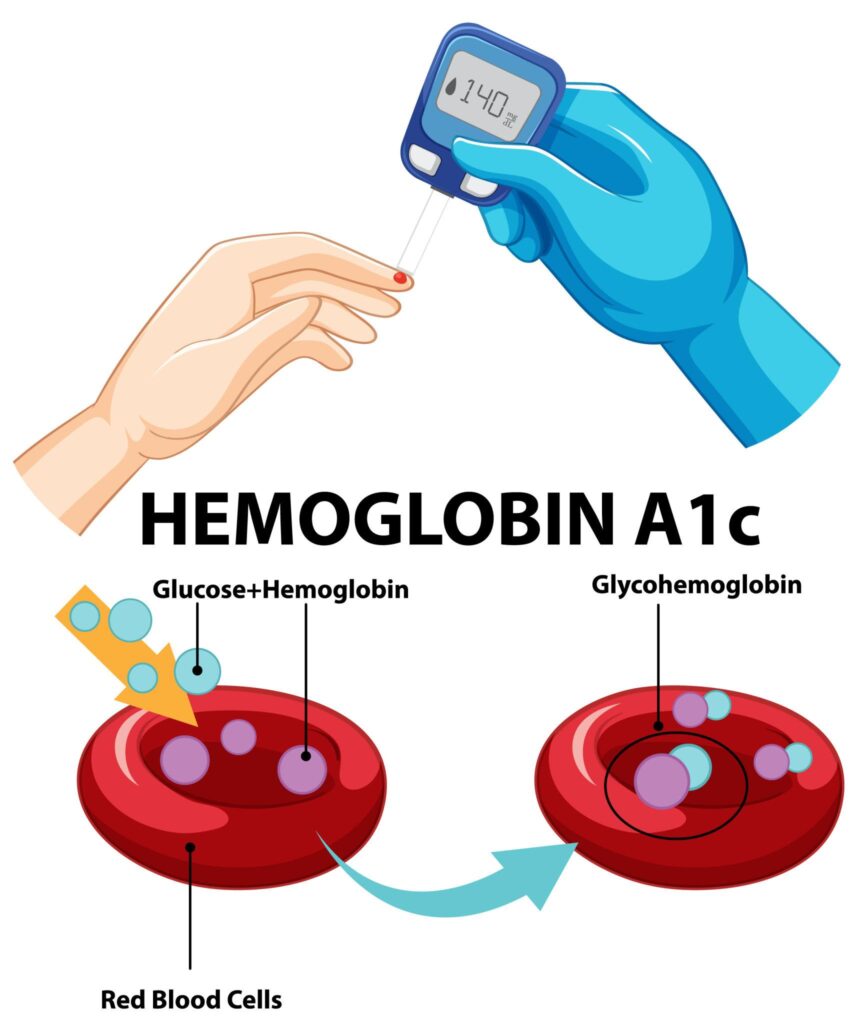
- When glucose is present in the blood, a small amount of glucose attaches to hemoglobin. This process is called glycation. The glucose-bound hemoglobin is known as glycated hemoglobin or HbA1c.
- Higher blood glucose levels lead to increased HbA1c formation.
- Since red blood cells survive for about 120 days, HbA1c reflects the average blood glucose concentration over the previous 8–12 weeks.
Principle
The HbA1c test is based on the measurement of glycated hemoglobin present in blood.
Glucose binds irreversibly to the N-terminal valine of the beta chain of hemoglobin A. The percentage of glycated hemoglobin is proportional to the average blood glucose concentration.
Different laboratory methods are used to separate HbA1c from normal hemoglobin and measure its percentage.
The result is usually expressed as:
HbA1c (% of total hemoglobin)
Formation of HbA1c
The formation of HbA1c occurs in two steps:
1. Formation of Schiff Base: Glucose reacts with hemoglobin to form an unstable Schiff base.
2. Amadori Rearrangement: The unstable compound undergoes rearrangement to form a stable ketoamine called HbA1c.
This reaction is non-enzymatic and depends on blood glucose concentration.
Types of Hemoglobin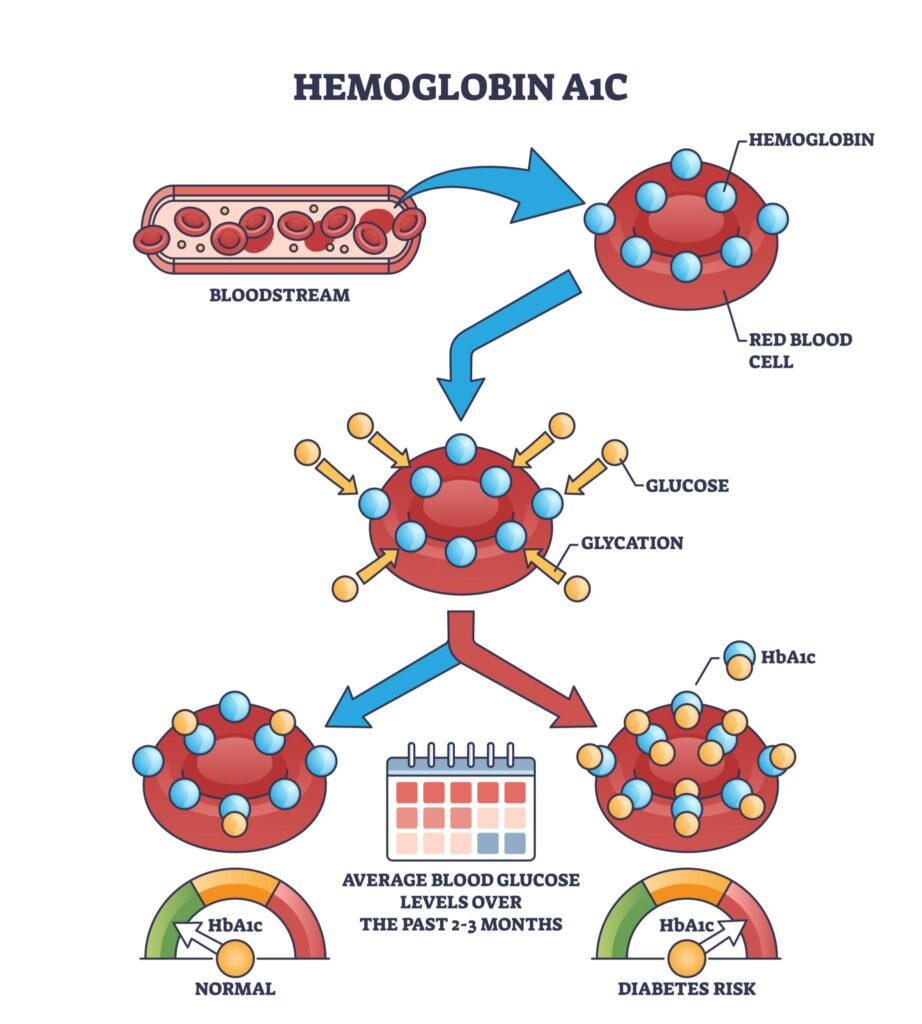
Normal adult blood contains different types of hemoglobin:
| Type of Hemoglobin | Percentage |
|---|---|
| HbA | 95–98% |
| HbA2 | 2–3% |
| HbF | <1% |
HbA further contains small fractions:
- HbA1a
- HbA1b
- HbA1c
Among these, HbA1c is clinically most important.
Methods
Several laboratory methods are used for HbA1c estimation.
1. Ion Exchange Chromatography
- Ion Exchange Chromatography is one of the commonly used methods for the estimation of HbA1c.
- This method separates glycated hemoglobin (HbA1c) from non-glycated hemoglobin based on differences in their electrical charge.
- In this technique, blood hemolysate is passed through a column containing charged resin material.
- HbA1c and normal hemoglobin bind differently to the resin because HbA1c has a slightly different charge due to the attachment of glucose molecules.
- Different buffer solutions are then used to elute the hemoglobin fractions separately.
- The amount of HbA1c is measured and expressed as a percentage of total hemoglobin.
Principle
HbA1c carries a different ionic charge compared to normal hemoglobin (HbA). When the sample passes through an ion exchange resin column, hemoglobin fractions are separated according to their charge properties.
The separated HbA1c fraction is measured photometrically or spectrophotometrically.
Procedure
| Step | Procedure |
|---|---|
| 1 | Collect EDTA anticoagulated blood sample |
| 2 | Prepare hemolysate from red blood cells |
| 3 | Add hemolysate to ion exchange column |
| 4 | HbA1c and HbA fractions bind differently to resin |
| 5 | Elute fractions using buffer solution |
| 6 | Measure absorbance of separated fractions |
| 7 | Calculate percentage of HbA1c |
Advantages
- Good accuracy and reliability
- Widely used in laboratories
- Useful for routine HbA1c estimation
- Relatively simple technique
Disadvantages
- Time consuming
- Requires proper calibration
- Hemoglobin variants may interfere
- Manual methods may produce errors
Clinical Importance
Ion Exchange Chromatography helps in:
- Diagnosis of diabetes mellitus
- Monitoring long-term blood glucose control
- Assessing effectiveness of diabetic treatment
- Predicting diabetic complications
Interpretation
| HbA1c Value | Interpretation |
|---|---|
| < 5.7% | Normal |
| 5.7–6.4% | Prediabetes |
| ≥ 6.5% | Diabetes Mellitus |
Precautions
- Use fresh EDTA blood sample
- Avoid hemolyzed or contaminated samples
- Proper column washing is necessary
- Follow manufacturer instructions carefully
2. High Performance Liquid Chromatography (HPLC)
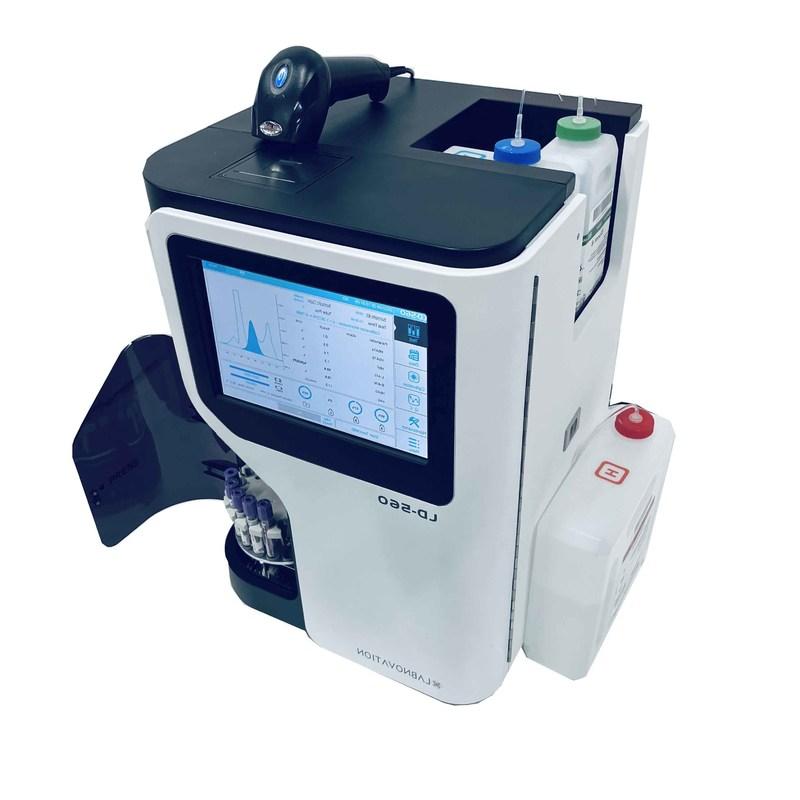
- High Performance Liquid Chromatography (HPLC) is considered the gold standard method for HbA1c estimation because of its high accuracy, precision, and reliability.
- It is widely used in modern clinical laboratories for the diagnosis and monitoring of diabetes mellitus.
- HPLC separates different hemoglobin fractions based on their ionic interactions with a chromatography column.
- The method accurately measures HbA1c and can also detect abnormal hemoglobin variants.
Principle
In HPLC, the blood sample is passed through a chromatographic column containing a stationary phase. Different hemoglobin fractions move through the column at different speeds depending on their charge and chemical properties.
HbA1c is separated from other hemoglobin fractions and measured quantitatively. The analyzer calculates HbA1c as a percentage of total hemoglobin.
Components of HPLC System
| Component | Function |
|---|---|
| Pump | Moves mobile phase through the system |
| Injector | Introduces sample into column |
| Chromatographic Column | Separates hemoglobin fractions |
| Detector | Detects separated fractions |
| Computer/Data System | Records and calculates results |
Procedure
| Step | Procedure |
|---|---|
| 1 | Collect EDTA anticoagulated blood sample |
| 2 | Prepare hemolysate from blood |
| 3 | Inject sample into HPLC analyzer |
| 4 | Hemoglobin fractions separate inside the column |
| 5 | Detector measures each fraction |
| 6 | HbA1c percentage is calculated automatically |
| 7 | Results are displayed as chromatogram and percentage |
Chromatogram in HPLC
The HPLC instrument produces a chromatogram showing different peaks for various hemoglobin fractions.
Each peak represents:
- HbA0
- HbA1c
- HbF
- HbA2
- Abnormal hemoglobin variants
The area under the HbA1c peak is used for calculation.
Advantages
- Highly accurate and precise
- Gold standard method for HbA1c estimation
- Detects hemoglobin variants
- Automated and rapid
- Excellent reproducibility
- Suitable for large laboratories
Disadvantages
- Expensive equipment
- Requires trained personnel
- High maintenance cost
- Not available in all laboratories
Clinical Importance
HPLC is useful for:
- Diagnosis of diabetes mellitus
- Monitoring long-term glycemic control
- Detecting hemoglobinopathies
- Assessing treatment response
- Research and advanced laboratory studies
Interpretation of HbA1c Values
| HbA1c Value | Interpretation |
|---|---|
| Below 5.7% | Normal |
| 5.7–6.4% | Prediabetes |
| 6.5% or more | Diabetes Mellitus |
Precautions
- Use properly anticoagulated blood sample
- Avoid old or degraded samples
- Instrument calibration should be done regularly
- Proper maintenance of HPLC column is essential
3. Immunoassay Method
This method uses antibodies against HbA1c.
Principle
The immunoassay method is based on the antigen-antibody reaction.
Specific antibodies are designed to bind only with HbA1c molecules. When the blood sample is mixed with these antibodies, HbA1c forms an antigen-antibody complex.
The amount of complex formed is measured photometrically or turbidimetrically and is directly proportional to the concentration of HbA1c in the sample.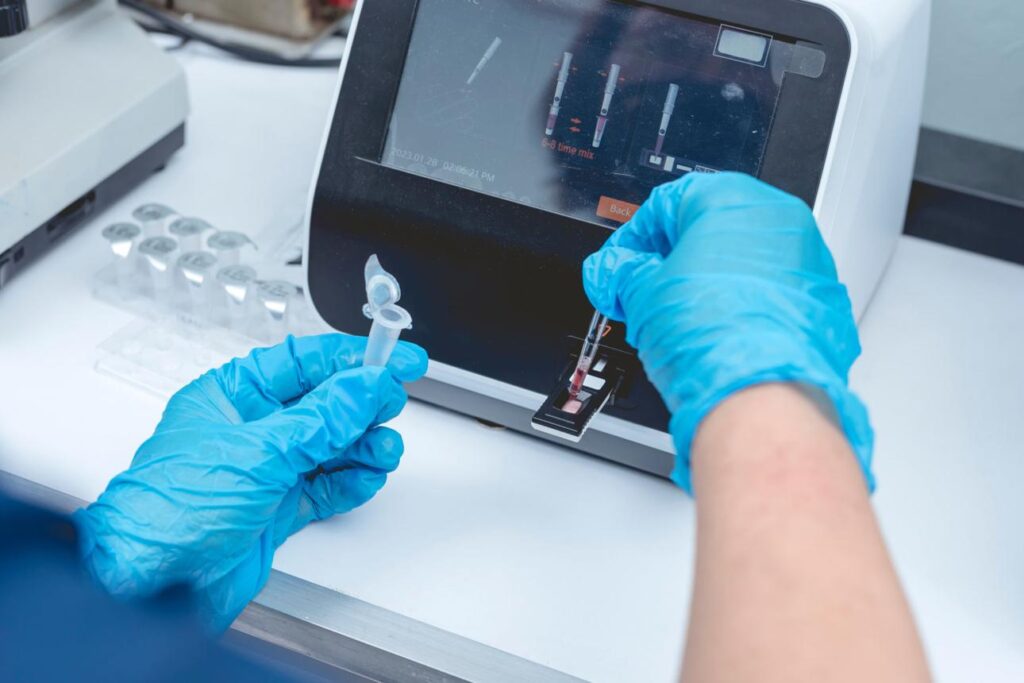
Types of Immunoassay Methods
Common immunoassay techniques include:
- Turbidimetric Immunoassay
- Nephelometric Immunoassay
- Latex Agglutination Immunoassay
- Enzyme Immunoassay
Procedure
| Step | Procedure |
|---|---|
| 1 | Collect EDTA anticoagulated blood sample |
| 2 | Prepare hemolysate from blood |
| 3 | Add sample to antibody reagent |
| 4 | HbA1c binds with specific antibodies |
| 5 | Antigen-antibody complexes are formed |
| 6 | Measure turbidity or absorbance |
| 7 | Analyzer calculates HbA1c percentage |
Reagents Used
Common reagents include:
- Anti-HbA1c antibodies
- Hemolysing reagent
- Buffer solution
- Latex particles or enzyme conjugates
- Calibrators and controls
Advantages
- Rapid and automated method
- Suitable for routine laboratories
- Requires less technical skill
- High throughput for large sample numbers
- Good precision and reproducibility
Disadvantages
- Hemoglobin variants may interfere
- Less accurate than HPLC in some cases
- Expensive antibody reagents
- Certain abnormal hemoglobins can affect results
Clinical Importance
The immunoassay method is useful for:
- Diagnosis of diabetes mellitus
- Monitoring long-term glucose control
- Routine diabetic screening
- Follow-up of diabetic patients
Interpretation of HbA1c Values
| HbA1c Value | Interpretation |
|---|---|
| Below 5.7% | Normal |
| 5.7–6.4% | Prediabetes |
| 6.5% or more | Diabetes Mellitus |
Precautions
- Use fresh EDTA blood sample
- Proper calibration of analyzer is necessary
- Avoid contaminated samples
- Follow manufacturer instructions carefully
4. Enzymatic Method
Principle
The enzymatic method is based on the action of specific enzymes on glycated hemoglobin.
First, hemoglobin from red blood cells is broken down into smaller peptides. Special enzymes then specifically react with the glycated portion of hemoglobin to produce measurable products.
The amount of product formed is directly proportional to the concentration of HbA1c present in the sample.
The result is finally expressed as the percentage of HbA1c relative to total hemoglobin.
Procedure
| Step | Procedure |
|---|---|
| 1 | Collect EDTA anticoagulated blood sample |
| 2 | Prepare hemolysate from blood |
| 3 | Add proteolytic enzymes to digest hemoglobin |
| 4 | Glycated peptides react with specific enzymes |
| 5 | Colored or measurable products are formed |
| 6 | Measure absorbance photometrically |
| 7 | Calculate HbA1c percentage automatically |
Reagents Used
Common reagents include:
- Hemolysing reagent
- Proteolytic enzymes
- Specific HbA1c enzymes
- Buffer solutions
- Chromogenic substrate
- Calibrators and controls
Advantages
- Rapid and highly automated
- Good accuracy and precision
- Less interference from some hemoglobin variants
- Suitable for routine clinical laboratories
- High throughput testing possible
Disadvantages
- Expensive reagents and analyzers
- Requires proper calibration
- Certain rare hemoglobin abnormalities may interfere
- Needs regular instrument maintenance
Clinical Importance
The enzymatic method is useful for:
- Diagnosis of diabetes mellitus
- Monitoring long-term glycemic control
- Evaluating effectiveness of diabetic treatment
- Routine diabetic screening programs
Interpretation of HbA1c Values
| HbA1c Value | Interpretation |
|---|---|
| Below 5.7% | Normal |
| 5.7–6.4% | Prediabetes |
| 6.5% or more | Diabetes Mellitus |
Precautions
- Use properly collected EDTA blood sample
- Avoid hemolyzed or contaminated specimens
- Store samples properly if testing is delayed
- Calibrate analyzer regularly
- Follow manufacturer instructions carefully
Estimated Average Glucose
- Estimated Average Glucose (eAG) is a value calculated from the HbA1c result that helps convert HbA1c percentage into an average blood glucose level.
- It gives a clearer understanding of long-term blood sugar control in terms that are easier for patients and students to understand.
- HbA1c reflects the average blood glucose concentration over the previous 2–3 months, while eAG expresses this value in the same units used for routine blood glucose tests, such as mg/dL.
Principle of eAG
There is a direct relationship between HbA1c level and average blood glucose concentration.
As blood glucose increases, more glucose attaches to hemoglobin, resulting in a higher HbA1c value. Using a mathematical formula, HbA1c can be converted into estimated average glucose (eAG).
Formula for eAG
eAG (mg/dL) = (28.7 × HbA1c) −46.7
eAG Conversion Table
| HbA1c (%) | eAG (mg/dL) |
|---|---|
| 5 | 97 |
| 6 | 126 |
| 7 | 154 |
| 8 | 183 |
| 9 | 212 |
| 10 | 240 |
| 11 | 269 |
| 12 | 298 |
Clinical Importance of eAG
1. Easy Understanding for Patients: Patients are more familiar with blood glucose values than HbA1c percentages. eAG helps explain long-term glucose control in simple terms.
2. Better Diabetes Monitoring: eAG provides an overall picture of blood sugar control over several weeks.
3. Helps in Treatment Adjustment: Doctors can evaluate whether medications, insulin therapy, diet, and exercise are effectively controlling glucose levels.
4. Reduces Confusion: eAG allows comparison between daily glucose monitoring results and HbA1c values.
Advantages of eAG
- Simple and easy to understand
- Helps correlate HbA1c with blood glucose levels
- Useful for diabetic education
- Improves patient compliance
- Helpful in long-term diabetes management
Limitations of eAG
- It is an estimated value, not a direct measurement
- Conditions affecting HbA1c also affect eAG
- Hemoglobinopathies may alter results
- Not useful in certain anemias or blood disorders
Factors Affecting eAG Accuracy
The following conditions can affect HbA1c and therefore alter eAG values:
- Hemolytic anemia
- Iron deficiency anemia
- Blood transfusion
- Chronic kidney disease
- Pregnancy
- Hemoglobin variants
Difference Between eAG and Blood Glucose Test
| Feature | eAG | Blood Glucose Test |
|---|---|---|
| Reflects | Average glucose over 2–3 months | Current glucose level |
| Based on | HbA1c calculation | Direct glucose measurement |
| Fasting needed | No | Sometimes required |
| Use | Long-term monitoring | Immediate assessment |
Clinical Significance
1. Diagnosis of Diabetes Mellitus
HbA1c is widely used for the diagnosis of diabetes mellitus.
According to international guidelines:
| HbA1c Level | Interpretation |
|---|---|
| Below 5.7% | Normal |
| 5.7–6.4% | Prediabetes |
| 6.5% or more | Diabetes Mellitus |
HbA1c is preferred because:
- Fasting is not required
- Blood sample can be collected anytime
- It reflects long-term glucose control
2. Monitoring Long-Term Glycemic Control
HbA1c is the best indicator of long-term blood glucose control in diabetic patients.
- Low HbA1c → Good diabetic control
- High HbA1c → Poor diabetic control
Since red blood cells survive for about 120 days, HbA1c reflects the average glucose concentration over the previous 8–12 weeks.
Doctors usually recommend HbA1c testing every 3 months in diabetic patients.
3. Assessment of Treatment Effectiveness
HbA1c helps evaluate whether diabetic treatment is effective or not.
It helps monitor:
- Dietary control
- Exercise therapy
- Oral hypoglycemic drugs
- Insulin therapy
A reduction in HbA1c indicates improvement in glucose control.
4. Early Detection of Prediabetes
Individuals with HbA1c levels between 5.7–6.4% are considered prediabetic.
Early detection is important because lifestyle modifications such as:
- Weight reduction
- Healthy diet
- Regular exercise
can prevent progression to diabetes mellitus.
5. Prediction of Diabetic Complications
Persistently elevated HbA1c increases the risk of diabetic complications.
Microvascular Complications
High HbA1c may lead to:
- Diabetic retinopathy
- Diabetic nephropathy
- Diabetic neuropathy
Macrovascular Complications
It also increases the risk of:
- Coronary artery disease
- Stroke
- Peripheral vascular disease
Better HbA1c control reduces the risk of these complications.
6. Assessment of Patient Compliance
HbA1c helps determine whether patients are following:
- Medication schedules
- Dietary advice
- Exercise recommendations
Poor compliance usually results in elevated HbA1c levels.
7. Useful in Screening Programs
HbA1c is widely used in community screening programs for:
- Diabetes mellitus
- Prediabetes
- High-risk individuals
The test is convenient because fasting is not required.
8. Helps in Prognosis
Patients with persistently high HbA1c levels generally have poorer prognosis and increased risk of complications.
Maintaining HbA1c below target level improves:
- Quality of life
- Disease outcome
- Survival rate
9. Importance in Pregnancy
HbA1c may help assess glucose control in diabetic pregnant women.
Poor glycemic control during pregnancy can increase the risk of:
- Congenital abnormalities
- Macrosomia
- Pregnancy complications
However, HbA1c interpretation during pregnancy should be done carefully.
10. Use in Research and Epidemiological Studies
HbA1c is commonly used in:
- Clinical research
- Diabetes studies
- Epidemiological surveys
- Drug trials
because it provides reliable long-term glucose information.
Advantages of HbA1c Test
| Advantage | Explanation |
|---|---|
| No fasting required | Sample can be collected anytime |
| Reflects long-term control | Shows average glucose over 2–3 months |
| Convenient | Easy sample collection |
| Stable sample | Less day-to-day variation |
| Useful for monitoring | Helps evaluate treatment |
Limitations
- HbA1c may give inaccurate results in conditions affecting red blood cells.
- Hemolytic anemia and blood loss can falsely decrease HbA1c.
- Iron deficiency anemia may falsely increase HbA1c.
- Hemoglobinopathies like sickle cell disease and thalassemia can interfere with results.
- Recent blood transfusion may alter HbA1c values.
- Chronic kidney disease and liver disease can affect accuracy.
- HbA1c is less reliable during pregnancy.
- It does not detect sudden changes in blood glucose.
- Not useful for day-to-day glucose monitoring.
- Different laboratory methods may show slight variations in results.
Factors Affecting
Factors Increasing HbA1c
- Diabetes mellitus
- Poor glycemic control
- Chronic hyperglycemia
- Iron deficiency anemia
- Vitamin B12 deficiency anemia
- Reduced insulin activity
- Sedentary lifestyle and obesity
Factors Decreasing HbA1c
- Hemolytic anemia
- Acute blood loss
- Blood transfusion
- Pregnancy
- Chronic kidney disease
- Increased red blood cell destruction
- Effective diabetic treatment and good glucose control
Recent Advances in HbA1c Testing
- Use of automated analyzers for rapid and accurate testing
- Development of point-of-care HbA1c devices for quick results
- NGSP-standardized methods for better accuracy and comparability
- IFCC reference methods for international standardization
- Improved HPLC systems with better detection of hemoglobin variants
- Advanced enzymatic assays with higher precision
- Use of portable HbA1c analyzers in clinics and rural healthcare centers
- Integration with laboratory information systems (LIS) for faster reporting
- Improved quality control and calibration techniques
- Faster testing methods with minimal sample requirement