Introduction
- Carbohydrates are one of the major biomolecules and the primary source of energy for the human body.
- They are composed of carbon (C), hydrogen (H), and oxygen (O).
- Carbohydrates are present in foods such as rice, wheat, fruits, vegetables, milk, and sugar.
- They provide energy for normal body functions, especially for the brain and muscles.
- Carbohydrates are classified into monosaccharides, disaccharides, oligosaccharides, and polysaccharides.
- They also play important roles in cell structure, cell recognition, and metabolism.
Definition of Carbohydrates
Carbohydrates are organic compounds composed of carbon, hydrogen, and oxygen. They are chemically defined as polyhydroxy aldehydes or ketones, or compounds that yield them on hydrolysis. They serve as the main source of energy and are essential for various biological functions.
General Formula of Carbohydrates
The general empirical formula of carbohydrates is:
(CH₂O)ₙ
Where:
- C = Carbon
- H = Hydrogen
- O = Oxygen
- n = Number of carbon atoms (usually 3–7)
Examples
| Carbohydrate | Molecular Formula |
|---|---|
| Glyceraldehyde | C₃H₆O₃ |
| Ribose | C₅H₁₀O₅ |
| Glucose | C₆H₁₂O₆ |
| Fructose | C₆H₁₂O₆ |
Biological Functions of Carbohydrates
Carbohydrates perform several important functions in the human body.
- Primary Source of Energy
- Provide 4 kcal of energy per gram and serve as the body’s main energy source.
- Energy Storage
- Excess glucose is stored as glycogen in the liver and muscles.
- Protein-Sparing Effect
- Adequate carbohydrate intake prevents proteins from being used for energy.
- Fat Metabolism
- Essential for the complete oxidation of fats and helps prevent ketosis.
- Structural Function
- Form components of glycoproteins, glycolipids, and proteoglycans in cell membranes and connective tissue.
- Component of Nucleic Acids
- Ribose and deoxyribose are essential sugars in RNA and DNA, respectively.
- Cell Recognition and Signaling
- Carbohydrates on the cell surface help in cell communication, recognition, and immune responses.
- Dietary Fiber
- Non-digestible carbohydrates (fiber) improve intestinal motility, prevent constipation, and support gut health.
Classification
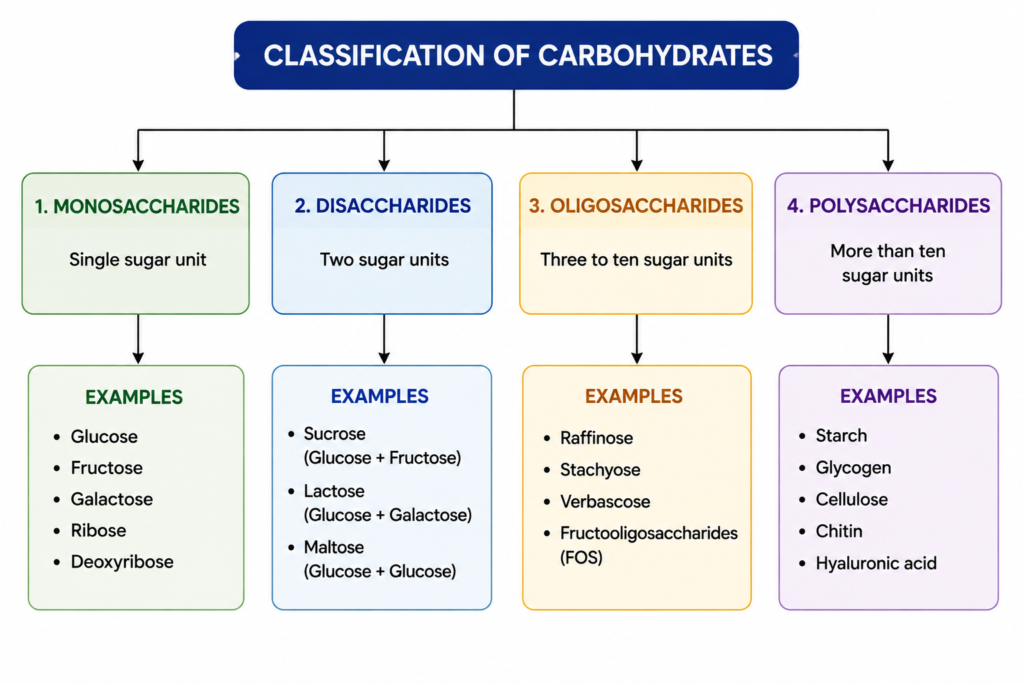
- Carbohydrates are classified based on the number of monosaccharide (sugar) units present in their molecules.
- They are divided into four major groups:
- Monosaccharides
- Disaccharides
- Oligosaccharides
- Polysaccharides.
1. Monosaccharides
- Monosaccharides are the simplest form of carbohydrates that cannot be hydrolyzed into smaller carbohydrate units.
- They are also known as simple sugars and are the building blocks of all other carbohydrates.
Characteristics
- Simplest carbohydrates with a single sugar unit.
- Contain 3–7 carbon atoms.
- Sweet in taste and highly soluble in water.
- Readily absorbed from the small intestine.
- Exist as aldehydes (aldoses) or ketones (ketoses).
- Usually have the general formula (CH₂O)ₙ, where n = 3–7.
Classification of Monosaccharides and Their Examples
| Classification | Number of Carbon Atoms | General Formula | Examples |
|---|---|---|---|
| Triose | 3 | C₃H₆O₃ | Glyceraldehyde, Dihydroxyacetone |
| Tetrose | 4 | C₄H₈O₄ | Erythrose, Erythrulose |
| Pentose | 5 | C₅H₁₀O₅ | Ribose, Deoxyribose, Xylose |
| Hexose | 6 | C₆H₁₂O₆ | Glucose, Fructose, Galactose, Mannose |
| Heptose | 7 | C₇H₁₄O₇ | Sedoheptulose, Mannoheptulose |
Biologically Important Monosaccharides
| Monosaccharide | Type | Biological Importance |
|---|---|---|
| Glucose | Aldohexose | Primary source of energy; major blood sugar. |
| Fructose | Ketohexose | Found in fruits and honey; metabolized in the liver. |
| Galactose | Aldohexose | Component of lactose; important for glycolipid and glycoprotein synthesis. |
| Mannose | Aldohexose | Essential for glycoprotein formation and cell signaling. |
| Ribose | Aldopentose | Component of RNA, ATP, NAD⁺, and FAD. |
| Deoxyribose | Aldopentose | Sugar present in DNA. |
| Glyceraldehyde | Aldotriose | Intermediate in carbohydrate metabolism (glycolysis). |
| Dihydroxyacetone | Ketotriose | Intermediate in glycolysis and lipid metabolism. |
Classification by Functional Group
1. Aldoses
- Contain an aldehyde (-CHO) group.
- Examples: Glucose, Galactose, Ribose.
2. Ketoses
- Contain a ketone (>C=O) group.
- Examples: Fructose, Dihydroxyacetone.
Important Examples
- Glucose: Main source of energy for the body.
- Fructose: Fruit sugar found in fruits and honey.
- Galactose: Component of lactose (milk sugar).
- Ribose: Sugar present in RNA and ATP.
- Deoxyribose: Sugar present in DNA.
Biological Functions
- Provide immediate energy to body cells.
- Act as the building blocks of disaccharides and polysaccharides.
- Form essential components of DNA, RNA, ATP, NAD⁺, and FAD.
- Participate in various metabolic pathways.
2. Disaccharides
- Disaccharides are carbohydrates composed of two monosaccharide molecules joined together by a glycosidic bond.
- They are formed by a condensation reaction (removal of one molecule of water) and are hydrolyzed into monosaccharides by specific enzymes during digestion.
Characteristics
- Contain two monosaccharide units.
- Sweet in taste and soluble in water.
- Cannot be absorbed directly from the intestine.
- Must be hydrolyzed into monosaccharides before absorption.
- Serve as an important dietary source of energy.
Formation of Disaccharides
Disaccharides are formed when two monosaccharides combine through a glycosidic linkage, releasing one molecule of water.
Example
Glucose + Fructose → Sucrose + H₂O
Classification of Disaccharides
| Disaccharide | Constituent Monosaccharides | Enzyme Required for Digestion |
|---|---|---|
| Sucrose | Glucose + Fructose | Sucrase |
| Lactose | Glucose + Galactose | Lactase |
| Maltose | Glucose + Glucose | Maltase |
Biologically Important Disaccharides
| Disaccharide | Source | Biological Importance |
|---|---|---|
| Sucrose | Sugarcane, sugar beet, fruits | Common table sugar and major dietary carbohydrate. |
| Lactose | Milk and dairy products | Principal carbohydrate of milk; important for infant nutrition. |
| Maltose | Germinating cereals, starch digestion | Intermediate product formed during starch digestion. |
Biological Functions
- Provide dietary energy (4 kcal/g).
- Supply glucose for cellular metabolism.
- Lactose supports growth and development in infants.
- Maltose acts as an intermediate during carbohydrate digestion.
3. Oligosaccharides
- Oligosaccharides are carbohydrates composed of 3–10 monosaccharide units linked together by glycosidic bonds.
- They are intermediate in complexity between disaccharides and polysaccharides.
Characteristics
- Contain 3–10 monosaccharide units.
- Usually soluble in water.
- Naturally present in plants, milk, and cell membranes.
- Often attached to proteins and lipids to form glycoproteins and glycolipids.
- Many are not completely digested by human digestive enzymes.
Classification of Oligosaccharides
| Type | Number of Monosaccharide Units | Examples |
|---|---|---|
| Trisaccharides | 3 | Raffinose |
| Tetrasaccharides | 4 | Stachyose |
| Pentasaccharides and Higher | 5–10 | Verbascose, Fructooligosaccharides (FOS) |
Biologically Important Oligosaccharides
| Oligosaccharide | Source | Biological Importance |
|---|---|---|
| Raffinose | Beans, cabbage, broccoli | Acts as a prebiotic and supports beneficial gut bacteria. |
| Stachyose | Soybeans, legumes | Promotes intestinal health and gut microbiota. |
| Verbascose | Legumes | Provides nourishment for beneficial intestinal bacteria. |
| Fructooligosaccharides (FOS) | Fruits, vegetables, chicory root | Prebiotic that promotes the growth of beneficial gut bacteria. |
Biological Functions
- Promote the growth of beneficial intestinal bacteria (prebiotic effect).
- Participate in cell recognition and cell signaling.
- Form essential components of glycoproteins and glycolipids.
- Support the immune system by facilitating cell–cell interactions.
- Help maintain a healthy intestinal microbiota.
4. Polysaccharides
- Polysaccharides are complex carbohydrates composed of more than 10 monosaccharide units linked together by glycosidic bonds.
- They are the major storage and structural forms of carbohydrates in living organisms.
Characteristics
- Contain more than 10 monosaccharide units.
- Have a high molecular weight.
- Usually insoluble or only slightly soluble in water.
- Generally non-sweet in taste.
- May be linear or branched in structure.
- Serve as energy storage or structural components.
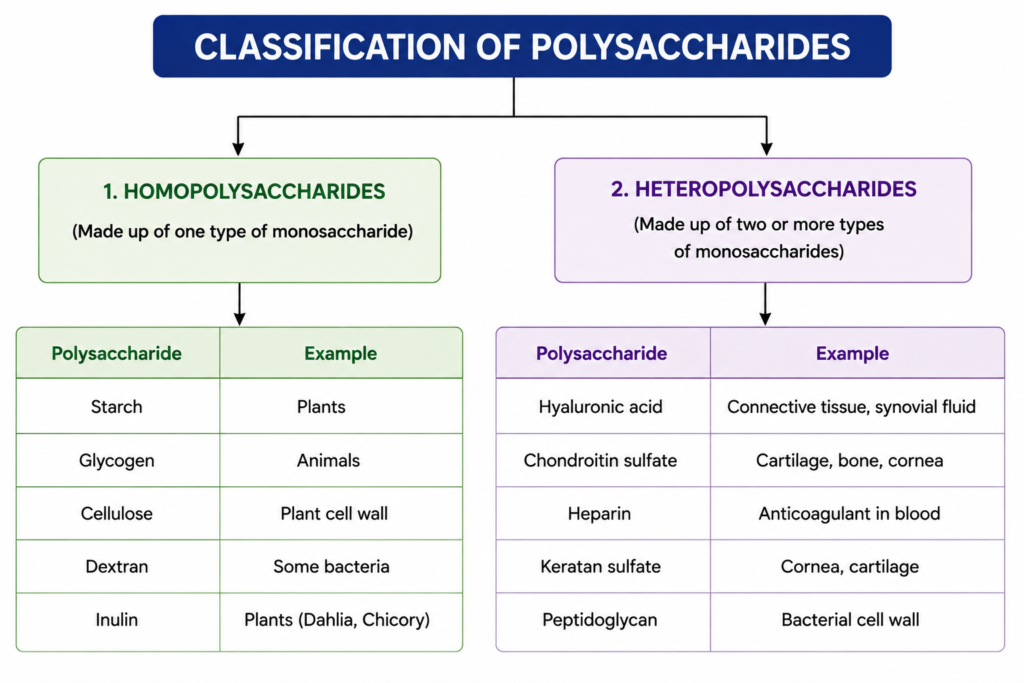
Classification of Polysaccharides
A. Homopolysaccharides
Composed of only one type of monosaccharide.
| Polysaccharide | Monomer | Function |
|---|---|---|
| Starch | Glucose | Energy storage in plants |
| Glycogen | Glucose | Energy storage in animals |
| Cellulose | Glucose | Structural component of plant cell walls |
| Dextran | Glucose | Used as a plasma volume expander |
| Inulin | Fructose | Used to assess kidney function (GFR) |
B. Heteropolysaccharides
Composed of two or more different monosaccharides.
| Polysaccharide | Major Components | Function |
|---|---|---|
| Hyaluronic Acid | Glucuronic acid + N-acetylglucosamine | Lubrication of joints and connective tissue |
| Chondroitin Sulfate | Glucuronic acid + N-acetylgalactosamine | Structural component of cartilage |
| Heparin | Sulfated polysaccharide | Natural anticoagulant |
| Keratan Sulfate | Galactose + N-acetylglucosamine | Component of cornea and cartilage |
Biologically Important Polysaccharides
| Polysaccharide | Source | Biological Importance |
|---|---|---|
| Starch | Plants | Major dietary carbohydrate and energy source |
| Glycogen | Liver and skeletal muscles | Stores glucose and maintains blood glucose levels |
| Cellulose | Plant cell wall | Provides dietary fiber and supports bowel health |
| Hyaluronic Acid | Connective tissue | Lubricates joints and maintains tissue hydration |
| Heparin | Mast cells | Prevents blood clot formation |
Biological Functions
- Energy storage in plants (starch) and animals (glycogen).
- Provide structural support in plants and connective tissues.
- Supply dietary fiber, improving intestinal health.
- Maintain joint lubrication and connective tissue integrity.
- Participate in blood coagulation regulation (heparin).
Structure of Carbohydrates
- Carbohydrates exist in two main structural forms: the open-chain (linear) form and the cyclic (ring) form.
- In aqueous solution, most monosaccharides exist predominantly in the cyclic form.
- These structures are commonly represented using the Haworth projection.
1. Open-Chain Structure (Linear Structure)
The open-chain structure is the linear form of a carbohydrate in which all carbon atoms are arranged in a straight chain.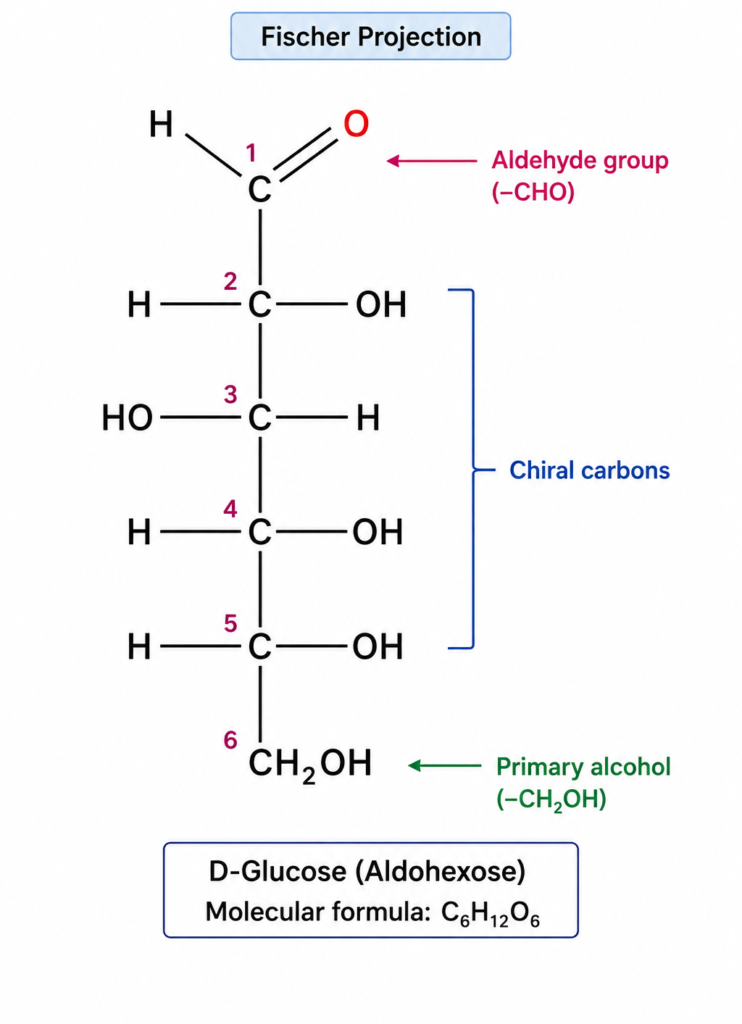
Characteristics
- Contains either an aldehyde group (aldose) or a ketone group (ketose).
- Usually represented by the Fischer projection.
- Less stable than the cyclic form.
- Present in small amounts in aqueous solution.
- Can be converted into the cyclic form.
Examples
- Glucose (aldohexose)
- Fructose (ketohexose)
- Galactose (aldohexose)
2. Cyclic Structure
The cyclic structure is formed when the carbonyl group reacts with a hydroxyl group within the same molecule, producing a ring structure.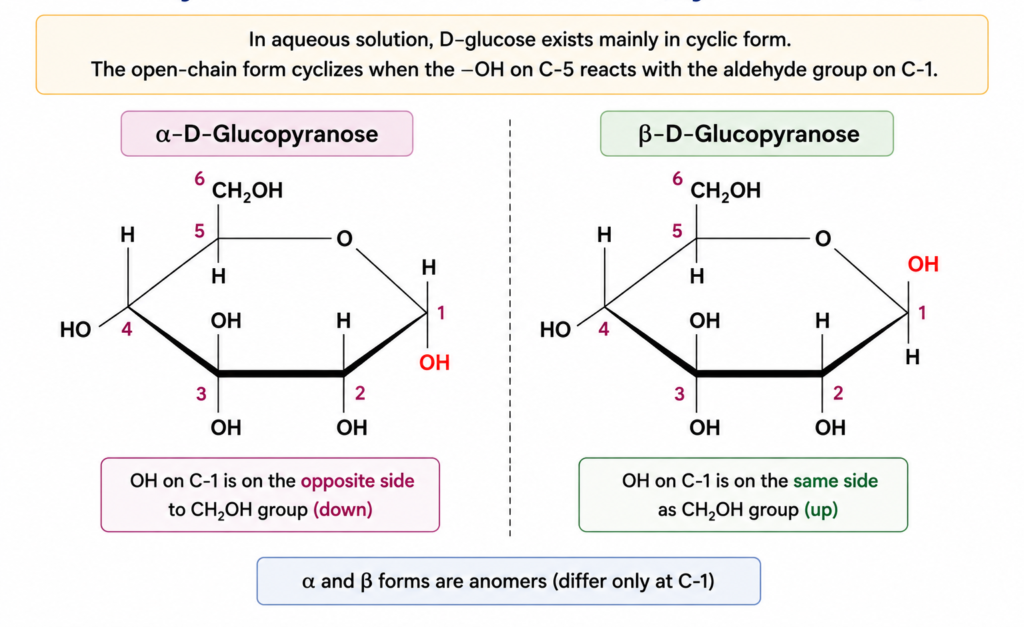
Characteristics
- More stable than the open-chain form.
- Predominant form in aqueous solution.
- Forms either a five-membered ring (furanose) or a six-membered ring (pyranose).
- Produces two isomers called α (alpha) and β (beta) anomers.
Examples
- α-D-Glucopyranose
- β-D-Glucopyranose
- β-D-Fructofuranose
3. Haworth Projection
The Haworth projection is a two-dimensional representation used to show the cyclic structure of carbohydrates.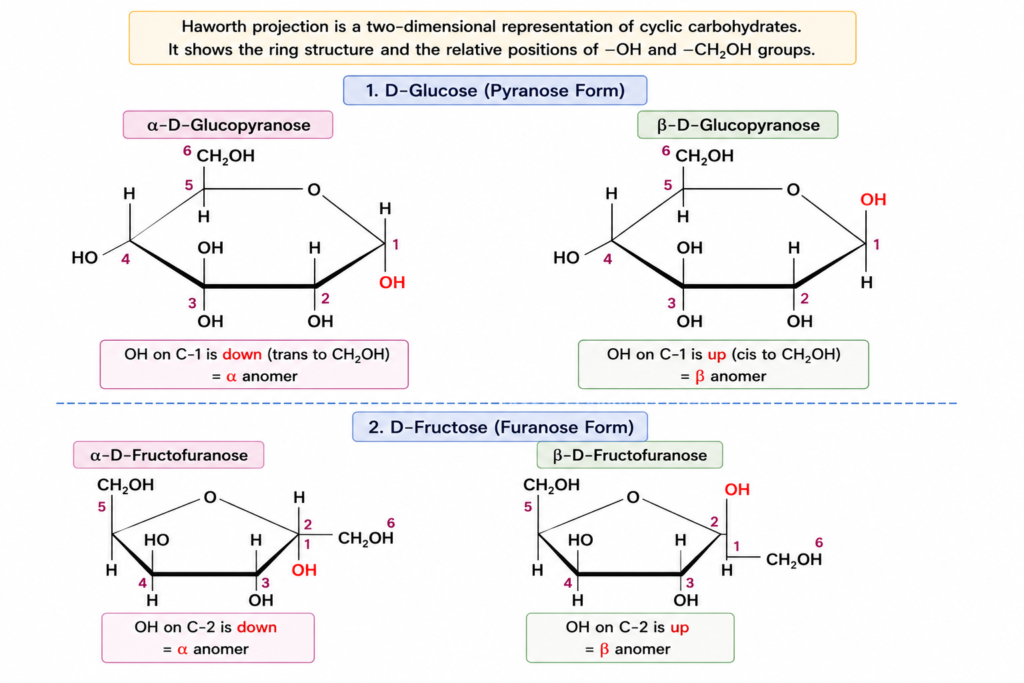
Characteristics
- Represents carbohydrates as ring structures.
- Clearly shows the position of –OH and –CH₂OH groups.
- Used to distinguish α and β anomers.
- Commonly used for glucose, fructose, galactose, and other monosaccharides.
Importance
- Simplifies the study of cyclic carbohydrate structures.
- Helps understand glycosidic bond formation.
- Widely used in biochemistry, nutrition, and carbohydrate metabolism.
Comparison of Carbohydrate Structures
| Feature | Open-Chain Structure | Cyclic Structure |
|---|---|---|
| Shape | Linear | Ring |
| Stability | Less stable | More stable |
| Predominant Form | Minor form | Major form in solution |
| Representation | Fischer projection | Haworth projection |
| Examples | Linear glucose | α-D-Glucose, β-D-Glucose |
Isomerism
- Isomerism is the phenomenon in which compounds have the same molecular formula but differ in the arrangement of atoms or the spatial orientation of their atoms.
- Carbohydrates exhibit various types of isomerism because they contain one or more chiral (asymmetric) carbon atoms and can exist in both open-chain and cyclic forms.
- These isomeric forms differ in their physical properties, chemical reactions, and biological functions.
The five major types of isomerism observed in carbohydrates are:
- D- and L-Isomerism
- Optical Isomerism
- Epimerism
- Anomerism
- Aldose–Ketose (Functional) Isomerism
1. D- and L-Isomerism
D- and L-isomers are stereoisomers that differ in the configuration of the chiral carbon atom farthest from the carbonyl (aldehyde or ketone) group.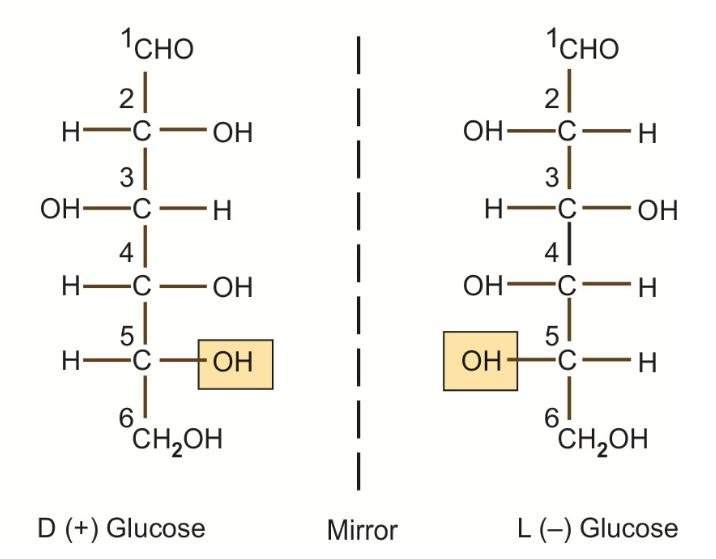
Characteristics
- Determined using the Fischer projection.
- If the –OH group on the reference carbon is on the right, the sugar belongs to the D-series.
- If the –OH group is on the left, the sugar belongs to the L-series.
- Most naturally occurring sugars are D-isomers.
Examples
| D-Isomer | L-Isomer |
|---|---|
| D-Glucose | L-Glucose |
| D-Galactose | L-Galactose |
| D-Fructose | L-Fructose |
Clinical Significance
- D-Glucose is the major energy source in humans.
- L-Glucose is rarely found in nature and is not metabolized efficiently.
2. Optical Isomerism
Optical isomerism is the ability of carbohydrates to rotate plane-polarized light because of the presence of one or more chiral carbon atoms.
Characteristics
- Molecules rotating light to the right (clockwise) are called dextrorotatory (+).
- Molecules rotating light to the left (anticlockwise) are called levorotatory (−).
- Optical rotation is measured using a polarimeter.
- The direction of optical rotation is independent of D- and L-configuration.
Examples
- (+)-Glucose (Dextrorotatory)
- (−)-Fructose (Levorotatory)
Clinical Significance
- Optical rotation helps in the identification and purity testing of carbohydrates in pharmaceutical and clinical laboratories.
3. Epimerism
Epimers are monosaccharides that differ in the configuration of only one chiral carbon atom, excluding the anomeric carbon.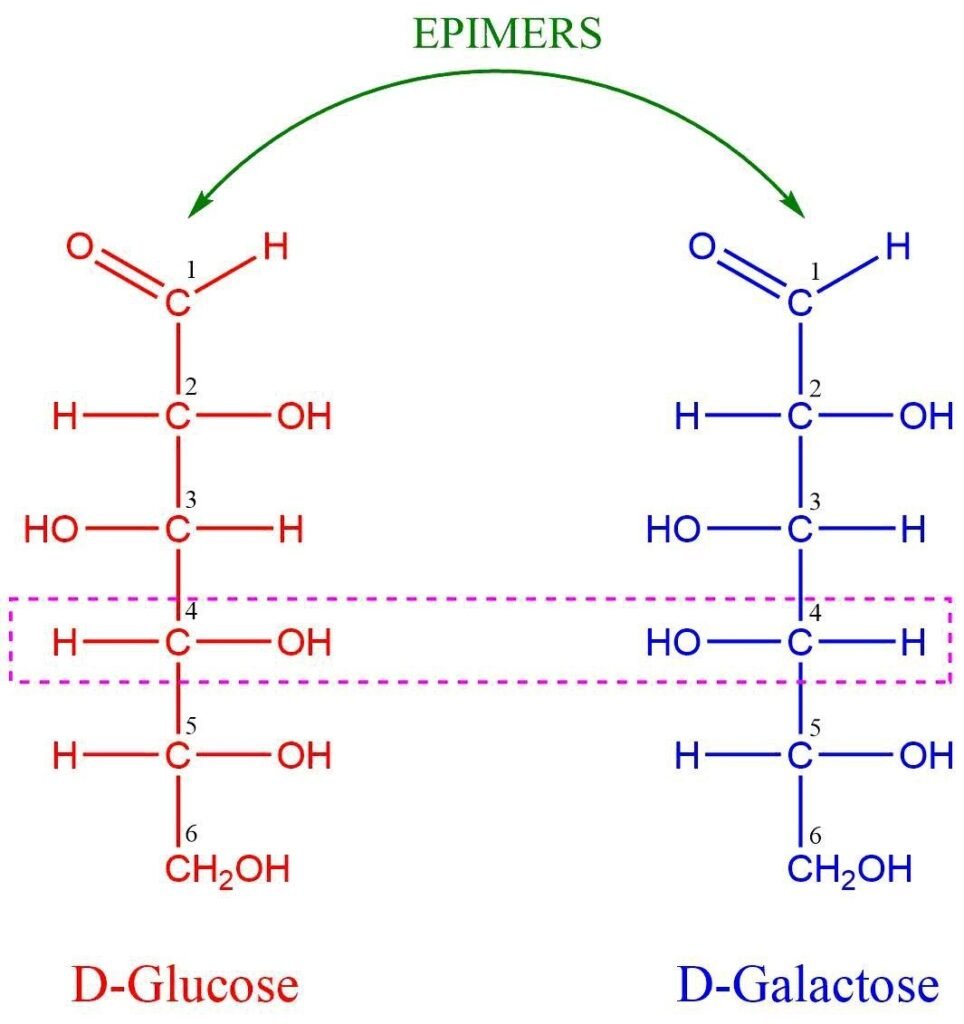
Characteristics
- Same molecular formula.
- Differ at only one specific carbon atom.
- Show different physical and biological properties.
Examples
| Epimer Pair | Carbon at Which They Differ |
|---|---|
| D-Glucose and D-Mannose | C-2 |
| D-Glucose and D-Galactose | C-4 |
Clinical Significance
- Epimers are important intermediates in carbohydrate metabolism.
- Many enzymes specifically recognize only one epimer.
4. Anomerism
Anomers are stereoisomers that differ in the configuration of the anomeric carbon, which is formed when a carbohydrate changes from an open-chain to a cyclic structure.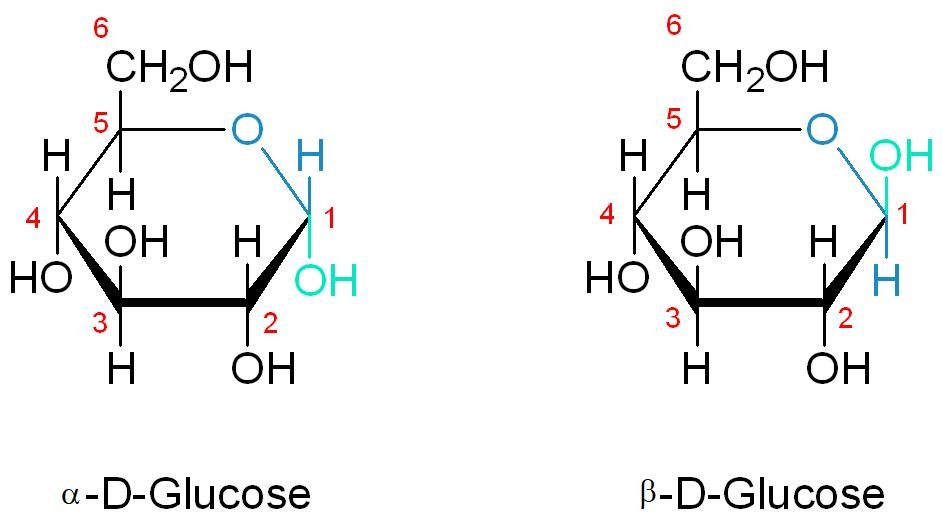
Characteristics
- Present only in the cyclic form.
- In aldoses, the anomeric carbon is C-1.
- In ketoses, the anomeric carbon is C-2.
- Two forms are produced:
- α (Alpha) anomer
- β (Beta) anomer
Examples
| Anomer | Configuration |
|---|---|
| α-D-Glucose | OH group below the ring at C-1 |
| β-D-Glucose | OH group above the ring at C-1 |
Clinical Significance
- α and β forms interconvert in aqueous solution through mutarotation.
- Digestive enzymes often act specifically on one anomer.
5. Aldose–Ketose (Functional) Isomerism
Aldose–ketose isomerism is a type of functional isomerism in which carbohydrates have the same molecular formula but differ in the type of carbonyl group present.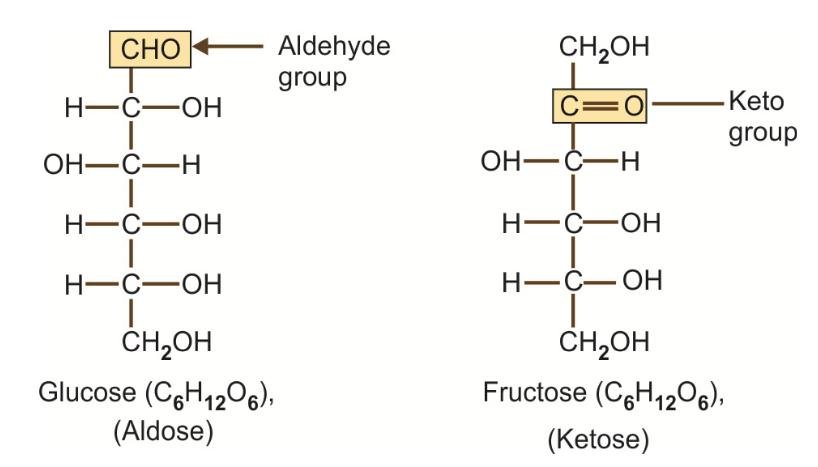
Characteristics
- Aldoses contain an aldehyde (–CHO) group.
- Ketoses contain a ketone (>C=O) group.
- Both have the same molecular formula but different chemical properties.
Examples
| Aldose | Ketose |
|---|---|
| Glucose | Fructose |
| Glyceraldehyde | Dihydroxyacetone |
Clinical Significance
- Aldose–ketose interconversion occurs in several metabolic pathways.
- Important in glycolysis and carbohydrate metabolism.
Physical Properties of Carbohydrates
Carbohydrates possess several physical properties that influence their behavior in biological systems and laboratory analysis.
1. Color and Appearance
- Most carbohydrates are white, crystalline solids.
- Some polysaccharides, such as starch, are amorphous powders.
2. Taste
- Most monosaccharides and disaccharides have a sweet taste.
- Polysaccharides are generally tasteless.
3. Solubility
- Monosaccharides and disaccharides are highly soluble in water.
- Polysaccharides are insoluble or only slightly soluble in water.
- Carbohydrates are generally insoluble in organic solvents such as ether and chloroform.
4. Optical Activity
- Most carbohydrates are optically active because they contain one or more chiral carbon atoms.
- They rotate plane-polarized light either to the right (+) or left (−).
5. Hygroscopic Nature
- Many carbohydrates readily absorb moisture from the atmosphere.
- This property helps maintain moisture in foods and pharmaceutical preparations.
6. Crystallization
- Monosaccharides and many disaccharides readily form crystals from aqueous solutions.
- The crystal shape depends on the type of carbohydrate.
7. Molecular Weight
- Monosaccharides have low molecular weight.
- Polysaccharides have high molecular weight because they contain many sugar units.
8. Diffusibility
- Monosaccharides diffuse rapidly through semipermeable membranes.
- Polysaccharides diffuse slowly or not at all due to their large size.
Chemical Properties of Carbohydrates
- Carbohydrates undergo various chemical reactions due to the presence of aldehyde or ketone groups and multiple hydroxyl (–OH) groups.
- These properties are important in clinical biochemistry and laboratory identification of carbohydrates.
1. Oxidation
- Carbohydrates containing a free aldehyde or ketone group can be oxidized.
- Oxidation converts the aldehyde group into a carboxylic acid.
- This property is shown by reducing sugars.
Examples:
- Benedict’s test
- Fehling’s test
- Tollens’ test
2. Reduction
- Monosaccharides can be reduced to form sugar alcohols (alditols).
Examples:
| Sugar | Sugar Alcohol |
|---|---|
| Glucose | Sorbitol |
| Mannose | Mannitol |
| Xylose | Xylitol |
Clinical Significance:
- Sorbitol accumulation is associated with diabetic complications such as cataracts and neuropathy.
3. Hydrolysis
- Disaccharides and polysaccharides are hydrolyzed into simpler sugars by acids or specific enzymes.
Examples:
- Sucrose → Glucose + Fructose
- Lactose → Glucose + Galactose
- Maltose → Glucose + Glucose
- Starch → Glucose
4. Esterification
- The hydroxyl (–OH) groups of carbohydrates react with acids to form esters.
Examples:
- Glucose-6-phosphate
- Fructose-6-phosphate
Clinical Significance:
- Phosphate esters are important intermediates in glycolysis and other metabolic pathways.
5. Glycoside Formation
- The anomeric hydroxyl group reacts with alcohols or other compounds to form glycosides through a glycosidic bond.
Examples:
- Sucrose
- Maltose
- Lactose
- Cardiac glycosides (e.g., Digoxin)
Clinical Significance:
- Glycosides are important in energy storage, cell signaling, and drug therapy.
Reducing and Non-Reducing Sugars
Carbohydrates are classified as reducing or non-reducing sugars based on the presence or absence of a free aldehyde or ketone group capable of reducing mild oxidizing agents.
1. Reducing Sugars
Reducing sugars are carbohydrates that possess a free aldehyde (-CHO) or free ketone (>C=O) group. They can reduce reagents such as Benedict’s, Fehling’s, and Tollens’ reagents.
Characteristics
- Have a free anomeric carbon.
- Give a positive Benedict’s and Fehling’s test.
- Can be oxidized to form sugar acids.
Examples
- Glucose
- Fructose
- Galactose
- Lactose
- Maltose
2. Non-Reducing Sugars
Non-reducing sugars are carbohydrates that do not possess a free aldehyde or ketone group because the anomeric carbon is involved in a glycosidic bond.
Characteristics
- Do not have a free anomeric carbon.
- Give a negative Benedict’s and Fehling’s test.
- Become reducing sugars only after hydrolysis.
Examples
- Sucrose
- Trehalose
Difference Between Reducing and Non-Reducing Sugars
| Feature | Reducing Sugars | Non-Reducing Sugars |
|---|---|---|
| Free aldehyde/ketone group | Present | Absent |
| Free anomeric carbon | Present | Absent |
| Benedict’s test | Positive | Negative |
| Fehling’s test | Positive | Negative |
| Ability to reduce reagents | Yes | No |
| Examples | Glucose, Fructose, Lactose, Maltose | Sucrose, Trehalose |
Clinical Significance
- Benedict’s test is used to detect reducing sugars in urine, helping in the diagnosis of disorders such as diabetes mellitus and some inherited carbohydrate metabolism disorders.
- Differentiation between reducing and non-reducing sugars is important in clinical biochemistry, food chemistry, and laboratory diagnosis.
Derivatives of Monosaccharides
Monosaccharide derivatives are compounds formed by the chemical modification of monosaccharides. They play important roles in metabolism, cell structure, and physiological functions.
1. Sugar Alcohols (Alditols)
Formed by the reduction of monosaccharides.
Examples:
- Sorbitol
- Mannitol
- Xylitol
Function:
- Used as sweeteners and osmotic agents.
2. Sugar Acids
Formed by the oxidation of monosaccharides.
Examples:
- Gluconic acid
- Glucuronic acid
Function:
- Help in drug detoxification and bilirubin conjugation.
3. Amino Sugars
Formed when a hydroxyl (–OH) group is replaced by an amino (–NH₂) group.
Examples:
- Glucosamine
- Galactosamine
Function:
- Components of cartilage, glycoproteins, and connective tissue.
4. Deoxy Sugars
Formed when a hydroxyl (–OH) group is replaced by hydrogen (H).
Examples:
- Deoxyribose
- Fucose
Function:
- Deoxyribose is an essential component of DNA.
5. Glycosides
Formed by the formation of a glycosidic bond at the anomeric carbon.
Examples:
- Digoxin
- Digitoxin
Function:
- Used as cardiac drugs and found in many plants.
Disaccharides
- Disaccharides are carbohydrates composed of two monosaccharide units joined together by a glycosidic bond.
- The three most important dietary disaccharides are sucrose, lactose, and maltose.
1. Sucrose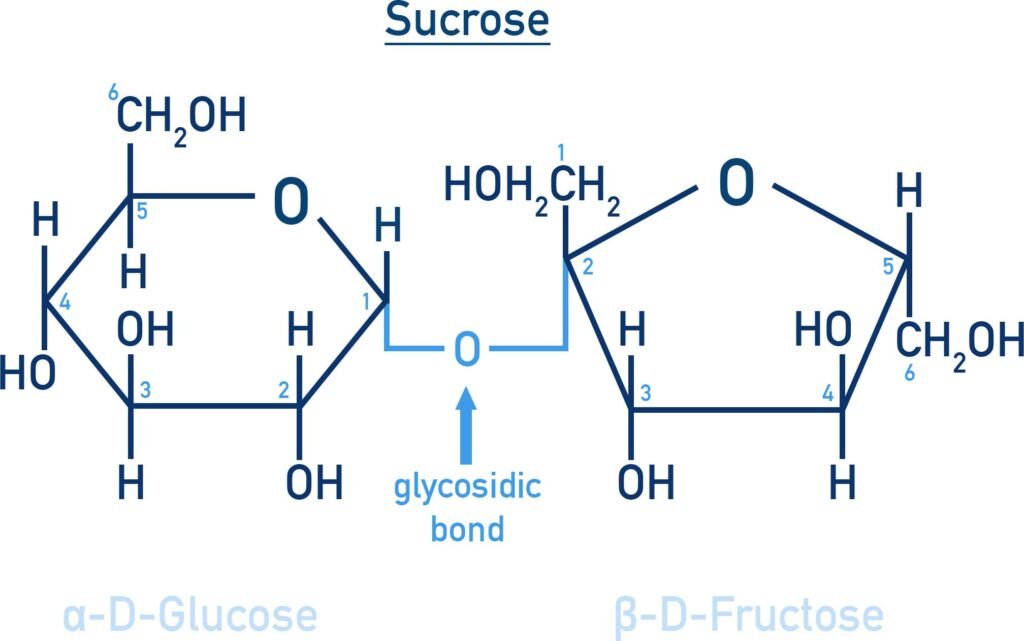
Structure
- Composition: Glucose + Fructose
- Molecular Formula: C₁₂H₂₂O₁₁
- Glycosidic Bond: α(1→2)β
- Formed between the anomeric carbon (C-1) of α-D-glucose and the anomeric carbon (C-2) of β-D-fructose.
- Since both anomeric carbons are involved in the glycosidic bond, sucrose is a non-reducing sugar.
Functions
- Major transport sugar in plants.
- Common table sugar used as a sweetener.
- Provides 4 kcal/g of energy.
- Hydrolyzed by sucrase into glucose and fructose before absorption.
2. Lactose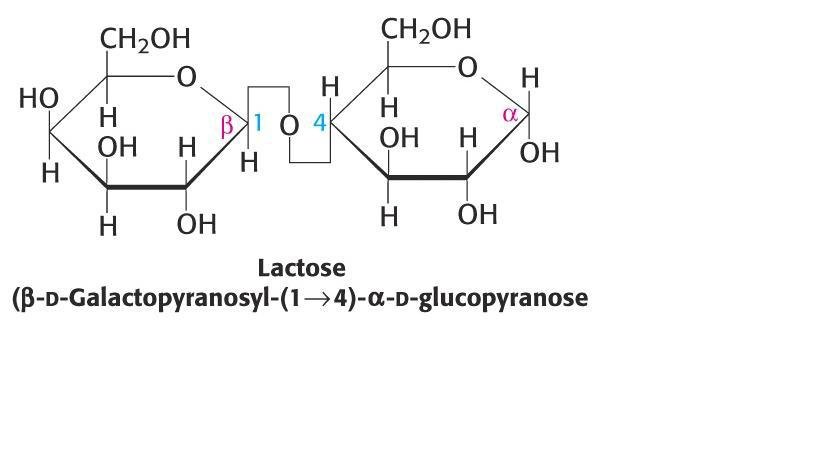
Structure
- Composition: Galactose + Glucose
- Molecular Formula: C₁₂H₂₂O₁₁
- Glycosidic Bond: β(1→4)
- Formed between C-1 of β-D-galactose and C-4 of D-glucose.
- The anomeric carbon of glucose remains free; therefore, lactose is a reducing sugar.
Functions
- Principal carbohydrate of milk.
- Important source of energy for infants.
- Promotes absorption of calcium and phosphorus.
- Hydrolyzed by lactase into glucose and galactose.
3. Maltose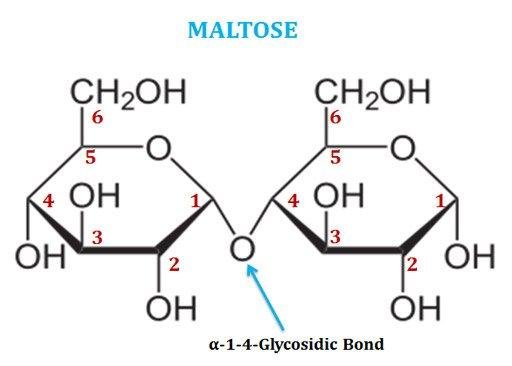
Structure
- Composition: Glucose + Glucose
- Molecular Formula: C₁₂H₂₂O₁₁
- Glycosidic Bond: α(1→4)
- Formed between C-1 of α-D-glucose and C-4 of another D-glucose.
- One anomeric carbon remains free; therefore, maltose is a reducing sugar.
Functions
- Formed during the digestion of starch and glycogen.
- Acts as an intermediate in carbohydrate metabolism.
- Provides energy after hydrolysis by maltase into two glucose molecules.
Polysaccharides
Characteristics
- Contain more than 10 monosaccharide units.
- Have a high molecular weight.
- Usually insoluble or only slightly soluble in water.
- Generally non-sweet in taste.
- May be linear or branched in structure.
- Function mainly as energy storage or structural support.
Classification of Polysaccharides
Polysaccharides are classified into two main groups:
1. Homopolysaccharides
Homopolysaccharides are composed of only one type of monosaccharide.
Examples
| Polysaccharide | Monomer | Main Function |
|---|---|---|
| Starch | Glucose | Energy storage in plants |
| Glycogen | Glucose | Energy storage in animals |
| Cellulose | Glucose | Structural component of plant cell walls |
| Dextran | Glucose | Plasma volume expander |
| Inulin | Fructose | Assessment of glomerular filtration rate (GFR) |
1. Starch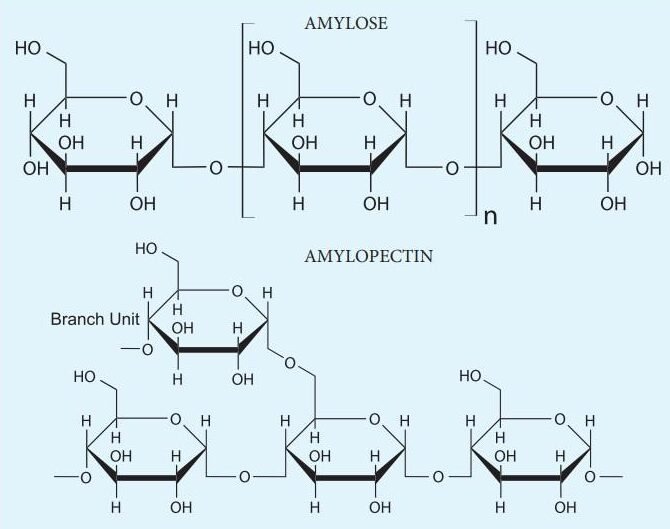
Structure
- Storage polysaccharide of plants.
- Composed entirely of α-D-glucose units.
- Consists of two components:
- Amylose (20–30%) – Linear polymer with α(1→4) glycosidic bonds.
- Amylopectin (70–80%) – Branched polymer with α(1→4) chains and α(1→6) branch points every 24–30 glucose residues.
- Molecular formula: (C₆H₁₀O₅)ₙ
Functions
- Principal storage carbohydrate in plants.
- Major source of dietary carbohydrates in humans.
- Digested by salivary and pancreatic amylase to glucose.
- Provides energy (4 kcal/g).
2. Glycogen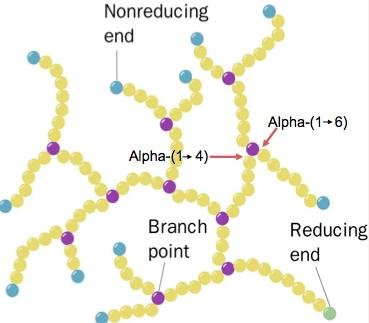
Structure
- Storage polysaccharide of animals.
- Polymer of α-D-glucose.
- Contains α(1→4) glycosidic bonds with α(1→6) branches every 8–12 glucose units.
- More highly branched than amylopectin.
Functions
- Stored mainly in the liver and skeletal muscles.
- Maintains blood glucose during fasting.
- Provides a rapid source of glucose during exercise.
- Serves as the body’s carbohydrate reserve.
3. Cellulose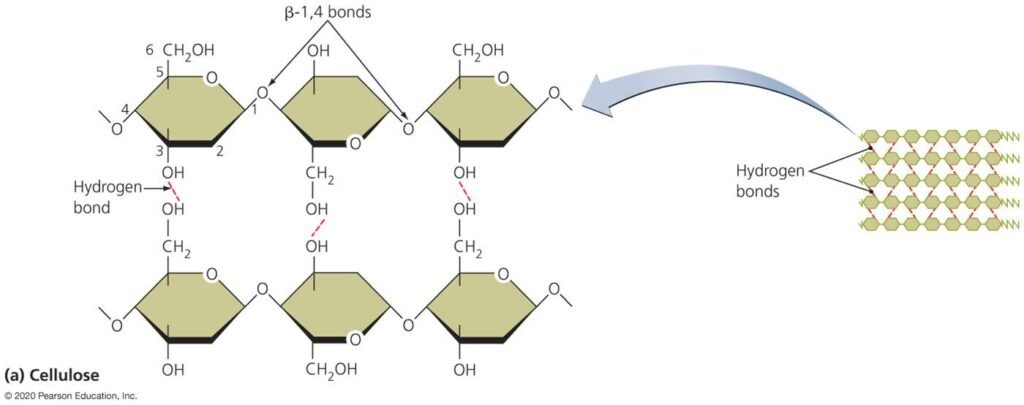
Structure
- Structural polysaccharide of plant cell walls.
- Composed entirely of β-D-glucose units.
- Glucose molecules are linked by β(1→4) glycosidic bonds.
- Forms long, straight, unbranched fibers.
Functions
- Provides strength and rigidity to plant cell walls.
- Acts as dietary fiber in humans.
- Promotes bowel movement and prevents constipation.
- Helps maintain intestinal health.
4. Dextran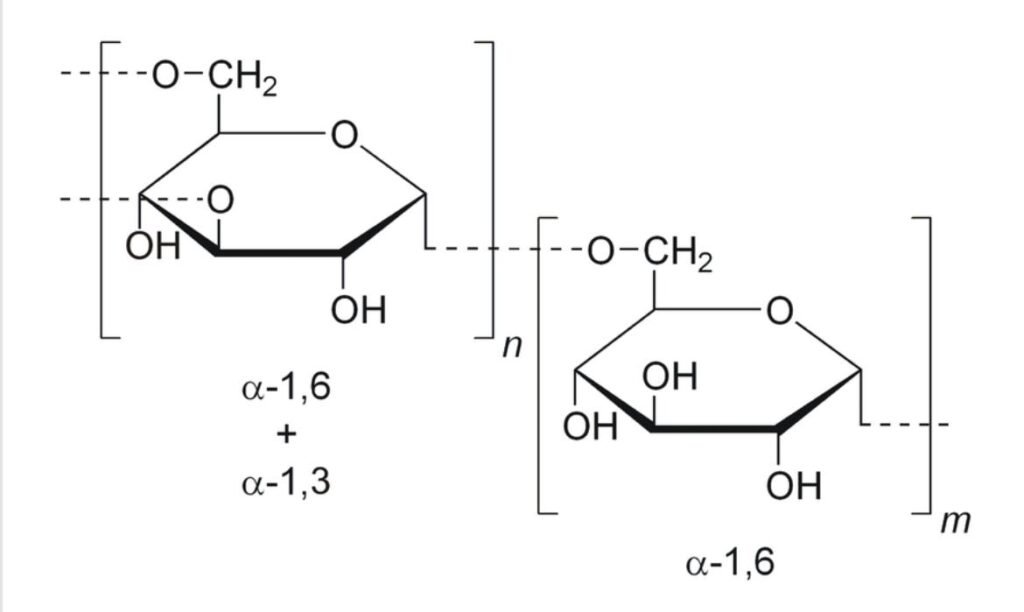
Structure
- Polymer of α-D-glucose.
- Main chain contains α(1→6) glycosidic bonds.
- Side branches are attached through α(1→3) linkages.
Functions
- Used as a plasma volume expander in medicine.
- Used in chromatography and laboratory research.
- Produced by certain bacteria such as Leuconostoc species.
5. Inulin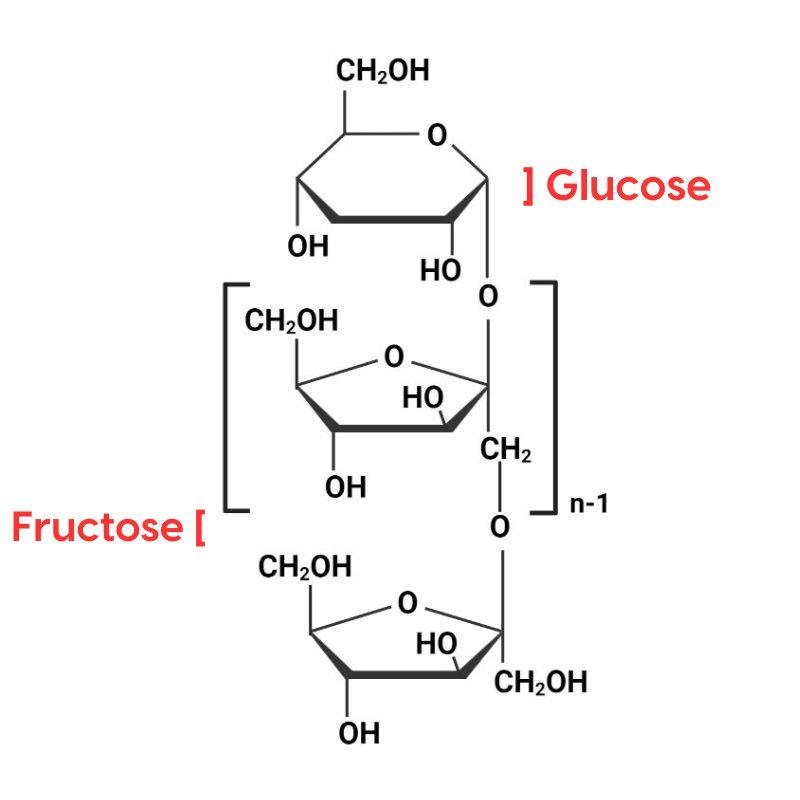
Structure
- Polymer of D-fructose.
- Fructose units are linked by β(2→1) glycosidic bonds.
- Usually ends with one glucose residue.
- Found in chicory root, onion, garlic, and dahlia.
Functions
- Used to measure glomerular filtration rate (GFR).
- Acts as a prebiotic, promoting beneficial intestinal bacteria.
- Improves digestive health.
- Used as dietary fiber in functional foods.
2. Heteropolysaccharides
Heteropolysaccharides are composed of two or more different monosaccharides.
Examples
| Polysaccharide | Major Components | Main Function |
|---|---|---|
| Hyaluronic acid | Glucuronic acid + N-acetylglucosamine | Joint lubrication and connective tissue |
| Chondroitin sulfate | Glucuronic acid + N-acetylgalactosamine | Cartilage structure |
| Heparin | Sulfated polysaccharide | Natural anticoagulant |
| Keratan sulfate | Galactose + N-acetylglucosamine | Cornea and cartilage |
1. Hyaluronic Acid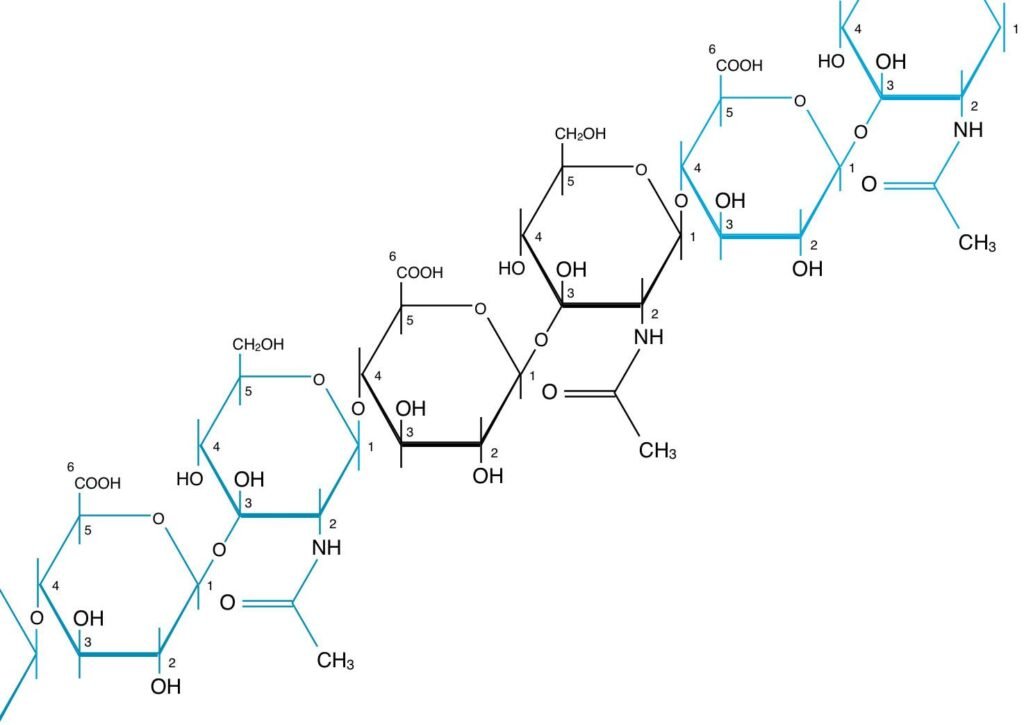
Structure
- Composed of repeating units of:
- D-Glucuronic acid
- N-Acetyl-D-glucosamine
- Linear, unbranched polysaccharide.
- Does not contain sulfate groups.
Functions
- Lubricates joints (synovial fluid).
- Maintains hydration of connective tissue.
- Present in skin, vitreous humor, and umbilical cord.
- Promotes wound healing.
2. Chondroitin Sulfate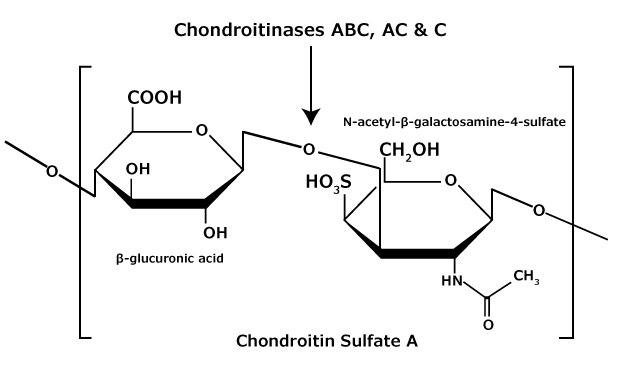
Structure
- Composed of repeating units of:
- D-Glucuronic acid
- N-Acetylgalactosamine sulfate
- Sulfated heteropolysaccharide.
Functions
- Major component of cartilage.
- Provides strength and elasticity to connective tissue.
- Supports joints, tendons, and ligaments.
3. Heparin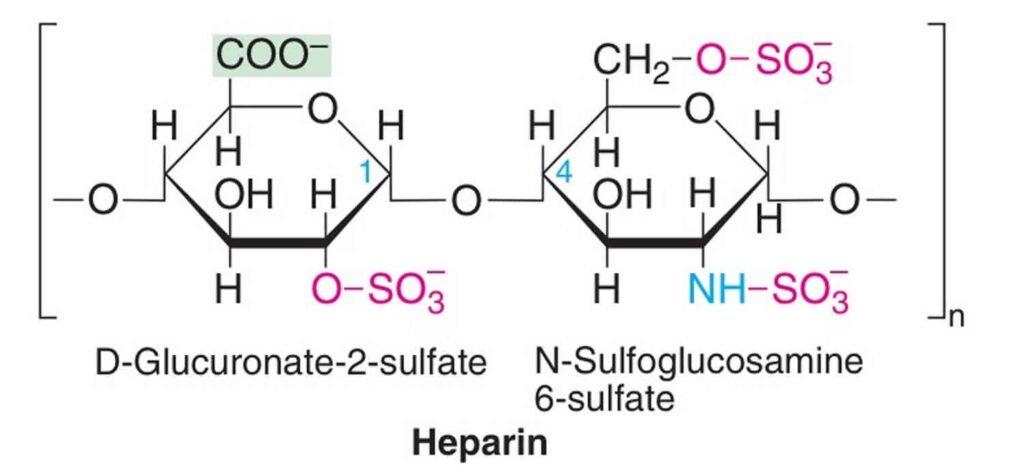
Structure
- Composed of repeating units of:
- Uronic acid
- Glucosamine
- Highly sulfated and strongly negatively charged.
Functions
- Natural anticoagulant.
- Prevents blood clot formation.
- Used clinically during surgery, dialysis, and anticoagulant therapy.
4. Keratan Sulfate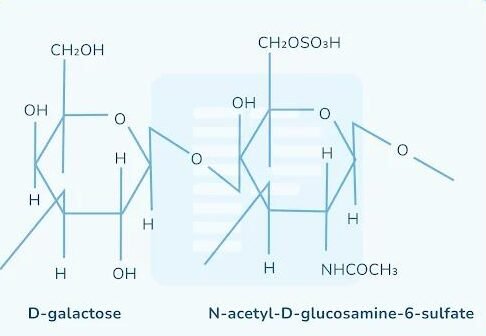
Structure
- Composed of repeating units of:
- Galactose
- N-Acetylglucosamine
- Sulfated heteropolysaccharide.
Functions
- Present in the cornea, cartilage, and intervertebral discs.
- Maintains tissue hydration.
- Provides structural support.