Introduction
- Essential fatty acids (EFAs) are fatty acids that the human body cannot synthesize in sufficient amounts and must obtain through the diet.
- They are essential for normal growth, development, and maintenance of overall health.
- Essential fatty acids are important components of cell membranes and help maintain membrane structure and fluidity.
- They play a significant role in brain development and the normal functioning of the nervous system.
- Essential fatty acids help maintain healthy skin and support the normal functioning of the skin barrier.
- Fatty acids are important components of lipids and can be used by the body as a source of energy.
- They participate in the synthesis of signaling molecules and help regulate inflammation and various cellular processes.
- Essential fatty acid deficiency may affect multiple organ systems, particularly the skin, nervous system, and reproductive system.
Characteristics of EFA
Essential fatty acids (EFAs) possess several important structural and physiological characteristics:
- Polyunsaturated Nature: Essential fatty acids contain two or more carbon–carbon double bonds in their hydrocarbon chains.
- Dietary Requirement: They cannot be synthesized from scratch by the human body and must be obtained through dietary sources.
- Two Major Types: The principal essential fatty acids are linoleic acid (omega-6) and alpha-linolenic acid (omega-3).
- Chemical Structure: They contain a terminal carboxyl group (-COOH), a methyl group (-CH₃), and a hydrocarbon chain with multiple double bonds.
- Cell Membrane Function: They contribute to the structure, fluidity, and normal functioning of cellular membranes.
- Precursor Role: They serve as precursors for longer-chain polyunsaturated fatty acids, including arachidonic acid, eicosapentaenoic acid (EPA), and docosahexaenoic acid (DHA).
- Physiological Importance: They support normal growth, brain development, skin integrity, and reproductive health.
- Role in Cell Signaling: Their derivatives participate in the production of lipid mediators, such as prostaglandins, thromboxanes, and leukotrienes.
- Deficiency Manifestations: Inadequate intake can cause dry, scaly skin, impaired wound healing, and poor growth, particularly in severe deficiency.
- Dietary Sources: Important sources include flaxseeds, chia seeds, walnuts, sunflower seeds, soybean oil, and other foods containing unsaturated fats.
Types of EFA
- Essential fatty acids (EFAs) are classified into two major types based on the position of the first double bond from the methyl (omega) end of the fatty acid chain: omega-3 fatty acids and omega-6 fatty acids.
- Both are essential for normal growth, cellular function, and overall health.
1. Omega-3 Fatty Acids
- Omega-3 fatty acids are polyunsaturated fatty acids (PUFAs) in which the first double bond is located at the third carbon atom from the methyl end of the chain.
- The principal essential omega-3 fatty acid is alpha-linolenic acid (ALA).
Types of Omega-3 Fatty Acids
a. Alpha-Linolenic Acid (ALA)
- ALA is an essential omega-3 fatty acid that must be obtained through the diet.
- It serves as a precursor for the synthesis of longer-chain omega-3 fatty acids.
- It is found in flaxseeds, chia seeds, walnuts, and soybean oil.
b. Eicosapentaenoic Acid (EPA)
- EPA is a long-chain omega-3 fatty acid containing 20 carbon atoms and five double bonds (20:5, n-3).
- It participates in the synthesis of lipid mediators involved in inflammatory responses.
- It is primarily obtained from fatty fish, seafood, and certain algal oils.
- The human body can produce EPA from ALA, but the conversion is limited.
c. Docosahexaenoic Acid (DHA)
- DHA is a long-chain omega-3 fatty acid containing 22 carbon atoms and six double bonds (22:6, n-3).
- It is an important structural component of neuronal and retinal cell membranes.
- It supports normal brain and visual development.
- Dietary sources include fatty fish and algal oils.
- The conversion of ALA to DHA in the human body is generally limited.
Functions of Omega-3 Fatty Acids
- Support brain and nervous system development.
- Contribute to normal retinal function and visual development.
- Participate in the regulation of inflammatory responses.
- Support cardiovascular health.
- Help maintain the structure and function of cell membranes.
2. Omega-6 Fatty Acids
- Omega-6 fatty acids are polyunsaturated fatty acids in which the first double bond is located at the sixth carbon atom from the methyl end of the chain.
- The principal essential omega-6 fatty acid is linoleic acid (LA).
Types of Omega-6 Fatty Acids
a. Linoleic Acid (LA)
- Linoleic acid is an essential omega-6 fatty acid containing 18 carbon atoms and two double bonds (18:2, n-6).
- It cannot be synthesized from scratch by the human body.
- It plays an important role in maintaining the skin’s protective barrier.
- It is found in sunflower oil, safflower oil, soybean oil, corn oil, and various seeds.
b. Gamma-Linolenic Acid (GLA)
- GLA is an omega-6 fatty acid containing 18 carbon atoms and three double bonds (18:3, n-6).
- It is formed from linoleic acid through an enzymatic desaturation reaction.
- It serves as a precursor for dihomo-gamma-linolenic acid (DGLA).
- Dietary sources include evening primrose oil and borage oil.
c. Arachidonic Acid (AA)
- Arachidonic acid is a long-chain omega-6 fatty acid containing 20 carbon atoms and four double bonds (20:4, n-6).
- It can be synthesized from linoleic acid through a series of enzymatic reactions.
- It is an important component of cell membrane phospholipids.
- It serves as a precursor for prostaglandins, thromboxanes, and leukotrienes.
- It is found in meat, eggs, and other animal-derived foods.
Functions of Omega-6 Fatty Acids
- Maintain the integrity and function of cell membranes.
- Support normal skin health and barrier function.
- Contribute to normal growth and development.
- Participate in immune and inflammatory signaling.
- Serve as precursors for biologically active lipid mediators.
3. Difference Between Omega-3 and Omega-6 Fatty Acids
| Feature | Omega-3 Fatty Acids | Omega-6 Fatty Acids |
|---|---|---|
| First double bond | Third carbon from the methyl end | Sixth carbon from the methyl end |
| Principal essential fatty acid | Alpha-linolenic acid (ALA) | Linoleic acid (LA) |
| Important derivatives | EPA and DHA | GLA and arachidonic acid |
| Major dietary sources | Flaxseeds, chia seeds, walnuts, fatty fish | Sunflower oil, soybean oil, sesame seeds |
| Major functions | Brain development, retinal function, and cellular signaling | Skin integrity, cell membrane function, and cellular signaling |
| Deficiency effects | May contribute to impaired growth and neurological or visual abnormalities in severe deficiency | May cause dry, scaly skin and impaired wound healing in severe deficiency |
Important Note: Linoleic acid and alpha-linolenic acid are the two principal essential fatty acids because humans cannot synthesize them from scratch. EPA, DHA, gamma-linolenic acid, and arachidonic acid are important long-chain or intermediate fatty acids that can be formed from essential fatty acid precursors, although the extent of conversion varies.
Chemical Structure of EFA
- Essential fatty acids (EFAs) are polyunsaturated fatty acids (PUFAs) characterized by long hydrocarbon chains containing multiple carbon–carbon double bonds.
- Their chemical structure determines their physical properties and biological functions.
- The two principal essential fatty acids in humans are linoleic acid (omega-6) and alpha-linolenic acid (omega-3).
- Both contain 18 carbon atoms but differ in the number and positions of their double bonds.
1. General Structure of Fatty Acids
A fatty acid consists of three main structural components:
- Carboxyl group (-COOH): The acidic end of the molecule.
- Hydrocarbon chain: A chain of carbon and hydrogen atoms that determines many of the fatty acid’s physical properties.
- Methyl group (-CH₃): The terminal end of the chain, also called the omega (ω) end.
Essential fatty acids contain multiple carbon–carbon double bonds (C=C), making them polyunsaturated.
2. Chemical Structure of Linoleic Acid (Omega-6)
Linoleic acid is an essential omega-6 fatty acid containing 18 carbon atoms and two double bonds.
- Chemical formula: C₁₈H₃₂O₂
- Abbreviation: LA
- Structural notation: 18:2 (Δ⁹,¹²)
- Omega classification: Omega-6 (n-6)
- IUPAC name: (9Z,12Z)-octadeca-9,12-dienoic acid
Condensed structural formula:
CH₃–(CH₂)₄–CH=CH–CH₂–CH=CH–(CH₂)₇–COOH
Key structural features:
- Contains 18 carbon atoms.
- Has two cis double bonds at positions 9 and 12 when counted from the carboxyl end.
- The first double bond is six carbons from the methyl end.
- Serves as the precursor for other omega-6 fatty acids, including arachidonic acid.
3. Chemical Structure of Alpha-Linolenic Acid (Omega-3)
Alpha-linolenic acid (ALA) is an essential omega-3 fatty acid containing 18 carbon atoms and three double bonds.
- Chemical formula: C₁₈H₃₀O₂
- Abbreviation: ALA
- Structural notation: 18:3 (Δ⁹,¹²,¹⁵)
- Omega classification: Omega-3 (n-3)
- IUPAC name: (9Z,12Z,15Z)-octadeca-9,12,15-trienoic acid
Condensed structural formula:
CH₃–CH₂–CH=CH–CH₂–CH=CH–CH₂–CH=CH–(CH₂)₇–COOH
Key structural features:
- Contains 18 carbon atoms.
- Has three cis double bonds at positions 9, 12, and 15 when counted from the carboxyl end.
- The first double bond is three carbons from the methyl end.
- Serves as the precursor for longer-chain omega-3 fatty acids, including EPA and DHA, although conversion to these fatty acids is limited.
4. Difference Between the Chemical Structures
| Feature | Linoleic Acid (LA) | Alpha-Linolenic Acid (ALA) |
|---|---|---|
| Chemical formula | C₁₈H₃₂O₂ | C₁₈H₃₀O₂ |
| Number of carbon atoms | 18 | 18 |
| Number of double bonds | 2 | 3 |
| Double-bond positions (Δ notation) | Δ⁹,¹² | Δ⁹,¹²,¹⁵ |
| Omega classification | Omega-6 | Omega-3 |
| Type | Polyunsaturated fatty acid | Polyunsaturated fatty acid |
| Major metabolic products | Arachidonic acid and other omega-6 fatty acids | EPA, DHA, and other omega-3 fatty acids |
5. Importance of Double Bonds
The double bonds in essential fatty acids influence their structure and biological properties.
- Molecular shape: Cis double bonds introduce bends or kinks in the hydrocarbon chain.
- Membrane fluidity: Polyunsaturated fatty acids contribute to the fluidity and functional properties of cell membranes.
- Metabolic activity: Double-bond positions determine whether a fatty acid belongs to the omega-3 or omega-6 family.
- Biological functions: Essential fatty acids act as precursors for longer-chain fatty acids and bioactive lipid mediators.
Clinical biochemistry significance: Humans lack the enzymes required to introduce double bonds at the omega-3 and omega-6 positions of fatty acids. Therefore, linoleic acid and alpha-linolenic acid must be obtained through the diet.
Functions of EFA
- Essential fatty acids (EFAs), particularly omega-3 and omega-6 fatty acids, perform several important physiological functions in the human body.
- They contribute to cell membrane structure, brain development, skin health, inflammatory regulation, and normal growth.
- They also serve as precursors for biologically active lipid mediators that regulate various cellular processes.
1. Maintenance of Cell Membrane Structure
Essential fatty acids are important components of membrane phospholipids and help maintain normal cellular structure and function.
- Contribute to the structural integrity of cell membranes.
- Influence membrane fluidity and flexibility.
- Support the normal functioning of membrane-associated proteins and receptors.
- DHA is particularly abundant in certain neuronal and retinal membrane phospholipids.
2. Brain and Nervous System Development
Omega-3 fatty acids, especially docosahexaenoic acid (DHA), play an important role in the development and functioning of the nervous system.
- Support normal brain growth and development.
- Contribute to neuronal membrane structure.
- Participate in neuronal signaling and cellular communication.
- Support normal visual development through their role in retinal structure.
- Adequate maternal omega-3 intake is important during pregnancy and lactation.
3. Synthesis of Eicosanoids and Other Lipid Mediators
Essential fatty acids serve as precursors for biologically active lipid mediators involved in several physiological processes.
- Arachidonic acid, an omega-6 fatty acid, is a precursor of prostaglandins, thromboxanes, and leukotrienes.
- EPA, an omega-3 fatty acid, contributes to the production of different lipid mediators.
- These substances participate in inflammatory responses, vascular regulation, and platelet activity.
- Specialized pro-resolving mediators derived from omega-3 fatty acids help regulate the resolution of inflammation.
4. Maintenance of Skin Health
Essential fatty acids, particularly linoleic acid, are important for maintaining the normal structure and function of the skin.
- Help maintain the epidermal barrier.
- Reduce excessive water loss through the skin.
- Support skin hydration and integrity.
- Contribute to normal wound healing.
- Deficiency may cause dry, scaly skin and impaired skin barrier function.
5. Cardiovascular Health
Omega-3 and omega-6 fatty acids contribute to normal cardiovascular function through several mechanisms.
- EPA and DHA can help lower elevated blood triglyceride concentrations.
- Participate in the regulation of vascular function.
- Contribute to cell membrane structure in cardiovascular tissues.
- Influence the production of lipid mediators involved in platelet activity and inflammation.
- The cardiovascular benefits of fatty acids depend on their type, amount, dietary source, and overall dietary pattern.
6. Regulation of Inflammatory Responses
Essential fatty acids participate in the regulation of inflammation through their conversion into biologically active lipid mediators.
- Arachidonic acid gives rise to several prostaglandins, thromboxanes, and leukotrienes.
- EPA and DHA serve as precursors for specialized pro-resolving mediators, including resolvins and protectins.
- These mediators influence inflammatory signaling and the resolution of inflammation.
- Both omega-3 and omega-6 fatty acids have important physiological roles; their effects depend on the specific metabolites produced and the biological context.
7. Growth and Development
Essential fatty acids are necessary for normal growth and development, particularly during infancy and childhood.
- Support normal cellular growth and differentiation.
- Contribute to brain and retinal development.
- Maintain the structural integrity of developing tissues.
- Support normal growth in children.
- Severe deficiency may impair growth and development.
8. Reproductive Health
Essential fatty acids contribute to normal reproductive function and the physiological processes associated with reproduction.
- Support the structure and function of reproductive cell membranes.
- Participate in the synthesis of prostaglandins involved in reproductive processes.
- Contribute to normal fetal development during pregnancy.
- Support the nutritional requirements of pregnancy and lactation.
9. Regulation of Cellular Signaling
Essential fatty acids and their metabolites participate in intracellular and intercellular signaling pathways.
- Serve as precursors for bioactive lipid molecules.
- Influence cellular responses to physiological stimuli.
- Participate in the regulation of immune cell activity.
- Contribute to communication between cells and tissues.
10. Maintenance of Normal Vision
Omega-3 fatty acids, particularly DHA, are important structural components of the retina.
- Contribute to the structure of photoreceptor cell membranes.
- Support normal retinal development.
- Participate in the maintenance of visual function.
- Adequate maternal DHA intake supports fetal and infant visual development.
Metabolism of Essential Fatty Acids
Essential fatty acids undergo elongation and desaturation reactions to produce longer-chain polyunsaturated fatty acids.
Omega-6 Pathway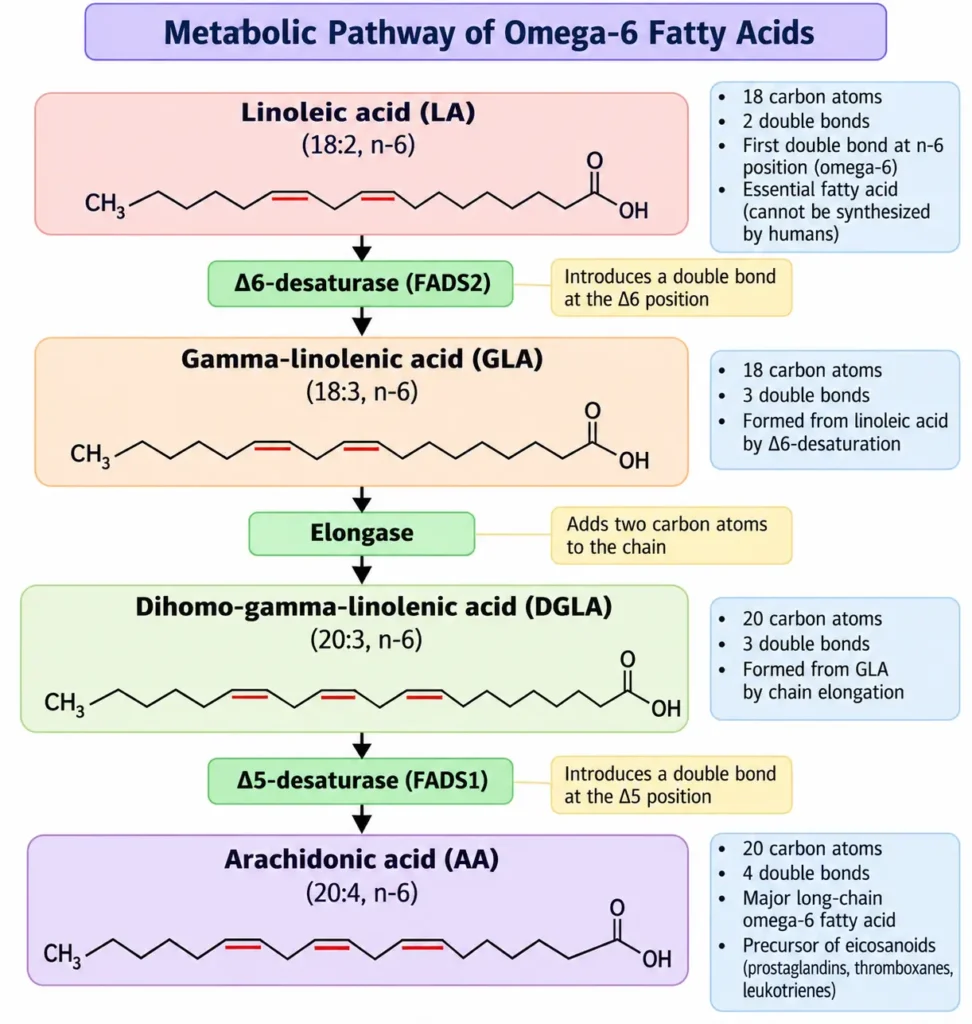
Linoleic acid → Gamma-linolenic acid → Dihomo-gamma-linolenic acid → Arachidonic acid
Omega-3 Pathway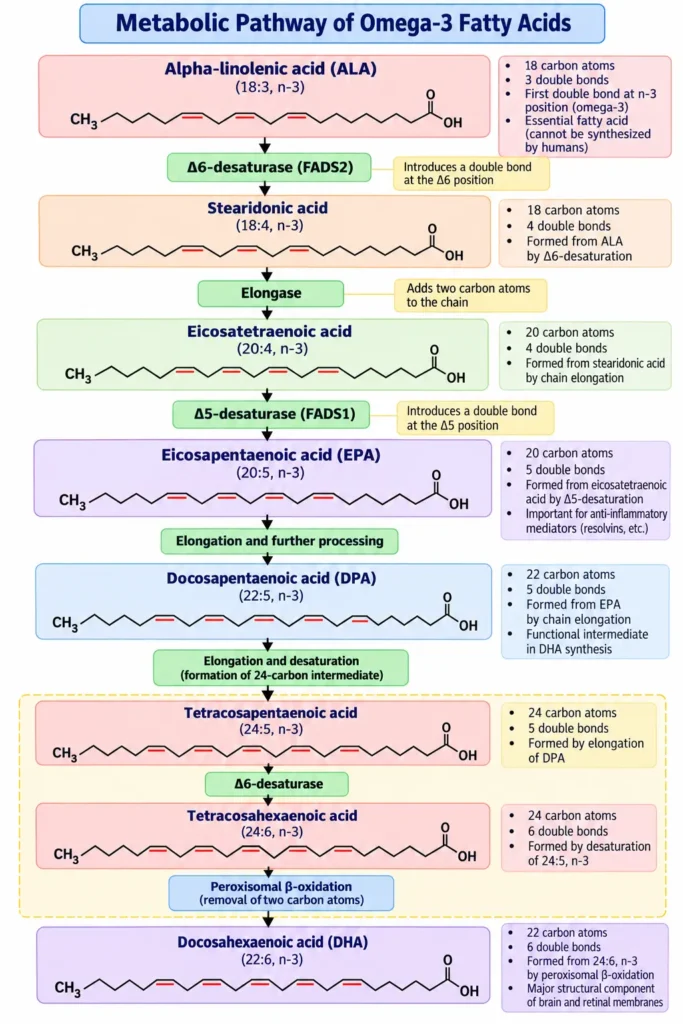
Alpha-linolenic acid → Stearidonic acid → Longer-chain intermediates → EPA → DHA
Dietary Sources of EFAs
- Essential fatty acids (EFAs) cannot be synthesized from scratch by the human body and must be obtained through the diet.
- The two principal essential fatty acids are linoleic acid (LA), an omega-6 fatty acid, and alpha-linolenic acid (ALA), an omega-3 fatty acid.
- A balanced diet containing suitable plant oils, nuts, seeds, and other foods helps provide adequate amounts of these essential nutrients.
1. Dietary Sources of Omega-3 Fatty Acids
- Omega-3 fatty acids include alpha-linolenic acid (ALA), eicosapentaenoic acid (EPA), and docosahexaenoic acid (DHA).
A. Plant Sources of Alpha-Linolenic Acid (ALA)
Plant foods are important sources of ALA, particularly for individuals following a vegetarian diet.
- Flaxseeds (Alsi): One of the richest plant sources of ALA.
- Chia seeds: Provide ALA and dietary fibre.
- Walnuts: Contain ALA and other beneficial nutrients.
- Hemp seeds: Provide ALA along with protein and other nutrients.
- Soybean oil: Contains both omega-3 and omega-6 fatty acids.
- Canola oil: Supplies ALA and linoleic acid.
B. Marine Sources of EPA and DHA
Fatty fish and certain seafood provide preformed EPA and DHA.
- Salmon
- Sardines
- Mackerel
- Herring
- Anchovies
- Tuna
These long-chain omega-3 fatty acids contribute to normal brain, retinal, and cardiovascular function.
Note: The conversion of ALA into EPA is limited, and conversion into DHA is generally even more limited. Therefore, plant sources of ALA do not necessarily provide the same amounts of EPA and DHA as fatty fish or algal oils.
C. Algal Sources
- Algal oil: A vegetarian-friendly source of preformed DHA and, depending on the product, EPA.
- Certain algae and microalgae are natural sources of long-chain omega-3 fatty acids.
Algal oil may be useful for individuals who do not consume fish.
2. Dietary Sources of Omega-6 Fatty Acids
Linoleic acid (LA) is the principal essential omega-6 fatty acid. It is widely available in vegetable oils, nuts, and seeds.
A. Vegetable Oils
Vegetable oils are important dietary sources of linoleic acid.
- Sunflower oil
- Safflower oil
- Soybean oil
- Corn oil
- Sesame oil
- Cottonseed oil
The amount of linoleic acid varies according to the type and composition of the oil.
B. Nuts and Seeds
Several nuts and seeds provide substantial amounts of omega-6 fatty acids.
- Sunflower seeds
- Sesame seeds
- Pumpkin seeds
- Peanuts
- Walnuts
- Almonds
- Pine nuts
These foods also provide protein, vitamins, minerals, and other beneficial nutrients.
C. Animal Sources
- Arachidonic acid is a long-chain omega-6 fatty acid that can be synthesized from linoleic acid in the body.
Dietary sources include:
- Eggs
- Meat
- Poultry
- Certain fish and seafood
These foods supply preformed arachidonic acid in varying amounts.
Laboratory Findings
- Laboratory investigations help identify essential fatty acid deficiency (EFAD) by assessing fatty acid concentrations and their relative proportions in plasma or other biological samples.
1. Plasma Fatty Acid Profile
- Decreased concentrations of essential fatty acids, particularly linoleic acid (omega-6).
- Reduced arachidonic acid concentrations may occur in significant deficiency.
- Altered proportions of omega-3 and omega-6 fatty acids.
2. Increased Mead Acid Concentration
- Mead acid (20:3, n-9) is an omega-9 fatty acid.
- Its production increases when essential fatty acid availability is inadequate.
- Elevated Mead acid is an important biochemical indicator of essential fatty acid deficiency.
3. Increased Triene-to-Tetraene Ratio
- The triene-to-tetraene ratio is calculated by dividing Mead acid by arachidonic acid.
- Formula: Triene-to-tetraene ratio = Mead acid (20:3, n-9) / Arachidonic acid (20:4, n-6).
- An elevated ratio supports the diagnosis of essential fatty acid deficiency.
- A ratio above approximately 0.2 has traditionally been used as a diagnostic indicator, although the threshold varies according to the laboratory method and patient population.
4. Altered Cell Membrane Fatty Acid Composition
- Reduced incorporation of essential fatty acids into membrane phospholipids.
- Changes in membrane lipid composition and function.
- Altered availability of precursors for biologically active lipid mediators.
5. Other Biochemical Findings
- Abnormalities in the fatty acid profile may vary according to the severity and duration of deficiency.
- Other laboratory abnormalities may reflect the underlying condition, such as malnutrition or fat malabsorption, rather than essential fatty acid deficiency itself.
Clinical Significance
- Essential fatty acids (EFAs), particularly omega-3 and omega-6 fatty acids, play important roles in human health and clinical medicine.
- They contribute to cell membrane structure, neurological development, cardiovascular function, inflammatory regulation, and skin integrity.
- Their deficiency or altered metabolism may have important clinical consequences.
1. Cardiovascular Diseases
- Omega-3 fatty acids, particularly EPA and DHA, can reduce elevated blood triglyceride concentrations.
- They participate in the regulation of vascular function and inflammatory signaling.
- Adequate intake of unsaturated fatty acids supports a healthy dietary pattern.
- The effects of omega-3 supplementation on cardiovascular outcomes depend on the preparation, dose, and clinical condition.
2. Brain and Neurological Development
- DHA is an important structural component of neuronal membranes.
- It supports normal brain and nervous system development.
- Adequate maternal omega-3 intake is important during pregnancy and lactation.
- Altered fatty acid availability may affect normal neurological development, particularly during early life.
3. Inflammatory and Immune Responses
- Arachidonic acid serves as a precursor for prostaglandins, thromboxanes, and leukotrienes.
- EPA and DHA contribute to the formation of specialized pro-resolving mediators, including resolvins and protectins.
- These lipid mediators participate in inflammatory signaling and the resolution of inflammation.
- The effects depend on the specific fatty acid, its metabolites, and the physiological context.
4. Skin Health
- Linoleic acid is essential for maintaining the epidermal barrier.
- It helps reduce excessive water loss through the skin.
- Essential fatty acid deficiency can cause dry, scaly dermatitis.
- Adequate intake supports normal skin integrity and wound healing.
5. Pregnancy and Fetal Development
- DHA contributes to fetal brain and retinal development.
- Essential fatty acids support normal cellular growth and development.
- Adequate maternal nutrition is important during pregnancy and lactation.
- Dietary recommendations should be followed according to individual nutritional needs and local health guidance.
6. Essential Fatty Acid Deficiency
- Deficiency may develop due to inadequate dietary intake, severe fat malabsorption, or prolonged inappropriate parenteral nutrition.
- Common manifestations include dry, scaly skin, poor wound healing, and impaired growth.
- Plasma fatty acid analysis can help identify biochemical abnormalities.
- An increased triene-to-tetraene ratio supports the diagnosis in an appropriate clinical setting.
7. Metabolic Health
- Essential fatty acids participate in cell signaling and lipid metabolism.
- They contribute to the regulation of triglyceride concentrations, particularly through the actions of EPA and DHA.
- Altered fatty acid metabolism may occur in several metabolic disorders.
- Their clinical effects depend on the specific fatty acid and the overall dietary pattern.
8. Reproductive Health
- Essential fatty acids contribute to the structure and function of reproductive cell membranes.
- Arachidonic acid-derived prostaglandins participate in reproductive physiology.
- Adequate essential fatty acid intake supports normal growth and reproductive function.
9. Clinical Nutrition and Parenteral Nutrition
- Essential fatty acids must be supplied through appropriate nutritional formulations when oral or enteral intake is insufficient.
- Patients receiving prolonged parenteral nutrition require an adequate supply of essential fatty acids.
- Monitoring is important in patients at risk of nutritional deficiency or fat malabsorption.
- Appropriate nutritional support helps prevent deficiency-related complications.
10. Clinical Laboratory Assessment
- Plasma fatty acid profiling can assess the concentrations of individual fatty acids.
- Mead acid may increase during essential fatty acid deficiency.
- The triene-to-tetraene ratio is a useful biochemical indicator.
- Laboratory results should be interpreted alongside clinical findings, dietary history, and underlying medical conditions.