Introduction
- Cholesterol is a lipid belonging to the sterol group and is essential for the normal functioning of the human body.
- It is an important component of animal cell membranes and helps maintain membrane structure and fluidity.
- The chemical formula of cholesterol is C₂₇H₄₆O.
- Cholesterol is obtained from two sources: endogenous synthesis within the body and dietary intake from animal-derived foods.
- The liver is the major site of cholesterol synthesis, although the intestine and other tissues can also produce it.
- Cholesterol is required for the synthesis of steroid hormones, bile acids, and vitamin D through its precursor, 7-dehydrocholesterol.
- Since cholesterol is insoluble in water, it is transported through the blood by lipoproteins such as LDL and HDL.
- Cholesterol metabolism involves its synthesis, absorption, transport, utilization, regulation, and elimination from the body.
- The enzyme HMG-CoA reductase plays a key role in cholesterol synthesis and is an important target of statin drugs.
- Abnormal cholesterol metabolism can contribute to atherosclerosis, coronary artery disease, and other metabolic disorders.
Structure 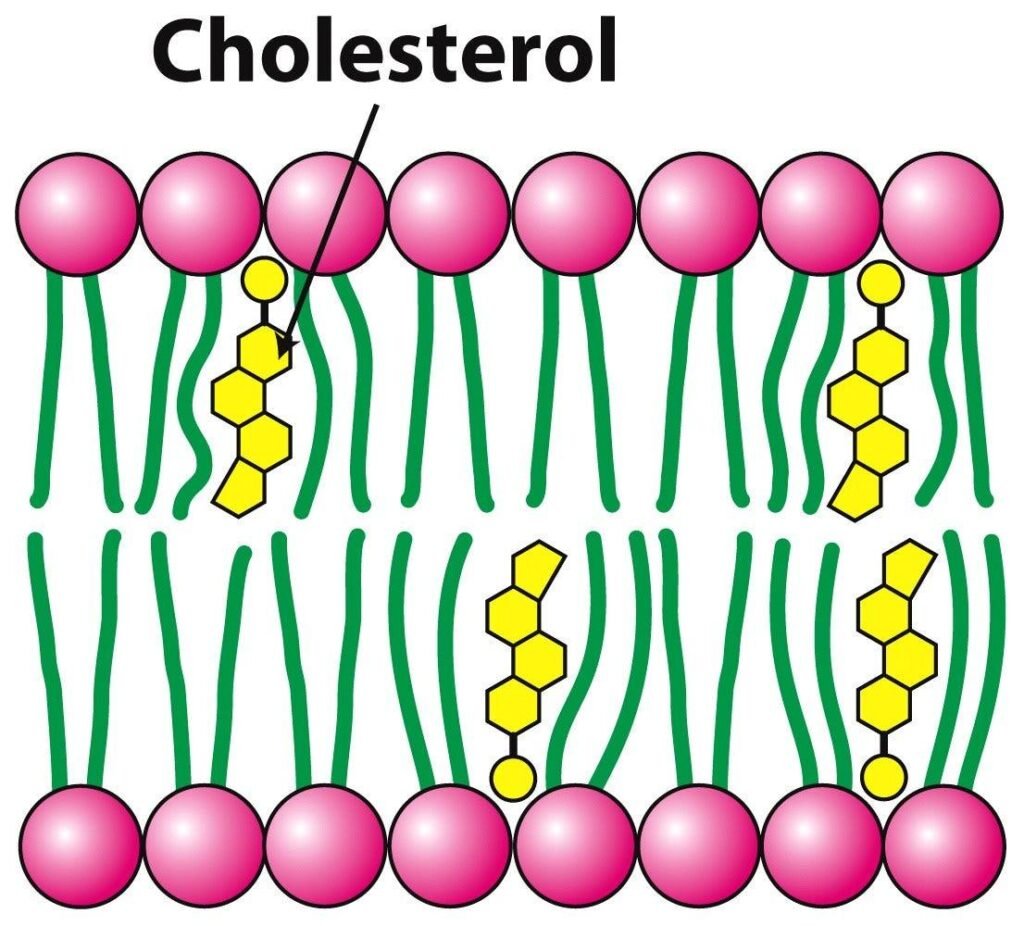
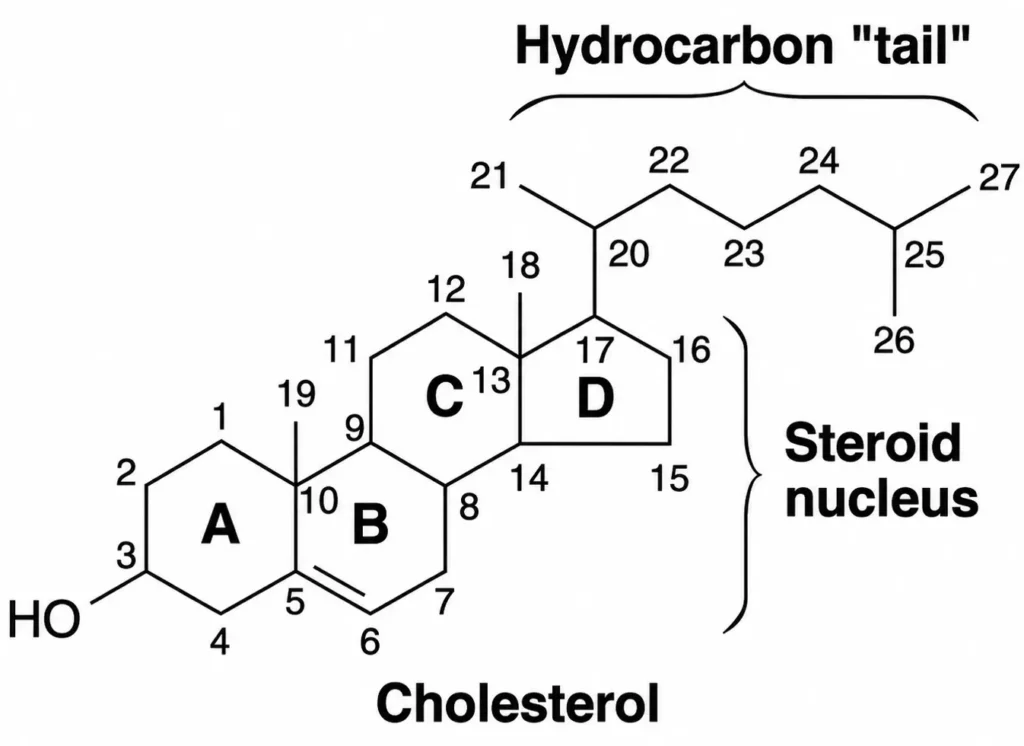
- Cholesterol is a 27-carbon sterol with the molecular formula C₂₇H₄₆O.
- Its structure consists of four fused hydrocarbon rings, collectively known as the steroid nucleus.
- The steroid nucleus contains three six-membered rings (A, B, and C) and one five-membered ring (D).
- A hydroxyl group (–OH) is present at carbon 3, making cholesterol slightly polar.
- A double bond is present between carbon 5 and carbon 6 (C5–C6).
- A branched hydrocarbon side chain is attached to carbon 17 of the steroid nucleus.
- Cholesterol contains both a hydrophilic hydroxyl group and a large hydrophobic region, making it an amphipathic molecule.
- Due to its amphipathic nature, cholesterol becomes incorporated into cell membranes and helps regulate membrane fluidity and stability.
- Cholesterol can be converted into cholesterol esters by attaching a fatty acid to its hydroxyl group. These esters are more hydrophobic and are suitable for storage and transport within lipoproteins.
- The rigid steroid nucleus and hydrophobic side chain are important for cholesterol’s structural and biological functions.
Sources
Cholesterol in the human body comes from two major sources: endogenous synthesis and dietary intake.
- Endogenous Synthesis: The body synthesizes cholesterol from acetyl-CoA, mainly in the liver. Other tissues, including the intestine, adrenal glands, and reproductive organs, can also synthesize cholesterol.
- Dietary Cholesterol: Cholesterol is obtained from animal-derived foods, such as egg yolk, meat, fish, and dairy products.
- Liver: The liver is a major site of cholesterol synthesis and plays a central role in cholesterol metabolism, transport, and elimination.
- Intestine: The small intestine absorbs dietary cholesterol and cholesterol present in bile. Intestinal cells can also synthesize cholesterol.
- Peripheral Tissues: Cells in various tissues synthesize cholesterol according to their requirements, particularly for cell membrane formation and other cellular functions.
- Adrenal Glands and Gonads: These organs use cholesterol to synthesize steroid hormones, including cortisol, aldosterone, testosterone, estrogen, and progesterone.
- Recycling Through Bile: Cholesterol secreted into bile can enter the intestine and be reabsorbed through enterohepatic circulation.
- Regulation of Sources: Dietary cholesterol absorption and endogenous synthesis are regulated by the body’s cholesterol requirements. Increased dietary intake may reduce synthesis in some individuals, but the response varies.
Important point: Plant-derived foods do not naturally contain cholesterol, although they contain plant sterols called phytosterols.
Functions
Cholesterol performs several essential structural and metabolic functions in the human body.
- Cell Membrane Structure: Cholesterol is an important component of animal cell membranes. It helps maintain membrane fluidity, stability, and permeability.
- Steroid Hormone Synthesis: Cholesterol serves as a precursor for steroid hormones, including cortisol, aldosterone, testosterone, estrogen, and progesterone.
- Bile Acid Formation: The liver converts cholesterol into primary bile acids, including cholic acid and chenodeoxycholic acid. Bile acids help digest and absorb dietary fats.
- Vitamin D Synthesis: Cholesterol metabolism provides 7-dehydrocholesterol, which is converted into vitamin D₃ in the skin following exposure to ultraviolet B radiation.
- Nervous System Function: Cholesterol is abundant in the brain and myelin sheaths. It supports neuronal membrane structure and normal nerve function.
- Cellular Signalling: Cholesterol influences the organization of cell membranes and helps regulate the activity of certain membrane proteins involved in cellular signalling.
- Lipoprotein Formation: Cholesterol is transported in the blood as a component of lipoproteins, which deliver lipids between the intestine, liver, and peripheral tissues.
- Cholesterol Homeostasis: Cholesterol participates in a regulated metabolic system involving synthesis, absorption, transport, storage, and elimination, helping maintain an appropriate supply for cellular needs.
Biosynthesis
- Cholesterol biosynthesis is the process by which the body produces cholesterol from acetyl-CoA.
- It occurs mainly in the liver and takes place in the cytoplasm and smooth endoplasmic reticulum.
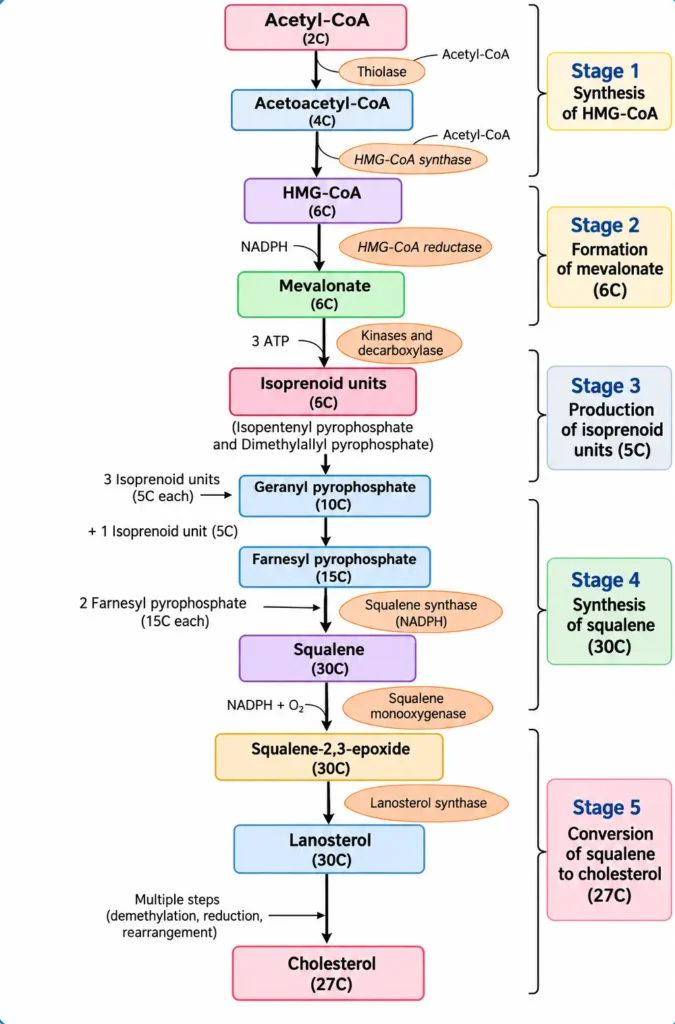
The synthesis of cholesterol occurs in five simple stages.
Stage 1: Synthesis of HMG-CoA
- Cholesterol synthesis begins with a molecule called acetyl-CoA.
- Two molecules of acetyl-CoA combine to form acetoacetyl-CoA.
- One more molecule of acetyl-CoA is added to form HMG-CoA.
- Enzymes involved: Thiolase and HMG-CoA synthase.
Remember: Acetyl-CoA → Acetoacetyl-CoA → HMG-CoA
Stage 2: Formation of Mevalonate (6C)
- HMG-CoA is converted into mevalonate by the enzyme HMG-CoA reductase.
- This reaction requires NADPH.
- HMG-CoA reductase is the rate-limiting enzyme of cholesterol synthesis.
- Statin drugs inhibit this enzyme and reduce cholesterol synthesis.
Remember: HMG-CoA → Mevalonate
Stage 3: Formation of Isoprenoid Units (5C)
- Mevalonate undergoes several reactions that require ATP.
- It is converted into activated five-carbon units.
- The two important units are isopentenyl pyrophosphate (IPP) and dimethylallyl pyrophosphate (DMAPP).
- These units act as the basic building blocks of cholesterol.
Remember: Mevalonate → Isoprenoid units (5C)
Stage 4: Synthesis of Squalene (30C)
- Six five-carbon isoprenoid units are used to form squalene.
- These units combine step by step to form larger molecules.
- Two molecules of farnesyl pyrophosphate (15C each) combine to form squalene (30C).
- The enzyme involved is squalene synthase.
Remember: 6 × 5C units → Squalene (30C)
Stage 5: Conversion of Squalene into Cholesterol (27C)
- Squalene is first converted into squalene-2,3-epoxide.
- It is then converted into lanosterol, which forms the steroid ring structure.
- Lanosterol undergoes several enzymatic reactions.
- Finally, cholesterol containing 27 carbon atoms is produced.
Remember: Squalene (30C) → Lanosterol (30C) → Cholesterol (27C)
Regulation of Cholesterol Synthesis
- Cholesterol synthesis is regulated to maintain an adequate supply of cholesterol for cell membranes, steroid hormone production, and bile acid formation.
- The liver plays a major role in this regulation.
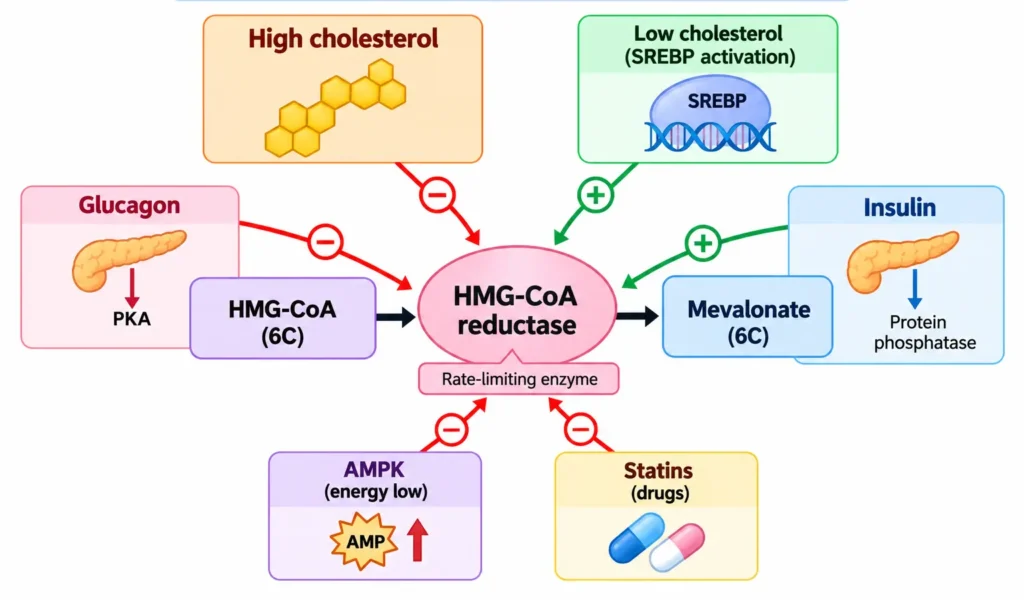
- The main regulatory enzyme is HMG-CoA reductase, which catalyses the conversion of HMG-CoA into mevalonate.
1. Feedback Inhibition by Cholesterol
- When intracellular cholesterol levels increase, the liver reduces cholesterol synthesis.
- High cholesterol levels suppress the expression and activity of HMG-CoA reductase.
- When cholesterol levels decrease, the liver increases cholesterol synthesis.
- This mechanism helps maintain cholesterol balance in the body.
2. Regulation by HMG-CoA Reductase
- HMG-CoA reductase is the rate-limiting enzyme of cholesterol synthesis.
- Its activity determines the rate at which cholesterol is produced.
- The enzyme is regulated by cholesterol levels, hormonal signals, and its phosphorylation state.
- Statins inhibit this enzyme and reduce cholesterol synthesis.
3. Regulation by SREBP
- SREBP stands for sterol regulatory element-binding protein.
- When cellular cholesterol levels are low, SREBP becomes activated.
- Activated SREBP enters the nucleus and increases the expression of genes involved in cholesterol synthesis and uptake.
- When cholesterol levels are high, SREBP activation decreases, reducing cholesterol synthesis.
4. Hormonal Regulation
Hormones influence cholesterol synthesis by regulating HMG-CoA reductase activity.
- Insulin: Generally promotes cholesterol synthesis by increasing HMG-CoA reductase activity.
- Glucagon: Generally reduces cholesterol synthesis, particularly through changes in enzyme phosphorylation.
- These effects help coordinate cholesterol metabolism with the body’s nutritional and metabolic state.
5. Regulation by Phosphorylation and Dephosphorylation
- HMG-CoA reductase is regulated by reversible phosphorylation.
- Phosphorylation: Inactivates the enzyme and decreases cholesterol synthesis.
- Dephosphorylation: Activates the enzyme and increases cholesterol synthesis.
- AMP-activated protein kinase (AMPK) phosphorylates and inhibits HMG-CoA reductase when cellular energy is low.
6. Regulation by Statins
- Statins are drugs that inhibit HMG-CoA reductase.
- They reduce the conversion of HMG-CoA into mevalonate.
- This decreases cholesterol synthesis in the liver.
- Reduced hepatic cholesterol also promotes increased LDL receptor expression, helping the liver remove more LDL cholesterol from the blood.
Transport of Cholesterol
- Cholesterol is a lipid that is insoluble in water. Therefore, it cannot circulate freely in blood and is transported by lipoproteins.
- These particles carry cholesterol and other lipids between the intestine, liver, and peripheral tissues.
- The major lipoproteins involved in cholesterol transport are chylomicrons, VLDL, IDL, LDL, and HDL.
1. Chylomicrons
- Chylomicrons are formed in the intestinal cells after the absorption of dietary fats.
- They transport dietary triglycerides and cholesterol from the intestine to peripheral tissues and the liver.
- Their remnants are taken up mainly by the liver.
2. Very-Low-Density Lipoprotein (VLDL)
- VLDL is produced by the liver.
- It transports triglycerides and cholesterol from the liver to peripheral tissues.
- As triglycerides are removed, VLDL is converted into intermediate-density lipoprotein (IDL).
3. Intermediate-Density Lipoprotein (IDL)
- IDL is formed during the metabolism of VLDL.
- It carries cholesterol and remaining triglycerides.
- IDL is either taken up by the liver or further converted into LDL.
4. Low-Density Lipoprotein (LDL)
- LDL is formed mainly from IDL during lipoprotein metabolism.
- It transports cholesterol from the liver to peripheral tissues.
- Cells take up LDL through LDL receptors.
- Excess LDL cholesterol can contribute to cholesterol accumulation in arterial walls.
Important: LDL is commonly called bad cholesterol because elevated LDL cholesterol is associated with an increased risk of atherosclerotic cardiovascular disease.
5. High-Density Lipoprotein (HDL)
- HDL is produced by the liver and intestine.
- It collects excess cholesterol from peripheral tissues and transports it toward the liver.
- This process is called reverse cholesterol transport.
- The liver can reuse cholesterol or eliminate it through bile and conversion into bile acids.
Important: HDL is commonly called good cholesterol because it participates in reverse cholesterol transport.
Degradation of Cholesterol
- Cholesterol cannot be completely degraded into carbon dioxide and water in humans.
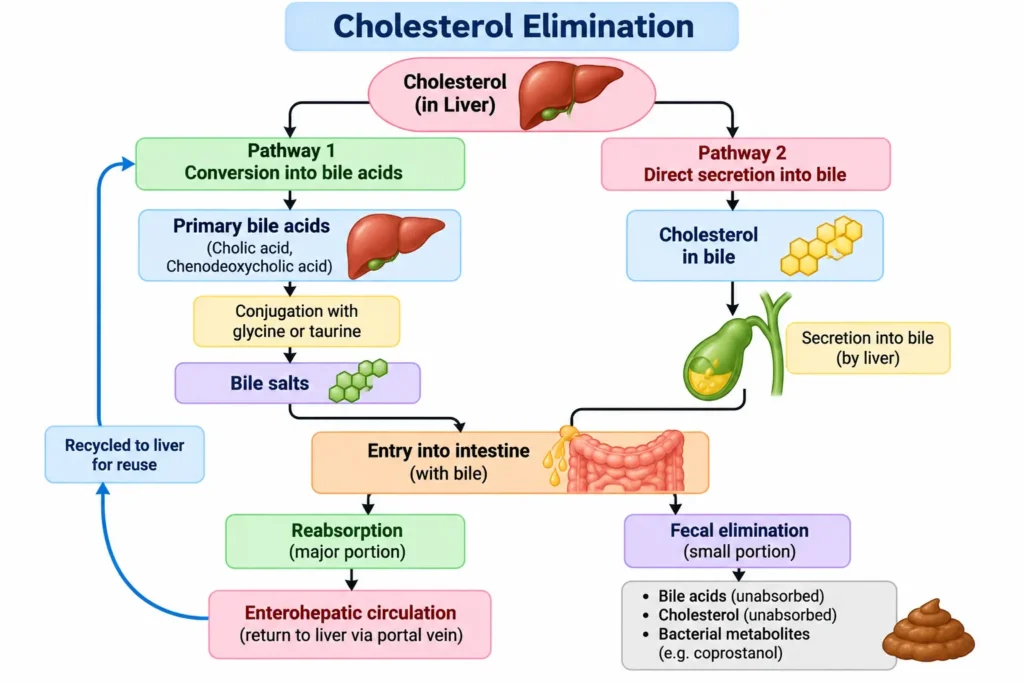
- Instead, excess cholesterol is eliminated mainly through bile, either directly as cholesterol or after conversion into bile acids.
- The liver plays a major role in this process.
1. Conversion of Cholesterol into Bile Acids
- The liver converts cholesterol into primary bile acids.
- The two primary bile acids are cholic acid and chenodeoxycholic acid.
- The enzyme cholesterol 7α-hydroxylase (CYP7A1) catalyses the first major step in the classical pathway of bile acid synthesis.
- Bile acids are conjugated with glycine or taurine to form bile salts.
- Bile salts help in the digestion and absorption of dietary fats.
2. Secretion of Cholesterol into Bile
- The liver secretes cholesterol directly into bile.
- Biliary cholesterol may be reabsorbed in the intestine or eliminated in feces.
- Excessive cholesterol concentration in bile can contribute to cholesterol gallstone formation.
3. Intestinal Elimination
- Bile carries cholesterol and bile acids into the small intestine.
- Most bile acids are reabsorbed, mainly in the terminal ileum, and returned to the liver through the portal circulation.
- This recycling process is called enterohepatic circulation.
- A small proportion of bile acids and cholesterol is eliminated through feces.
4. Conversion into Other Metabolites
- Intestinal bacteria modify some bile acids to produce secondary bile acids, including deoxycholic acid and lithocholic acid.
- Some cholesterol is converted by intestinal bacteria into other sterol metabolites, including coprostanol.
- These metabolites may be eliminated through feces.
5. Importance of Cholesterol Degradation and Elimination
- Helps maintain cholesterol homeostasis.
- Provides bile acids and bile salts for fat digestion and absorption.
- Prevents excessive accumulation of cholesterol in the body.
- Supports the regulation of circulating and hepatic cholesterol levels.
- Abnormalities in bile composition can contribute to cholesterol gallstone formation.
Clinical Significance
- Cholesterol is an essential lipid required for cell membrane formation, steroid hormone synthesis, bile acid production, and vitamin D synthesis.
- However, abnormalities in cholesterol synthesis, transport, and elimination can contribute to several diseases.
1. Hypercholesterolemia
- Hypercholesterolemia refers to an elevated concentration of cholesterol in the blood, particularly low-density lipoprotein cholesterol (LDL-C).
Causes
- Genetic factors: Inherited abnormalities in LDL receptors or related proteins.
- Dietary factors: Dietary patterns high in saturated fats can increase LDL cholesterol in some individuals.
- Endocrine disorders: Hypothyroidism can reduce LDL clearance.
- Metabolic conditions: Diabetes mellitus and obesity may be associated with abnormal lipid metabolism.
- Medications and other diseases: Certain drugs and medical conditions can alter cholesterol concentrations.
Biochemical Mechanism
- LDL particles transport cholesterol through the bloodstream.
- When LDL concentrations are elevated, more LDL particles can enter the arterial wall.
- Retention and modification of these particles promote inflammation and atherosclerotic plaque formation.
- Prolonged exposure to elevated LDL increases cardiovascular risk.
Clinical Features
- Hypercholesterolemia is usually asymptomatic.
- Some patients with inherited disorders develop tendon xanthomas.
- Corneal arcus at a young age may suggest an inherited lipid disorder.
- Severe, longstanding elevation increases the risk of premature cardiovascular disease.
Diagnosis
- Total cholesterol
- LDL cholesterol
- HDL cholesterol
- Triglycerides
- Non-HDL cholesterol, when appropriate
Clinical importance: Early detection and appropriate management of elevated LDL cholesterol can reduce the risk of atherosclerotic cardiovascular disease.
2. Atherosclerosis
- Atherosclerosis is a chronic inflammatory disease characterized by the accumulation of cholesterol-rich lipoproteins and the development of plaques in the walls of arteries.
Pathogenesis
The development of atherosclerosis involves several stages:
- Entry of LDL: LDL particles enter the arterial wall.
- Retention of LDL: These particles become retained in the subendothelial space.
- Modification of LDL: Retained particles undergo modifications, including oxidation.
- Inflammatory response: Immune cells, particularly monocytes, enter the arterial wall and differentiate into macrophages.
- Foam cell formation: Macrophages take up modified LDL and accumulate cholesterol, becoming foam cells.
- Plaque formation: Foam cells, inflammatory cells, smooth muscle cells, and extracellular matrix contribute to atherosclerotic plaque formation.
- Complications: Plaque rupture or erosion can trigger thrombosis and obstruct blood flow.
Clinical Consequences
- Coronary artery disease
- Myocardial infarction
- Ischemic stroke
- Peripheral artery disease
Clinical correlation: Elevated LDL cholesterol contributes directly to atherosclerosis, while smoking, hypertension, diabetes, and other risk factors further increase cardiovascular risk.
3. Coronary Artery Disease
- Coronary artery disease occurs when atherosclerotic plaques affect the coronary arteries that supply blood to the heart muscle.
Role of Cholesterol
- LDL particles contribute to cholesterol accumulation in coronary artery walls.
- Atherosclerotic plaques can progressively narrow the arteries.
- Reduced blood supply may cause myocardial ischemia.
- Plaque rupture or erosion can lead to thrombus formation and sudden coronary artery obstruction.
Clinical Manifestations
- Angina pectoris
- Breathlessness during exertion
- Myocardial infarction
- In severe cases, life-threatening cardiac arrhythmias
Clinical Importance
- LDL-C is an important treatment target in patients at risk of cardiovascular disease.
- Lipid-lowering therapy can slow atherosclerotic progression and reduce cardiovascular events.
- Treatment intensity depends on the patient’s overall cardiovascular risk and clinical history.
4. Familial Hypercholesterolemia
- Familial hypercholesterolemia (FH) is an inherited disorder characterized by markedly elevated LDL cholesterol from birth or early childhood.
Genetic Basis
FH commonly results from pathogenic variants affecting genes involved in LDL clearance, including:
- LDLR: Encodes the LDL receptor.
- APOB: Encodes apolipoprotein B-100, which participates in LDL receptor binding.
- PCSK9: Encodes a protein that regulates LDL receptor degradation.
Biochemical Mechanism
- Normally, LDL receptors on hepatocytes bind circulating LDL particles.
- The LDL particles are internalized and processed by the cells.
- When LDL receptor function is impaired, LDL clearance decreases.
- LDL cholesterol consequently accumulates in the bloodstream.
Clinical Features
- Markedly elevated LDL cholesterol
- Tendon xanthomas, particularly involving the Achilles tendon
- Corneal arcus at a young age
- Premature coronary artery disease
- A family history of early cardiovascular disease
Diagnosis and Management
- Lipid profile assessment
- Family history evaluation
- Clinical examination
- Genetic testing when appropriate
- LDL-lowering therapy, often including statins and additional medications when required
Clinical importance: Early identification and cascade screening of relatives can help prevent premature cardiovascular complications.
5. Cholesterol Gallstones
- Cholesterol gallstones are stones formed in the gallbladder when bile becomes supersaturated with cholesterol.
Normal Role of Bile
Bile contains:
- Bile acids and bile salts
- Phospholipids, particularly phosphatidylcholine
- Cholesterol
- Water and electrolytes
Bile salts and phospholipids help keep cholesterol soluble in bile.
Mechanism of Gallstone Formation
- The liver secretes cholesterol into bile.
- Cholesterol concentration becomes excessive relative to bile salts and phospholipids.
- Cholesterol crystals begin to form.
- Gallbladder stasis allows crystals to grow and aggregate.
- Gallstones may develop.
Risk Factors
- Obesity
- Rapid weight loss
- Increasing age
- Pregnancy and estrogen exposure
- Certain genetic factors
- Impaired gallbladder emptying
Clinical Manifestations
- Many gallstones remain asymptomatic.
- Biliary colic may cause pain in the right upper abdomen.
- Acute cholecystitis may develop if a stone obstructs the cystic duct.
- Common bile duct obstruction may cause jaundice or pancreatitis.
Clinical importance: Cholesterol gallstone formation demonstrates how disturbances in cholesterol elimination and bile composition can produce disease.
6. Role of Cholesterol in Steroid Hormone Synthesis
- Cholesterol is the fundamental precursor of all steroid hormones.
Major Steroid Hormones Derived from Cholesterol
| Hormone | Main Site of Production | Major Function |
|---|---|---|
| Cortisol | Adrenal cortex | Regulates stress responses and metabolism |
| Aldosterone | Adrenal cortex | Regulates sodium, potassium, and fluid balance |
| Testosterone | Testes; smaller amounts in other tissues | Supports male reproductive function and secondary sexual characteristics |
| Estrogen | Ovaries and other tissues | Regulates reproductive function and bone health |
| Progesterone | Corpus luteum and placenta | Supports the menstrual cycle and pregnancy |
Biochemical Pathway
- Cholesterol is transported into steroid-producing cells.
- It is transported into mitochondria by steroidogenic acute regulatory protein (StAR).
- The enzyme CYP11A1 converts cholesterol into pregnenolone.
- Pregnenolone is subsequently converted into different steroid hormones through tissue-specific enzymatic pathways.
Clinical Significance
- Steroid hormone production depends on cholesterol availability and the activity of steroidogenic enzymes.
- Defects in steroid hormone synthesis can cause endocrine disorders.
- Disorders affecting adrenal or gonadal function may alter steroid hormone concentrations.
Important point: Cholesterol is essential for hormone production; its presence in the body is not inherently harmful.
7. Role of Cholesterol in Vitamin D Synthesis
- Cholesterol metabolism is connected to vitamin D synthesis through 7-dehydrocholesterol.
Steps of Vitamin D Formation
- 7-Dehydrocholesterol: Present in the epidermis of the skin.
- Ultraviolet B exposure: UVB radiation converts 7-dehydrocholesterol into previtamin D₃.
- Vitamin D₃ formation: Previtamin D₃ undergoes thermal isomerization to form cholecalciferol.
- Liver hydroxylation: Cholecalciferol is converted into 25-hydroxyvitamin D.
- Kidney hydroxylation: It is converted into 1,25-dihydroxyvitamin D, the active hormonal form.
Functions of Vitamin D
- Promotes intestinal calcium absorption.
- Supports phosphate homeostasis.
- Maintains normal bone mineralization.
- Contributes to normal muscle function.
Clinical Significance
- Deficiency of vitamin D can contribute to rickets in children and osteomalacia in adults.
- Vitamin D metabolism is important in the assessment of bone and mineral disorders.
Important distinction: Cholesterol itself is not directly converted into vitamin D by sunlight; the skin precursor is 7-dehydrocholesterol.
8. Cholesterol and Neurological Function
- Cholesterol is an important structural component of the brain and nervous system.
Functions
- Maintains neuronal membrane structure.
- Supports synapse formation and function.
- Contributes to the formation and maintenance of myelin sheaths.
- Participates in membrane organization and cellular signalling.
Cholesterol Metabolism in the Brain
- The blood–brain barrier restricts the entry of circulating lipoprotein cholesterol into the central nervous system.
- Most brain cholesterol is synthesized locally by brain cells.
- Astrocytes provide cholesterol to neurons through lipoprotein particles.
- Excess brain cholesterol is converted into oxysterols, including 24S-hydroxycholesterol, which can cross the blood–brain barrier and contribute to cholesterol elimination from the brain.
Clinical Significance
- Abnormal cholesterol metabolism is involved in certain inherited neurological disorders.
- Defects in cholesterol synthesis can impair normal development.
- Disturbances in brain lipid homeostasis are studied in relation to neurodegenerative diseases.
Important point: Blood cholesterol levels do not directly determine brain cholesterol levels because the blood–brain barrier separates these cholesterol pools.
9. Cholesterol and Metabolic Disorders
- Abnormal cholesterol metabolism frequently occurs alongside endocrine, metabolic, hepatic, and renal diseases.
A. Diabetes Mellitus
- Insulin resistance alters lipid metabolism.
- Increased hepatic VLDL production may raise triglyceride levels.
- HDL cholesterol may decrease.
- LDL particles may become smaller and denser in some patients.
- Cardiovascular risk is increased.
Clinical importance: Lipid assessment is an important part of cardiovascular risk management in diabetes.
B. Hypothyroidism
- Thyroid hormones influence LDL receptor expression and cholesterol metabolism.
- Hypothyroidism can reduce LDL clearance.
- Total cholesterol and LDL cholesterol may increase.
- Treating hypothyroidism can improve lipid abnormalities in affected patients.
Clinical importance: Thyroid function testing may be appropriate in patients with unexplained or newly identified dyslipidemia.
C. Liver Diseases
- The liver synthesizes cholesterol, produces lipoproteins, and converts cholesterol into bile acids.
- Liver dysfunction can alter cholesterol synthesis and transport.
- Cholestatic liver diseases may produce characteristic lipid abnormalities.
- Advanced liver disease can also reduce cholesterol concentrations because of impaired synthesis.
Clinical importance: Lipid results should be interpreted in the context of liver function and the underlying disease.
D. Chronic Kidney Disease
- Chronic kidney disease can disturb lipoprotein metabolism.
- Triglyceride-rich lipoproteins may accumulate.
- HDL function may be altered.
- Cardiovascular risk is elevated in many patients with chronic kidney disease.
Clinical importance: Dyslipidemia is one of several factors contributing to cardiovascular risk in kidney disease.
10. Clinical Importance of Lipoproteins
- Cholesterol circulates in blood as a component of lipoproteins because it is poorly soluble in water.
Major Lipoproteins and Their Functions
| Lipoprotein | Main Function | Clinical Relevance |
|---|---|---|
| Chylomicrons | Transport dietary triglycerides and cholesterol from the intestine | Their remnants deliver dietary cholesterol to the liver |
| VLDL | Transports liver-derived triglycerides and other lipids | Elevated levels contribute to atherogenic remnant particles |
| IDL | Intermediate formed during VLDL metabolism | Can be taken up by the liver or converted into LDL |
| LDL | Delivers cholesterol to peripheral tissues | Elevated LDL is causally associated with atherosclerotic disease |
| HDL | Participates in reverse cholesterol transport | HDL-C is a marker used in cardiovascular risk assessment |
LDL Cholesterol
- LDL transports cholesterol to peripheral tissues.
- Excess circulating LDL particles can enter and become retained in arterial walls.
- LDL-C is an important marker and treatment target for reducing cardiovascular risk.
HDL Cholesterol
- HDL accepts cholesterol from peripheral tissues.
- It participates in transporting cholesterol toward the liver.
- HDL-C is associated with cardiovascular risk, but increasing HDL-C alone does not necessarily reduce cardiovascular events.
Important point: The number and characteristics of atherogenic lipoprotein particles, overall cardiovascular risk, and the response to treatment are important in clinical assessment.