Introduction
- Amino acids are the basic structural units of proteins and are essential for the formation of all proteins present in living organisms.
- They are often called the building blocks of life because enzymes, hormones, antibodies, transport proteins, and structural proteins are all composed of amino acids.
- In biochemistry, amino acid chemistry is important because the physical, chemical, and biological properties of proteins depend on the nature of their amino acids.
- Chemically, each amino acid contains an amino group (-NH₂), a carboxyl group (-COOH), a hydrogen atom, and a variable side chain (R group) attached to the same alpha carbon (α-carbon).
- The R group or side chain determines the identity, chemical behavior, polarity, and biological function of each amino acid.
- Amino acids possess both acidic and basic groups, so they behave as amphoteric molecules, meaning they can act as either acids or bases depending on the pH.
- Because of this amphoteric nature, amino acids exist as zwitterions in aqueous solution, carrying both positive and negative charges simultaneously.
Basic Structure of Amino Acids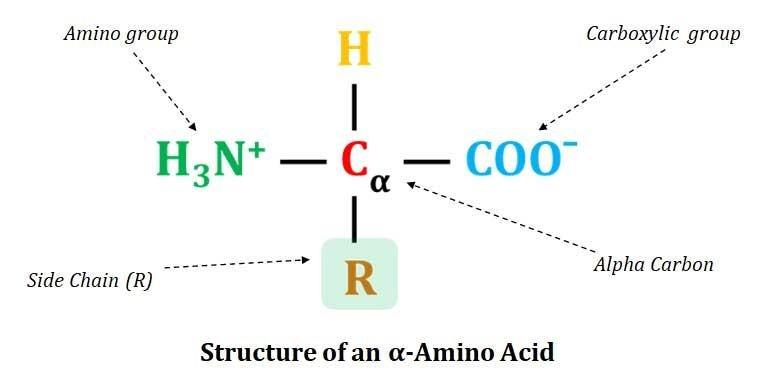
The general formula of an amino acid is:
Where:
- NH₂ = amino group
- COOH = carboxyl group
- R = side chain
- CH = alpha carbon
The alpha carbon is attached to four different groups:
- Amino group
- Carboxyl group
- Hydrogen atom
- Side chain (R group)
Classification of Amino Acids
A. Based on Nutritional Requirement
A. Essential Amino Acids
These cannot be synthesized by the human body and must be obtained from diet:
- Leucine
- Isoleucine
- Valine
- Lysine
- Methionine
- Phenylalanine
- Threonine
- Tryptophan
- Histidine
B. Non-Essential Amino Acids
Synthesized within the body:
- Alanine
- Aspartate
- Glutamate
- Serine
- Glycine
C. Semi-essential Amino Acids
Required during growth or special conditions.
- Arginine
- Histidine
B. Classification Based on Side Chain Polarity
A. Nonpolar (Hydrophobic) Amino Acids
These amino acids are insoluble in water and usually found inside proteins.
- Glycine
- Alanine
- Valine
- Leucine
- Isoleucine
- Methionine
- Phenylalanine
- Tryptophan
- Proline
B. Polar Uncharged Amino Acids
These contain polar groups and can form hydrogen bonds.
- Serine
- Threonine
- Asparagine
- Glutamine
- Tyrosine
- Cysteine
C. Acidic Amino Acids
These contain extra carboxyl groups.
- Aspartic acid
- Glutamic acid
D. Basic Amino Acids
These contain extra amino groups.
- Lysine
- Arginine
- Histidine
C. Amino Acid Classification Based on Structure
1. Aliphatic Amino Acids
These amino acids contain open-chain hydrocarbon side chains.
- Glycine
- Alanine
- Valine
- Leucine
- Isoleucine
Characteristics:
- Mostly hydrophobic
- Nonpolar in nature
- Important in protein core formation
2. Aromatic Amino Acids
These contain an aromatic benzene or indole ring in the side chain.
- Phenylalanine
- Tyrosine
- Tryptophan
Characteristics:
- Absorb ultraviolet light
- Important in protein spectroscopy
- Participate in hormone and neurotransmitter synthesis
3. Hydroxy Amino Acids
These contain a hydroxyl (−OH) group in the side chain.
- Serine
- Threonine
- Tyrosine
Characteristics:
- Polar in nature
- Participate in hydrogen bonding
- Important in phosphorylation reactions
4. Sulfur-Containing Amino Acids
These contain sulfur atoms in their structure.
- Cysteine
- Methionine
Characteristics:
- Cysteine forms disulfide bonds
- Important for protein stability
- Methionine acts as a methyl group donor
5. Acidic Amino Acids and Their Amides
Acidic Amino Acids
Contain an extra carboxyl group.
- Aspartic acid
- Glutamic acid
Amides of Acidic Amino Acids
Formed when the carboxyl group is converted into an amide group.
- Asparagine
- Glutamine
Characteristics:
- Polar compounds
- Important in nitrogen transport
6. Basic Amino Acids
These contain additional amino or nitrogen-containing groups.
- Lysine
- Arginine
- Histidine
Characteristics:
- Positively charged at physiological pH
- Important in nucleic acid binding
- Participate in enzyme active sites
7. Heterocyclic Amino Acids
These contain a ring structure with atoms other than carbon.
- Proline
- Histidine
- Tryptophan
Characteristics:
- Influence protein folding
- Proline produces bends in protein chains
8. Imino Acid
Proline is often classified separately as an imino acid because it contains an imino (−NH−) group instead of a primary amino group.
Characteristics:
- Cyclic structure
- Restricts protein flexibility
- Important in collagen structure
D. Amino Acid Classification Based on Their Metabolic Fate
Based on their metabolic fate, amino acids are classified into:
- Glucogenic amino acids
- Ketogenic amino acids
- Both glucogenic and ketogenic amino acids
1. Glucogenic Amino Acids
These amino acids are metabolized into compounds that can be converted into glucose through gluconeogenesis.
Their carbon skeletons usually form:
- Pyruvate
- Oxaloacetate
- α-ketoglutarate
- Succinyl-CoA
- Fumarate
Examples
- Alanine
- Glycine
- Serine
- Cysteine
- Aspartate
- Asparagine
- Glutamate
- Glutamine
- Histidine
- Methionine
- Valine
- Arginine
- Proline
Characteristics
- Produce glucose during fasting
- Help maintain blood glucose level
- Important during starvation and diabetes mellitus
2. Ketogenic Amino Acids
These amino acids are degraded into compounds that form ketone bodies or fatty acids.
They produce:
- Acetyl-CoA
- Acetoacetate
Purely Ketogenic Amino Acids
- Leucine
- Lysine
Characteristics
- Cannot produce net glucose
- Form ketone bodies
- Important during prolonged fasting
3. Both Glucogenic and Ketogenic Amino Acids
These amino acids produce intermediates that can participate in both glucose and ketone body formation.
Examples
- Isoleucine
- Phenylalanine
- Tyrosine
- Tryptophan
- Threonine
Characteristics
- Produce both glucose and ketone bodies
- Participate in multiple metabolic pathways
Properties of Amino Acids
The properties of amino acids can be divided into:
- Physical properties
- Chemical properties
I. Physical Properties of Amino Acids
1. Color and Appearance
- Most amino acids are:
- Colorless
- Crystalline solids
- Usually have a sweet or tasteless nature
2. Solubility
- Amino acids are generally:
- Soluble in water
- Insoluble in organic solvents like ether and chloroform
Reason:
- Presence of polar amino and carboxyl groups
3. High Melting Point
Amino acids possess high melting points because they exist as zwitterions.
+H3N−CH(R)−COO−
Characteristics:
- Strong ionic interactions
- High thermal stability
4. Optical Activity
- Most amino acids are optically active due to the presence of an asymmetric carbon atom.
- They exist in:
- D-form
- L-form
- Proteins mainly contain L-amino acids.
- Glycine is optically inactive because it lacks a chiral carbon.
5. Amphoteric Nature
Amino acids act as both:
- Acids
- Bases
Therefore, they are called amphoteric compounds.
They can:
- Donate H⁺ ions
- Accept H⁺ ions
6. Buffer Action
Amino acids resist sudden changes in pH because they contain both acidic and basic groups.
Importance:
- Maintenance of body pH
- Protein stability
II. Chemical Properties of Amino Acids
1. Formation of Zwitterions
In aqueous solution, amino acids exist as dipolar ions called zwitterions.
H2N − CH(R) − COOH ⇌ +H3N − CH(R) − COO−
Characteristics:
- Electrically neutral
- Responsible for ionic behavior
2. Reaction with Acids
The amino group reacts with acids forming salts.
RNH2+HCl→RNH3Cl
3. Reaction with Bases
The carboxyl group reacts with bases.
RCOOH+NaOH→RCOONa+H2O
4. Peptide Bond Formation
−COOH+−NH2→−CO−NH−+H2O
Importance:
- Formation of proteins
- Formation of peptides
5. Ninhydrin Reaction
Amino acids react with ninhydrin producing a blue-violet color.
Importance:
- Detection of amino acids
- Protein analysis
- Forensic applications
6. Decarboxylation
Removal of the carboxyl group forms amines.
Example:
- Histidine → Histamine
Importance:
- Formation of biologically active compounds
7. Deamination
Removal of the amino group produces keto acids and ammonia.
Importance:
- Amino acid metabolism
- Energy production
Biological Importance of Amino Acids
1. Building Blocks of Proteins
The most important function of amino acids is the formation of proteins.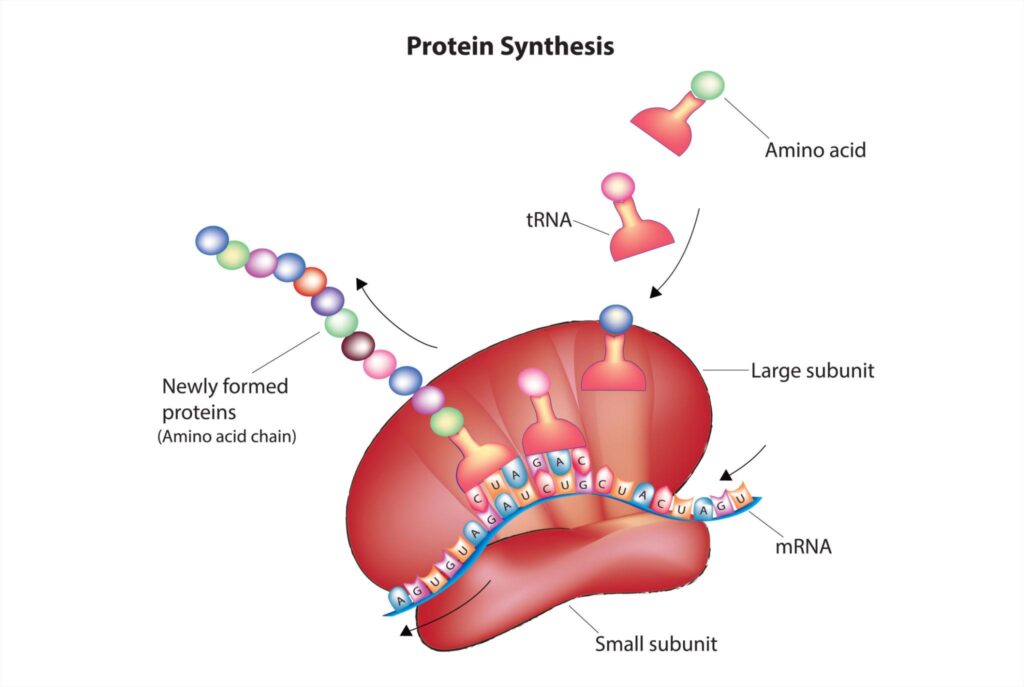
- Peptides
- Polypeptides
- Proteins
Proteins formed include:
- Enzymes
- Structural proteins
- Transport proteins
- Antibodies
2. Growth and Tissue Repair
Amino acids are necessary for:
- Growth of body tissues
- Repair of damaged cells
- Muscle development
- Wound healing
Essential amino acids are especially important during:
- Childhood
- Pregnancy
- Recovery from illness
3. Formation of Enzymes
Most enzymes are proteins made from amino acids.
Functions:
- Catalyze biochemical reactions
- Increase metabolic rate
- Maintain normal cellular activities
Examples:
- Digestive enzymes
- Metabolic enzymes
4. Energy Production
They:
- Enter the TCA cycle
- Produce ATP
- Form glucose or ketone bodies
5. Synthesis of Hormones
Many hormones are synthesized from amino acids.
Examples:
| Amino Acid | Hormone Formed |
|---|---|
| Tyrosine | Thyroxine, Epinephrine |
| Tryptophan | Melatonin |
| Histidine | Histamine |
6. Formation of Neurotransmitters
Amino acids act as precursors for neurotransmitters.
| Amino Acid | Neurotransmitter |
|---|---|
| Tyrosine | Dopamine, Norepinephrine |
| Tryptophan | Serotonin |
| Glutamate | GABA |
Functions:
- Brain function
- Mood regulation
- Nerve impulse transmission
7. Maintenance of Acid–Base Balance
Amino acids act as buffers due to their amphoteric nature.
Functions:
- Maintain blood pH
- Stabilize intracellular pH
- Prevent acidosis and alkalosis
8. Transport and Storage of Nutrients
Certain amino acids help in transport and storage.
Examples:
- Hemoglobin transports oxygen
- Albumin transports fatty acids and drugs
9. Formation of Biologically Important Compounds
Amino acids form several important compounds.
Examples
| Amino Acid | Compound Formed |
|---|---|
| Glycine | Heme, Creatine |
| Arginine | Nitric oxide |
| Methionine | S-adenosyl methionine |
| Cysteine | Glutathione |
10. Immune Function
Amino acids help in:
- Antibody formation
- Immune cell growth
- Tissue defense mechanisms
Glutamine is especially important for immune cells.
11. Detoxification
Certain amino acids participate in detoxification processes.
Examples:
- Glycine conjugates toxic substances
- Methionine helps methylation reactions
12. Clinical Importance
- Phenylketonuria (PKU)
- Alkaptonuria
- Maple syrup urine disease
- Homocystinuria
Peptides and Peptide Bonds
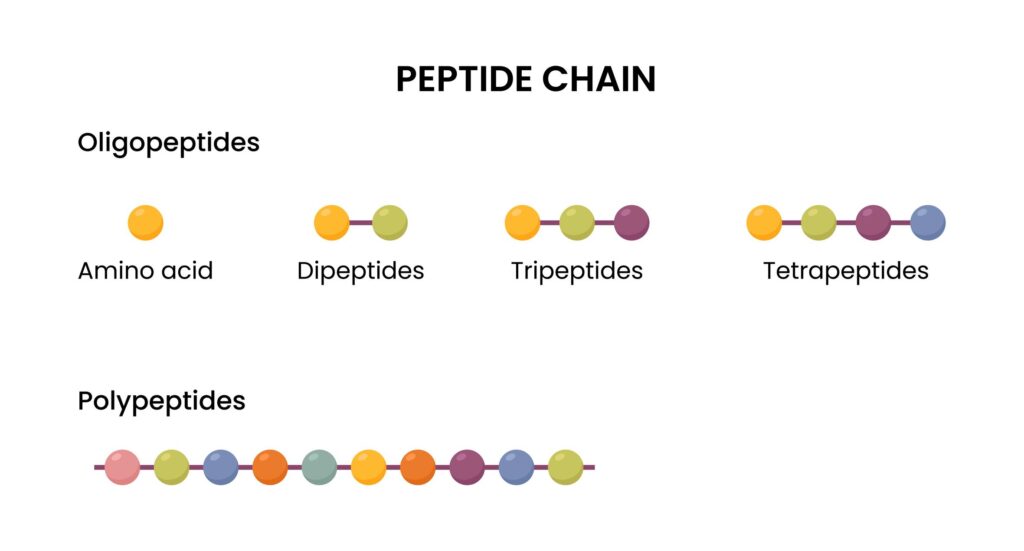 Peptides are compounds formed when two or more amino acids join together through peptide bonds.
According to the number of amino acids:
- Dipeptide → 2 amino acids
- Tripeptide → 3 amino acids
- Polypeptide → Many amino acids
Proteins are long polypeptide chains.
Peptide Bond
A peptide bond is a covalent bond formed between:
- Carboxyl group (−COOH) of one amino acid
- Amino group (−NH₂) of another amino acid
During bond formation, one molecule of water is removed (condensation reaction).
−COOH+−NH2→−CO−NH−+H2O
The bond formed is called a peptide bond or amide bond.
Characteristics of Peptide Bond
- Strong covalent bond
- Rigid and planar structure
- Important for protein stability
- Links amino acids into chains
Biological Importance
- Formation of proteins
- Essential for growth and tissue repair
- Important in enzymes and hormones
- Maintain structure and function of cells