Introduction
- Nutrition is the science of food and nutrients and how they help the body grow, function, and stay healthy.
- A healthy diet provides essential nutrients such as carbohydrates, proteins, fats, vitamins, minerals, water, and dietary fiber.
- Good nutrition provides energy, supports growth, strengthens immunity, and helps repair body tissues.
- Poor nutrition can lead to diseases such as obesity, diabetes, anemia, hypertension, and heart disease.
- The process of nutrition includes digestion, absorption, metabolism, and utilization of nutrients by the body.
- A balanced diet is essential for maintaining good health and preventing nutritional deficiencies.
- Nutrition plays an important role in the prevention, treatment, and management of diseases.
Classification of Nutrients
Nutrients are chemical substances present in food that are essential for growth, energy production, tissue repair, and regulation of body functions. They are broadly classified into macronutrients and micronutrients.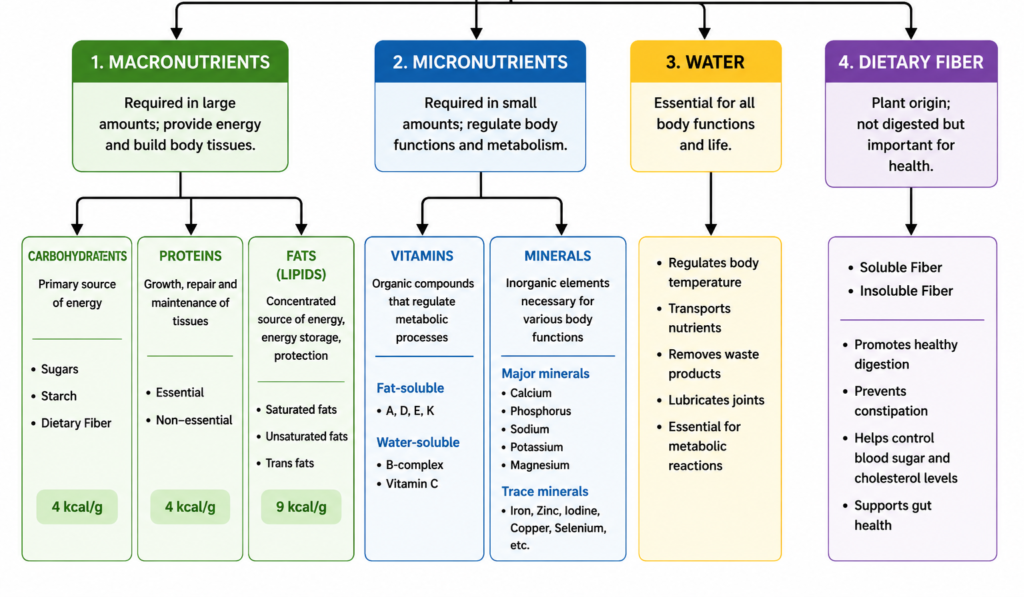
1. Macronutrients
Macronutrients are required in large amounts and provide energy to the body.
- Carbohydrates – Main source of energy (4 kcal/g)
- Proteins – Required for growth, tissue repair, and maintenance (4 kcal/g)
- Fats (Lipids) – Concentrated source of energy and help in the absorption of fat-soluble vitamins (9 kcal/g)
2. Micronutrients
Micronutrients are required in small amounts but are essential for normal growth, metabolism, and body functions.
- Vitamins – Organic compounds that regulate metabolic processes.
- Minerals – Inorganic elements necessary for bone health, nerve function, muscle contraction, and enzyme activity.
3. Water
Water is an essential nutrient that maintains body temperature, transports nutrients, removes waste products, and supports all metabolic reactions.
4. Dietary Fiber
Dietary fiber is the indigestible part of plant foods that promotes healthy digestion, prevents constipation, supports gut health, and helps regulate blood glucose and cholesterol levels.
Nutrients and Their Role in Humans
- Nutrients are chemical substances in food that are essential for growth, development, and normal body functions.
- They provide energy, support tissue growth and repair, and regulate metabolic processes.
- Nutrients help maintain immunity and overall health.
- Most nutrients must be obtained from a balanced diet because the body cannot produce them in sufficient amounts.
- Based on the amount required, nutrients are classified into:
- Macronutrients: Carbohydrates, proteins, and fats (required in large amounts).
- Micronutrients: Vitamins and minerals (required in small amounts).
- Water and dietary fiber are also essential for maintaining good health.
1. Carbohydrates
- Carbohydrates are the primary and most readily available source of energy for the human body.
- During digestion, carbohydrates are broken down into glucose, which serves as the main fuel for the brain, nervous system, muscles, and other body tissues.
Functions
- Primary source of energy for daily activities.
- Maintain normal blood glucose levels.
- Supply energy to the brain and red blood cells.
- Spare proteins from being used as an energy source.
- Help prevent ketosis by ensuring proper fat metabolism.
- Dietary fiber (a type of carbohydrate) promotes digestive health.
Major Sources
- Rice
- Wheat
- Maize
- Potatoes
- Fruits
- Honey
- Sugar
- Oats
Energy value: 4 kcal/g
2. Proteins
- Proteins are known as the building blocks of the body because they are essential for growth, repair, and maintenance of tissues.
- They are made up of amino acids, some of which are essential and must be obtained from the diet.
Functions
- Promote growth and repair of body tissues.
- Form enzymes, hormones, and antibodies.
- Maintain muscle mass and body structure.
- Support wound healing.
- Transport oxygen and nutrients in the blood.
- Help maintain fluid and acid-base balance.
- Can provide energy during prolonged fasting.
Major Sources
- Eggs
- Milk and dairy products
- Meat
- Fish
- Poultry
- Soybeans
- Pulses
- Beans
- Nuts
Energy value: 4 kcal/g
3. Fats (Lipids)
- Fats are the most concentrated source of energy and serve as the body’s major energy reserve.
- They are essential for normal cell function and the absorption of fat-soluble vitamins.
Functions
- Provide concentrated energy.
- Store energy for future use.
- Protect internal organs from injury.
- Maintain body temperature by providing insulation.
- Aid in the absorption of vitamins A, D, E, and K.
- Form cell membranes and support hormone production.
- Supply essential fatty acids required for normal growth.
Major Sources
- Vegetable oils
- Butter
- Ghee
- Nuts
- Seeds
- Avocado
- Fish oil
- Fatty fish
Energy value: 9 kcal/g
4. Vitamins
- Vitamins are organic micronutrients required in small quantities to regulate metabolic reactions.
- They do not provide energy but are essential for maintaining normal body functions.
Functions
- Regulate enzyme activity.
- Strengthen the immune system.
- Promote healthy vision and skin.
- Support bone growth and calcium metabolism.
- Aid in blood clotting.
- Assist in energy metabolism.
- Protect cells from oxidative damage through antioxidant activity.
Types
Fat-soluble vitamins
- Vitamin A
- Vitamin D
- Vitamin E
- Vitamin K
Water-soluble vitamins
- Vitamin C
- Vitamin B-complex (B1, B2, B3, B5, B6, B7, B9, and B12)
Major Sources
- Fruits
- Vegetables
- Milk
- Eggs
- Fish
- Whole grains
- Liver
- Nuts
5. Minerals
- Minerals are inorganic nutrients that play important roles in structural support, enzyme function, nerve transmission, muscle contraction, and fluid balance.
Functions
- Build strong bones and teeth.
- Maintain electrolyte and acid-base balance.
- Support muscle contraction and nerve conduction.
- Participate in enzyme activation.
- Assist in oxygen transport.
- Strengthen immune function.
- Support thyroid hormone production.
Types
Major minerals
- Calcium
- Phosphorus
- Sodium
- Potassium
- Magnesium
- Chloride
Trace minerals
- Iron
- Zinc
- Copper
- Iodine
- Selenium
- Fluoride
- Manganese
Major Sources
- Milk
- Green leafy vegetables
- Meat
- Fish
- Whole grains
- Nuts
- Fruits
6. Water
- Water is the most essential nutrient for life and constitutes approximately 50–70% of total body weight in adults.
- It is involved in almost every physiological and biochemical process.
Functions
- Maintains hydration.
- Regulates body temperature through sweating.
- Transports nutrients, hormones, and oxygen.
- Removes metabolic waste through urine and sweat.
- Lubricates joints.
- Maintains blood volume.
- Serves as a medium for biochemical reactions.
- Supports digestion and nutrient absorption.
Major Sources
- Drinking water
- Milk
- Fruits
- Vegetables
- Soups
- Other beverages
7. Dietary Fiber
- Dietary fiber is the indigestible portion of plant foods. Although it does not provide energy, it is essential for maintaining gastrointestinal health and preventing several chronic diseases.
Types
- Soluble fiber – Dissolves in water and helps lower blood cholesterol and regulate blood glucose.
- Insoluble fiber – Adds bulk to stool and promotes regular bowel movements.
Functions
- Prevents constipation.
- Promotes healthy digestion.
- Supports a healthy gut microbiome.
- Helps control blood sugar levels.
- Reduces blood cholesterol.
- Increases satiety and aids in weight management.
- Lowers the risk of colorectal disease.
Major Sources
- Whole grains
- Oats
- Fruits
- Vegetables
- Legumes
- Beans
- Nuts
- Seeds
Nitrogen Balance
- Nitrogen balance is the difference between nitrogen intake (from dietary proteins) and nitrogen loss (through urine, feces, sweat, and other body secretions).
- It is an important indicator of protein metabolism and nutritional status.
- Since proteins are the only major dietary source of nitrogen, nitrogen balance reflects changes in body protein stores.
- In healthy adults, protein synthesis and protein breakdown remain balanced, resulting in nitrogen equilibrium.
- Nitrogen balance is used to assess the body’s anabolic (tissue-building) or catabolic (tissue-breaking) state.
Formula
Nitrogen Balance = Nitrogen Intake − Nitrogen Loss
- Nitrogen Intake: Obtained from dietary protein.
- Nitrogen Loss: Occurs mainly through urine (as urea), and to a lesser extent through feces, sweat, skin, hair, nails, and other body secretions.
Types of Nitrogen Balance
1. Positive Nitrogen Balance
- Positive nitrogen balance occurs when nitrogen intake is greater than nitrogen loss, indicating that the body is synthesizing more protein than it is breaking down.
- This reflects an anabolic state, where new tissues are being formed.
Causes
- Growth during infancy, childhood, and adolescence
- Pregnancy
- Lactation
- Recovery after illness, surgery, or trauma
- Muscle building during resistance training
- High-protein diet with adequate calorie intake
Clinical Significance
- Promotes tissue growth and repair.
- Indicates good nutritional status.
- Essential for wound healing and recovery.
2. Negative Nitrogen Balance
- Negative nitrogen balance occurs when nitrogen loss exceeds nitrogen intake, indicating that the body is breaking down more protein than it is synthesizing.
- This reflects a catabolic state, leading to loss of body protein.
Causes
- Protein-energy malnutrition
- Starvation or prolonged fasting
- Severe infections and sepsis
- Burns and major trauma
- Cancer and chronic illnesses
- Uncontrolled diabetes mellitus
- Hyperthyroidism
- Excessive physical stress
Clinical Significance
- Loss of muscle mass.
- Delayed wound healing.
- Reduced immune function.
- Increased risk of complications during illness.
3. Nitrogen Equilibrium (Zero Nitrogen Balance)
- Nitrogen equilibrium occurs when nitrogen intake equals nitrogen loss.
- It represents a normal physiological state in which protein synthesis and protein breakdown are balanced.
Seen In
- Healthy adults
- Individuals consuming an adequate balanced diet
- Stable body weight without significant illness
Clinical Significance
- Indicates normal protein metabolism.
- Reflects maintenance of body protein stores.
Factors Affecting Nitrogen Balance
Several factors influence nitrogen balance, including:
- Quantity and quality of dietary protein
- Total calorie intake
- Age and growth
- Pregnancy and lactation
- Exercise and physical activity
- Infections and inflammation
- Trauma, burns, and surgery
- Hormonal disorders
- Liver and kidney diseases
Clinical Importance of Nitrogen Balance
Nitrogen balance is an important clinical tool used to:
- Assess protein nutritional status.
- Evaluate growth in children and adolescents.
- Monitor recovery after surgery, trauma, and burns.
- Assess critically ill and hospitalized patients.
- Determine protein requirements in pregnancy and lactation.
- Monitor patients receiving enteral or parenteral nutrition.
- Evaluate muscle wasting and protein loss in chronic diseases.
Nutritional Quality of Proteins
- Nutritional quality of proteins is the ability of a protein to provide all essential amino acids (EAAs) in adequate amounts.
- It is essential for growth, tissue repair, maintenance, and normal metabolic functions.
- Protein quality depends on:
- Essential amino acid composition
- Digestibility
- Utilization (biological value) by the body
- Proteins from different food sources vary in quality because they differ in their amino acid composition.
- A protein that provides all essential amino acids in the required proportions is called a high-quality protein.
Factors Affecting the Nutritional Quality of Proteins
The nutritional quality of a protein depends on several factors:
1. Essential Amino Acid Composition
- Essential amino acids cannot be synthesized by the human body and must be obtained through the diet.
- A high-quality protein contains all nine essential amino acids in adequate amounts.
- Deficiency of even one essential amino acid reduces the nutritional value of the protein.
2. Digestibility
- Digestibility refers to the proportion of dietary protein that is digested and absorbed by the body.
- Animal proteins generally have higher digestibility than plant proteins because they contain fewer indigestible components.
3. Biological Utilization
- After absorption, amino acids must be efficiently utilized for protein synthesis.
- Proteins with higher utilization have greater nutritional value.
4. Limiting Amino Acid
- The limiting amino acid is the essential amino acid present in the lowest amount relative to the body’s requirement.
- It limits the body’s ability to synthesize proteins even if other amino acids are present in adequate amounts.
- Example:
- Cereals are deficient in lysine.
- Pulses are deficient in methionine.
Reference Protein
A reference protein is used to compare the quality of other dietary proteins.
- Egg protein is considered the ideal reference protein because its amino acid pattern closely resembles that of human tissue proteins.
- Human milk protein is also regarded as a high-quality protein, especially for infants.
- Proteins with amino acid patterns similar to egg protein are considered superior in nutritional quality.
Methods of Assessing Protein Quality
Several methods are used to evaluate the nutritional quality of proteins.
1. Chemical Score (Amino Acid Score)
- The chemical score compares the concentration of each essential amino acid in a test protein with that in the reference protein (usually egg protein).
Formula
- Chemical Score (%) = (Essential amino acid in test protein ÷ Essential amino acid in reference (egg) protein) × 100
Advantages
- Simple and rapid method.
- Identifies the limiting amino acid.
Limitations
- Does not consider digestibility.
- Does not indicate biological utilization.
2. Net Protein Utilization (NPU)
- Net Protein Utilization (NPU) measures the percentage of dietary nitrogen retained by the body after digestion and absorption.
Formula
- NPU (%) = (Nitrogen retained ÷ Nitrogen intake) × 100
Characteristics
- Measures both digestibility and biological value.
- Better indicator of overall protein quality.
- Higher NPU indicates better utilization of dietary protein.
Clinical Importance
- Useful in assessing dietary protein requirements.
- Indian mixed diets generally have an NPU of 50–60.
3. Protein Efficiency Ratio (PER)
- Protein Efficiency Ratio (PER) measures the growth-promoting ability of a protein.
Formula
- PER = Gain in body weight (g) ÷ Protein consumed (g)
Characteristics
- Determined using growing laboratory animals (usually rats).
- Indicates the ability of dietary protein to support growth.
- Higher PER indicates better protein quality.
Limitations
- Animal growth may not exactly represent human protein requirements.
4. Biological Value (BV)
- Biological Value measures the proportion of absorbed nitrogen that is retained by the body for protein synthesis.
Formula
- BV (%) = (Nitrogen retained ÷ Nitrogen absorbed) × 100
Characteristics
- Indicates the efficiency with which absorbed protein is utilized.
- High BV indicates efficient utilization.
- Egg protein has one of the highest biological values.
Comparison of Protein Quality Assessment Methods
| Method | Measures | Advantage | Limitation |
|---|---|---|---|
| Chemical Score | Essential amino acid composition | Identifies limiting amino acid | Does not assess digestibility |
| NPU | Nitrogen retained from dietary intake | Includes digestibility and utilization | Requires nitrogen balance studies |
| PER | Weight gain per gram of protein | Measures growth-promoting ability | Based on animal studies |
| BV | Nitrogen retained from absorbed protein | Measures biological utilization | Does not include digestibility completely |
Mutual Supplementation of Proteins (Protein Complementation)
- Most animal proteins are complete proteins because they contain all essential amino acids in adequate amounts.
- In contrast, many plant proteins are deficient in one or more essential amino acids and are therefore considered incomplete proteins.
- The nutritional quality of plant proteins can be improved by combining foods with complementary amino acid profiles.
- This phenomenon is called mutual supplementation or protein complementation.
Common Limiting Amino Acids
| Food | Limiting Amino Acid |
|---|---|
| Cereals | Lysine |
| Pulses | Methionine and Cysteine |
| Maize | Lysine and Tryptophan |
Examples of Protein Complementation
- Rice + Dal
- Chapati + Dal
- Idli + Sambar
- Khichdi (Rice + Pulses)
- Corn + Beans
These combinations provide a balanced amino acid profile and improve the overall nutritional quality of plant-based diets.
Classification of Proteins Based on Nutritional Quality
1. Complete (High-Quality) Proteins
- Contain all essential amino acids in sufficient quantities.
- High digestibility and biological value.
- Examples: Egg, milk, fish, meat, poultry, soy protein.
2. Partially Complete Proteins
- Contain all essential amino acids but in inadequate amounts.
- Can maintain life but do not adequately support growth when consumed alone.
- Examples: Cereals and legumes.
3. Incomplete (Low-Quality) Proteins
- Deficient in one or more essential amino acids.
- Cannot support normal growth if consumed as the sole protein source.
- Examples: Gelatin and zein (maize protein).
Protein Requirement
- Protein requirements depend on age, body weight, physiological status, and the nutritional quality of dietary protein.
Approximate Daily Protein Requirements
| Group | Requirement |
|---|---|
| Healthy adults | ~1 g/kg body weight/day |
| Infants and children | Higher due to rapid growth |
| Adolescents | Increased requirement |
| Pregnant women | Increased requirement |
| Lactating women | Increased requirement |
| Athletes | Higher depending on activity level |
| Patients recovering from illness or surgery | Increased requirement |
Clinical Importance
Assessment of protein quality is important in:
- Planning balanced diets.
- Preventing protein-energy malnutrition.
- Evaluating nutritional status.
- Managing critically ill patients.
- Sports nutrition.
- Pediatric nutrition.
- Pregnancy and lactation.
- Clinical nutrition and diet therapy.
Recommended Dietary Allowance
- Recommended Dietary Allowance (RDA) is the average daily intake of a nutrient that is sufficient to meet the nutritional requirements of nearly all (97–98%) healthy individuals of a specific age, sex, and physiological group.
- RDA is established by expert bodies such as the Indian Council of Medical Research (ICMR) and the National Institute of Nutrition (NIN) in India.
Factors Affecting RDA
- Age
- Sex
- Body weight
- Physical activity level
- Physiological state (pregnancy and lactation)
- Health status (illness, infection, trauma)
- Nutrient bioavailability
Importance of RDA
- Serves as a guideline for planning balanced diets.
- Helps assess the adequacy of nutrient intake.
- Prevents nutritional deficiencies.
- Used in hospitals for diet planning and nutritional therapy.
- Forms the basis for national nutrition policies and public health programs.
- Assists in food labeling and nutrition education.
Clinical Significance
- Used to assess an individual’s nutritional status.
- Helps prevent protein-energy malnutrition (PEM) and micronutrient deficiencies.
- Guides dietary management in pregnancy, lactation, childhood, and old age.
- Supports nutritional care of hospitalized and critically ill patients.
- Used by dietitians and healthcare professionals to plan therapeutic diets.
Basal Metabolic Rate
- Basal Metabolic Rate (BMR) is the minimum amount of energy required by the body to maintain vital life functions while at complete physical and mental rest.
- It represents the largest component of total daily energy expenditure (TDEE), accounting for approximately 60–70% of the body’s daily energy needs.
- BMR is measured under standardized conditions: after 8–12 hours of fasting, in a thermoneutral environment, and after adequate sleep and complete rest.
Functions of BMR
BMR provides energy for essential body functions such as:
- Breathing (respiration)
- Blood circulation
- Heart function
- Brain and nervous system activity
- Kidney and liver function
- Maintenance of body temperature
- Cellular metabolism and tissue repair
Factors Affecting BMR
- Age: Decreases with increasing age.
- Sex: Higher in males due to greater lean body mass.
- Body composition: Higher in individuals with more muscle mass.
- Body size and surface area: Larger individuals have higher BMR.
- Hormones: Thyroid hormones increase BMR.
- Growth: Higher during infancy, childhood, and adolescence.
- Pregnancy and lactation: Increase BMR.
- Fever and infections: Increase BMR.
- Environmental temperature: Exposure to cold increases BMR.
- Starvation and malnutrition: Decrease BMR.
Normal BMR
- Adult males: Approximately 24 kcal/kg/day
- Adult females: Approximately 22 kcal/kg/day
Clinical Significance
- Used to estimate daily energy requirements.
- Helps in planning balanced diets and weight management.
- Assists in nutritional assessment of hospitalized patients.
- Increased BMR is seen in hyperthyroidism, fever, burns, pregnancy, and severe infections.
- Decreased BMR is seen in hypothyroidism, starvation, malnutrition, and prolonged fasting.
Specific Dynamic Action
- Specific Dynamic Action (SDA), also called the Thermic Effect of Food (TEF) or Diet-Induced Thermogenesis (DIT), is the increase in energy expenditure that occurs after eating food.
- It represents the energy required for the digestion, absorption, transport, metabolism, and storage of nutrients.
- SDA contributes approximately 5–10% of the total daily energy expenditure.
SDA of Different Nutrients
| Nutrient | SDA (% of Energy Intake) |
|---|---|
| Protein | 20–30% (Highest) |
| Carbohydrate | 5–10% |
| Fat | 0–3% (Lowest) |
| Mixed Diet | 10% |
Factors Affecting SDA
- Type of nutrient consumed.
- Quantity of food intake.
- Meal composition (mixed or single nutrient).
- Age.
- Body composition.
- Hormonal status.
- Physical activity.
- Health and metabolic status.
Importance of SDA
- Increases energy expenditure after meals.
- Helps maintain energy balance.
- Supports digestion and nutrient metabolism.
- Contributes to daily calorie expenditure.
- Protein-rich meals produce the greatest SDA.
Clinical Significance
- Used in estimating total daily energy requirements.
- Important in weight management and obesity treatment.
- High-protein diets increase SDA and may improve satiety.
- Reduced SDA may be observed in some metabolic disorders.
- Considered in clinical nutrition and therapeutic diet planning.
Balanced Diet
- A balanced diet is a diet that provides all essential nutrients in the right amounts and proportions to meet the body’s nutritional needs.
- It supplies adequate energy, proteins, fats, carbohydrates, vitamins, minerals, water, and dietary fiber for normal growth, maintenance, and overall health.
Components of a Balanced Diet
- Carbohydrates
- Proteins
- Fats
- Vitamins
- Minerals
- Water
- Dietary fiber
Characteristics of a Balanced Diet
- Provides adequate calories according to age, sex, and physical activity.
- Contains all essential nutrients in appropriate proportions.
- Includes a variety of foods from different food groups.
- Is safe, hygienic, and easily digestible.
- Maintains healthy body weight.
- Prevents nutritional deficiencies and excesses.
Importance of a Balanced Diet
- Provides energy for daily activities.
- Promotes normal growth and development.
- Supports tissue repair and maintenance.
- Strengthens the immune system.
- Maintains healthy bones, muscles, and organs.
- Supports normal metabolism and body functions.
- Reduces the risk of obesity, diabetes, hypertension, cardiovascular diseases, and other chronic illnesses.
Components of a Healthy Balanced Plate
- ½ Plate: Fruits and vegetables
- ¼ Plate: Whole grains and cereals
- ¼ Plate: Protein-rich foods (pulses, eggs, fish, lean meat, milk, soy, nuts)
- Include healthy fats and drink adequate water.
Factors Affecting a Balanced Diet
- Age
- Sex
- Body weight
- Physical activity
- Physiological status (pregnancy and lactation)
- Health and disease conditions
- Socioeconomic and cultural factors
Clinical Significance
- Prevents protein-energy malnutrition (PEM) and micronutrient deficiencies.
- Helps maintain a healthy body weight.
- Supports recovery from illness, surgery, and infections.
- Reduces the risk of non-communicable diseases such as obesity, diabetes, hypertension, and cardiovascular diseases.
- Forms the basis of therapeutic diet planning in hospitals.
Nutritional Disorders
Nutritional disorders are broadly classified into:
- Undernutrition
- Overnutrition
- Micronutrient Deficiency Disorders
1. Undernutrition
- Undernutrition occurs when the body does not receive sufficient energy, protein, or other essential nutrients to meet its physiological requirements.
Causes
- Inadequate food intake
- Poverty and food insecurity
- Chronic infections
- Malabsorption disorders
- Poor feeding practices
- Recurrent diarrhea
- Increased nutritional requirements during growth
Types of Undernutrition
a. Protein-Energy Malnutrition (PEM)
- PEM results from inadequate intake of both protein and calories and is most common in infants and young children.
Clinical Features
- Growth retardation
- Weight loss
- Muscle wasting
- Weakness
- Delayed wound healing
- Increased susceptibility to infections
b. Marasmus
- Marasmus is caused primarily by severe calorie deficiency.
Clinical Features
- Severe weight loss
- Marked muscle wasting
- Loss of subcutaneous fat
- Thin, wrinkled skin
- Prominent ribs
- “Old man” appearance
- Normal or alert mental status
- No edema
c. Kwashiorkor
- Kwashiorkor results mainly from severe protein deficiency despite relatively adequate calorie intake.
Clinical Features
- Bilateral pitting edema
- Moon face
- Distended abdomen
- Fatty liver
- Hair discoloration (“flag sign”)
- Skin depigmentation and dermatitis
- Poor growth
- Irritability and apathy
d. Stunting
- Low height for age.
- Indicates chronic malnutrition.
e. Wasting
- Low weight for height.
- Indicates acute malnutrition.
f. Underweight
- Low weight for age.
- Reflects both chronic and acute undernutrition.
Clinical Significance
- Impaired physical and mental development
- Poor academic performance
- Increased infection risk
- Delayed recovery from illness
- Increased childhood mortality
2. Overnutrition
- Overnutrition occurs due to excessive intake of calories or nutrients, leading to overweight, obesity, and metabolic disorders.
Causes
- Excess calorie intake
- High-fat and high-sugar diets
- Sedentary lifestyle
- Genetic factors
- Hormonal disorders
- Lack of physical activity
Types of Overnutrition
a. Overweight
- BMI 25–29.9 kg/m²
- Excess body weight without severe obesity.
b. Obesity
- BMI ≥30 kg/m²
- Excessive accumulation of body fat affecting health.
c. Hypervitaminosis
- Excessive intake of vitamins, particularly fat-soluble vitamins.
Examples:
- Vitamin A toxicity
- Vitamin D toxicity
d. Dyslipidemia
Abnormal blood lipid levels characterized by:
- High total cholesterol
- High LDL cholesterol
- High triglycerides
- Low HDL cholesterol
Clinical Features
- Excess body weight
- Fatigue
- Reduced physical activity
- Breathlessness
- Joint pain
- Hypertension
- Hyperglycemia
Complications
- Type 2 diabetes mellitus
- Hypertension
- Coronary artery disease
- Stroke
- Fatty liver disease
- Sleep apnea
- Osteoarthritis
Clinical Significance
- Major risk factor for cardiovascular diseases
- Reduces life expectancy
- Increases healthcare costs
- Associated with metabolic syndrome
3. Micronutrient Deficiency Disorders
- Micronutrient deficiency disorders occur due to inadequate intake or absorption of vitamins or minerals.
Common Micronutrient Deficiencies
Iron Deficiency
Cause
- Poor dietary intake
- Blood loss
- Increased requirement
Clinical Features
- Iron deficiency anemia
- Fatigue
- Pallor
- Weakness
- Reduced work capacity
Vitamin A Deficiency
Clinical Features
- Night blindness
- Xerophthalmia
- Bitot’s spots
- Corneal ulceration
- Blindness
Vitamin D Deficiency
Children
- Rickets
Adults
- Osteomalacia
Clinical Features
- Bone pain
- Delayed growth
- Skeletal deformities
- Muscle weakness
Calcium Deficiency
Clinical Features
- Osteoporosis
- Muscle cramps
- Bone fractures
Iodine Deficiency
Clinical Features
- Goiter
- Hypothyroidism
- Mental retardation in children
- Cretinism
Vitamin C Deficiency
Clinical Features
- Scurvy
- Bleeding gums
- Poor wound healing
- Petechiae
Vitamin B₁₂ Deficiency
Clinical Features
- Megaloblastic anemia
- Peripheral neuropathy
- Memory impairment
- Weakness
Folate Deficiency
Clinical Features
- Megaloblastic anemia
- Neural tube defects in fetus
- Fatigue
Zinc Deficiency
Clinical Features
- Growth retardation
- Delayed wound healing
- Loss of taste
- Poor immunity